



Media file capture
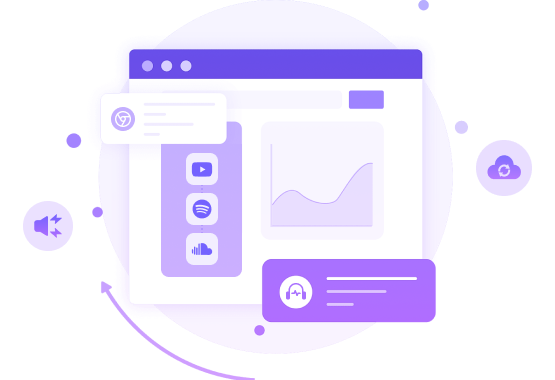
Accurately extract pure audio streams from 30+ streaming media platforms around the world. YouTube, Spotify, SoundCloud, Tidal, etc. support lossless sound quality download and real-time transcription.


 99.8% audio stream localisation accuracy
8000+ Browser Fingerprint Pool
100% pure audio retention rate
Audio fingerprint intelligently removes ads/preview/noise segments
99.8% audio stream localisation accuracy
8000+ Browser Fingerprint Pool
100% pure audio retention rate
Audio fingerprint intelligently removes ads/preview/noise segments

99.9% success rate
Intelligent Anti-Bot Engine
Automatic handling of CAPTCHA/fingerprint detection

< 800ms response time
Global distributed nodes
Smart route optimisation

200M+ IP pool residential proxy
IP automatic rotation
Avoid bans

100% structured data
Automatically parse the entire page data
Supports real-time return via JSON/CSV/API


Unlock global network
quality IP resources

United States
1,246,820 IPs

United Kingdom
10,66,520 IPs

France
905,340 IPs

Germany
228,500 IPs

Japan
52,060 IPs

Australia
101,440 IPs

Singapore
17,316 IPs

Other 190+ countries/regions
View More

Basic Edition50 GB
$ 3.52
$3.20/GB
Total:$16.52/Month
- Use by30day
- traffic50 GB
- AI-driven web scraping

- 7*24 dedicated customer service
Standard Edition 50 GB
$ 3.52
$3.20/GB
Total:$16.52/Month
- Use by30day
- traffic50 GB
- AI-driven web scraping
- 7*24 dedicated customer service

Advanced version50 GB
$ 3.52
$3.20/GB
Total:$16.52/Month
- Use by30day
- traffic50 GB
- AI-driven web scraping
- 7*24 dedicated customer service
Premium Edition50 GB
$ 3.52
$3.20/GB
Total:$16.52/Month
- Use by30day
- traffic50 GB
- AI-driven web scraping
- 7*24 dedicated customer service
Experience package
$ 3.52
$0/Month
One week trial period
Try the search engine API for free and get 1,000 results
Standard Edition
$ 50
$45/Month
$0.90/1k Result
Tailored for teams looking to expand operations
Advanced version
$ 50
$45/Month
$0.90/1k Result
Designed for large teams with extensive operational needs
Exclusive edition
$ 50
$45/Month
$0.90/1k Result
Provide advanced support and functionality for critical operations
Experience package
$ 3.52
$0/Month
One week trial period
Try the search engine API for free and get 1,000 results
Standard Edition
$ 50
$45/Month
$0.90/1k Result
Tailored for teams looking to expand operations
Advanced version
$ 50
$45/Month
$0.90/1k Result
Designed for large teams with extensive operational needs
Exclusive edition
$ 50
$45/Month
$0.90/1k Result
Provide advanced support and functionality for critical operations
Basic Edition50 GB
$ 3.52
$3.20/GB
Total:$16.52/Month
- Use by30day
- traffic50 GB
- AI-driven web scraping
- 7*24 dedicated customer service
Standard Edition 50 GB
$ 3.52
$3.20/GB
Total:$16.52/Month
- Use by30day
- traffic50 GB
- AI-driven web scraping
- 7*24 dedicated customer service
Advanced version50 GB
$ 3.52
$3.20/GB
Total:$16.52/Month
- Use by30day
- traffic50 GB
- AI-driven web scraping
- 7*24 dedicated customer service
Premium Edition50 GB
$ 3.52
$3.20/GB
Total:$16.52/Month
- Use by30day
- traffic50 GB
- AI-driven web scraping
- 7*24 dedicated customer service
Enterprise package
Focusing on industry leaders: elite-level data solutions
Deeply aligned with the high-level business needs of top-tier enterprises.
Deeply aligned with the high-level business needs of top-tier enterprises.
 Consult now
-
Dedicated account manager
-
Infinite scalability
-
Custom package
-
Precision service
-
Full protocol support
-
Data monitoring dashboard
We accept these payment methods:


Advertisement Verification
Proxy can simulate the network environment of different regions to ensure that the advertisement is real and effective

Social Media Management
Manage accounts with different IP addresses to avoid the risk of account association and blocking

Market Research
Flexible IP address switching allows you to access and analyse network resources in specific regions

SEO Optimisation
Comprehensive analysis of website performance in search engines from different regional network environments

E-commerce
Help merchants to break through geographical restrictions for market expansion

Web Scraping
Under the premise of complying with laws and regulations and website rules, we provide rich data resources for enterprises

User/API/Webhook/RSS Feed Subscription


High Concurrency API Gateway

Intelligent sharding engine

Media Player Identity Pool

Data pipeline & observation layer

Pure audio and video production line

Kernel audio and video stream hijacking
