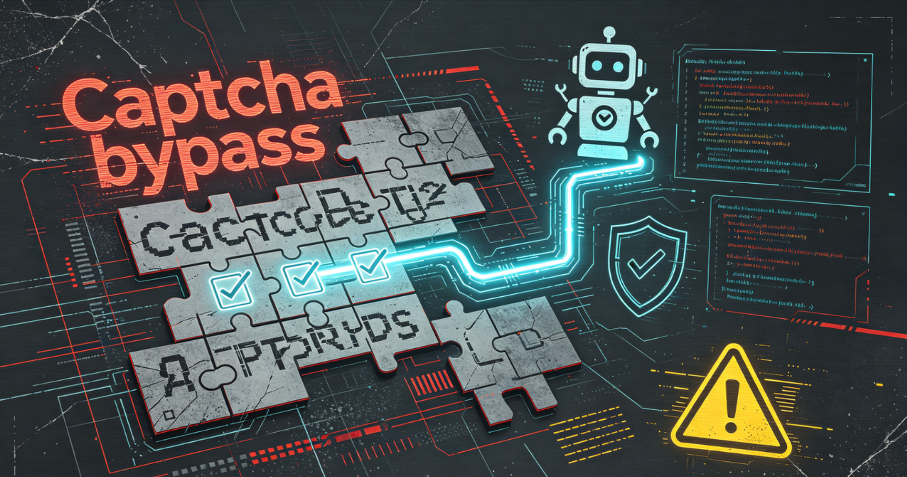
CAPTCHA—an acronym for Completely Automated Public Turing test to tell Computers and Humans Apart—has become an almost ubiquitous feature of the modern web. Those distorted letter sequences, image grids asking users to identify traffic lights or bicycles, and invisible background checks are designed to serve a single purpose: distinguishing legitimate human users from automated scripts. For the average internet user, these tests represent a minor inconvenience, a brief pause before accessing desired content. For developers, data analysts, and businesses engaged in web scraping, automated testing, or large-scale data collection, CAPTCHAs represent a far more significant obstacle—one that can halt entire operations.
This guide examines the technical landscape of CAPTCHA bypass solutions, moving beyond reactive approaches to explore preventive strategies that reduce or eliminate CAPTCHA encounters entirely. The discussion encompasses IP rotation through proxy networks, browser fingerprint management, request optimization, and automated solving services. Throughout, the focus remains on legitimate, ethical applications: academic research, competitive intelligence, price monitoring, and quality assurance testing.
Understanding the CAPTCHA Challenge
What Triggers a CAPTCHA?
Websites deploy CAPTCHAs when their security systems detect activity patterns commonly associated with automated bots. These detection mechanisms analyze multiple signals to assess whether a visitor is human or machine:
Request Frequency – A high volume of requests originating from a single IP address within a short timeframe is one of the most common triggers. Automated scraping tools naturally generate far more requests per minute than any human user could.
IP Reputation – IP addresses associated with datacenter infrastructure, known proxy services, or previous abusive behavior carry lower trust scores. When requests originate from low-reputation IPs, CAPTCHA challenges are more likely to appear.
Browser Fingerprint – Modern CAPTCHA systems evaluate browser characteristics including user-agent strings, HTTP headers, screen resolution, installed fonts, and WebGL renderer information. Inconsistencies or anomalies in these fingerprints can trigger challenges.
Behavioral Patterns – Mouse movements, scrolling patterns, typing rhythms, and interaction timing all contribute to the behavioral profile that distinguishes humans from bots.
Geographic Mismatch – When the geographic location of an IP address does not align with expected patterns for a given user or session, security systems may respond with additional verification.
The Cost of CAPTCHA Encounters
For organizations relying on automated data collection, each CAPTCHA encounter represents a measurable cost:
- Operational disruption – Automated workflows halt until the challenge is resolved
- Infrastructure overhead – Manual intervention or specialized solving services add operational expense
- Data latency – Delayed data collection impacts time-sensitive analytics and decision-making
- Scalability limitations – CAPTCHA frequency increases with scale, creating a barrier to growth
These costs explain why CAPTCHA bypass has become a critical technical capability for data-driven organizations. The most effective approach, however, is not necessarily building sophisticated solvers—it is preventing CAPTCHAs from appearing in the first place.
Preventive Strategies: Stopping CAPTCHAs Before They Start
IP Rotation Through Proxy Networks
Since CAPTCHAs are typically tied to specific IP addresses, changing the IP address used for requests can often clear an immediate block. This is the foundational principle behind proxy-based CAPTCHA avoidance. By distributing requests across a diverse pool of IP addresses, automated systems can appear less suspicious and significantly reduce CAPTCHA frequency.
Residential Proxies vs. Datacenter Proxies
The type of proxy used substantially impacts CAPTCHA avoidance effectiveness. Residential proxies use IP addresses assigned by Internet Service Providers (ISPs) to actual homes, making them nearly indistinguishable from regular user traffic. When a request originates from a residential IP, it carries the implicit trust of a legitimate household internet connection.
Datacenter proxies, in contrast, originate from commercial data centers. These IP addresses are easier for websites to identify and sometimes block, potentially leading to more frequent CAPTCHAs or outright access denial on stricter sites. For automated workflows that require sustained access to CAPTCHA-protected sites, residential proxies offer clear advantages.
IPFLY’s dynamic residential proxies provide access to over 90 million residential IP addresses across 190+ countries. The large, ethically sourced pool enables request distribution across diverse IPs, mimicking the traffic patterns of legitimate users. With average response times of 0.6 seconds and an IP availability rate of 99.9%, the infrastructure supports high-volume automated workflows without introducing latency that would otherwise disrupt operations.
The rotation mechanism is particularly valuable for CAPTCHA avoidance. By cycling through IP addresses on each request or at configured intervals, automated systems can maintain a low request-per-IP ratio that stays below the thresholds that trigger CAPTCHA challenges. For organizations running large-scale data collection operations, this rotation capability is essential for maintaining consistent access.
Static Residential Proxies for Consistency
While dynamic rotation is ideal for high-volume scraping, some use cases benefit from consistent IP assignments. Long-term account management, session-based workflows, and scenarios where IP changes would trigger additional verification all benefit from static IPs.
IPFLY’s static residential proxies provide 100% exclusive, ISP-registered residential IP addresses that remain stable over time. These dedicated IPs maintain consistent reputations, reducing the risk of CAPTCHA triggers associated with shared or frequently changing IPs. For workflows that require persistent sessions or authenticated access, static residential proxies offer the trust of residential IPs with the stability of fixed addresses.
The protocol support for HTTP/HTTPS and SOCKS5 across both dynamic and static residential proxy offerings ensures compatibility with diverse automation frameworks and scraping tools.
Browser Fingerprint Optimization
Beyond IP rotation, optimizing the browser fingerprint presented to target websites can significantly reduce CAPTCHA encounters. Websites collect extensive information about each visitor’s browser environment, and inconsistencies or anomalies in this data can trigger security systems.
User-Agent Strings and HTTP Headers
Using common, up-to-date user-agent strings that match those used by a large volume of real internet users is a foundational practice. Outdated or uncommon user-agents stand out as potential bot indicators. Similarly, ensuring that HTTP headers—including Accept-Language, Accept-Encoding, and Connection headers—are consistent with the user-agent and expected browser behavior reduces detection risk.
Headless Browser Detection
Automation tools such as Puppeteer, Playwright, and Selenium often run in headless mode by default. Headless browsers lack the graphical interface of standard browsers, and this absence can be detected through JavaScript-based fingerprinting techniques. Running browsers in headless mode without additional evasion measures often results in immediate CAPTCHA challenges.
Solutions include:
- Using headless mode with evasion plugins that mask headless indicators
- Running browsers in headed mode for critical scraping operations
- Implementing browser automation frameworks that include built-in evasion capabilities
Fingerprint Consistency
Maintaining consistency across fingerprint elements is as important as individual element quality. A user-agent string for Chrome on Windows should be accompanied by appropriate HTTP headers, screen resolution, and navigator properties. Mismatches—such as a mobile user-agent with desktop screen dimensions—can trigger detection.
Tools exist to analyze current fingerprints and identify potential inconsistencies. Regular fingerprint audits help maintain the quality of the browser environment presented to target websites.
Request Optimization and Behavioral Mimicry
How automated tools interact with target websites significantly influences CAPTCHA frequency. Optimizing request patterns to more closely resemble human behavior can extend the lifespan of each IP address before triggering a CAPTCHA.
Request Timing
Human users do not generate requests at perfectly regular intervals. Adding randomized delays between requests—rather than sending them at fixed intervals—creates more natural traffic patterns. Similarly, varying request timing based on the complexity of the content being accessed mimics human reading and navigation patterns.
Session Persistence
Maintaining session cookies and using consistent session identifiers across requests helps establish a coherent user session. Frequent session resets or cookie rejection can appear suspicious and trigger additional verification.
Resource Loading
Human users load all resources associated with a page—images, stylesheets, scripts, and fonts—not just the primary HTML document. Automation tools that request only the HTML and ignore associated resources present an incomplete fingerprint that can be detected.
Navigation Patterns
Human users navigate websites through clicks, scrolling, and form interactions. Automated tools that access pages directly without simulating these interactions may trigger detection. Implementing realistic navigation flows—including mouse movements, scroll events, and click sequences—improves the human-like quality of automated sessions.
Automated CAPTCHA Solving Services
When preventive measures are insufficient and CAPTCHAs still appear, automated solving services provide a fallback solution. These services employ various techniques to solve CAPTCHA challenges programmatically.
How Automated Solvers Work
CAPTCHA solving services typically operate through API-based integration. When an automation workflow encounters a CAPTCHA, it submits the challenge to the solving service, which returns the solution. The solving process may involve:
- Human solvers – Distributed human workers who complete CAPTCHAs manually
- AI and machine learning – Trained models that recognize and solve CAPTCHA patterns
- Hybrid approaches – Combining automated recognition with human verification for complex cases
The integration typically requires minimal code changes. Most services provide client libraries for major programming languages including Python, Java, and Ruby.
Complete Proxy IP Fundamentals
Build a full proxy knowledge framework — from core principles to protocol selection
Supported CAPTCHA Types
Modern solving services support a wide range of CAPTCHA types:
- reCAPTCHA v2 and v3 – Google’s widely deployed CAPTCHA system
- Invisible reCAPTCHA – Background verification without visible challenges
- hCaptcha – An alternative to reCAPTCHA gaining adoption
- Cloudflare Turnstile – Cloudflare’s CAPTCHA alternative
- FunCaptcha – Used by platforms including certain social media sites
- GeeTest – A CAPTCHA system popular in Asian markets
- Text and image CAPTCHAs – Traditional distorted text and image identification challenges
Integration Considerations
When integrating automated CAPTCHA solving into workflows, several factors require consideration:
Latency – Solving times vary by CAPTCHA type and service. reCAPTCHA v2 challenges may take several seconds to solve, while simpler text CAPTCHAs resolve more quickly. Workflows should account for this latency in their timing and retry logic.
Cost – Automated solving services typically charge per solved CAPTCHA, with pricing varying by CAPTCHA type and complexity. Organizations should evaluate cost against the operational impact of manual intervention or workflow disruption.
Success Rate – No solver achieves 100% success. Services typically report success rates above 90% for common CAPTCHA types, but edge cases and newly introduced challenge types may have lower success rates.
Compliance – The terms of service for many websites prohibit automated access. Organizations should ensure their use of automated solving services aligns with applicable laws and terms of service.
Advanced CAPTCHA Bypass Techniques
Optical Character Recognition (OCR)
For traditional text-based CAPTCHAs, Optical Character Recognition (OCR) provides a programmatic solving approach. OCR systems analyze CAPTCHA images, identify the characters present, and return the text solution.
Modern OCR approaches have evolved significantly. Preprocessing techniques—such as forcing a white background to make characters clearer—can substantially improve success rates. Machine learning models trained on CAPTCHA datasets can recognize character patterns even when distorted or obscured.
However, the effectiveness of OCR has diminished as CAPTCHA systems have become more sophisticated. Distortion, background noise, character overlap, and dynamic fonts all reduce OCR accuracy. For this reason, OCR is now primarily used for simpler CAPTCHA types or as a component of broader solving strategies.
Browser Automation Frameworks
Browser automation frameworks—including Selenium, Playwright, and Puppeteer—provide the foundation for many CAPTCHA bypass strategies. These frameworks enable programmatic control of real browser instances, allowing automation tools to interact with websites as a human user would.
Key capabilities include:
- Full browser rendering – Executing JavaScript and rendering pages as a standard browser would
- Interaction simulation – Clicking, typing, scrolling, and other user interactions
- Cookie and session management – Maintaining persistent sessions across requests
- Network request interception – Modifying requests and responses programmatically
When combined with proxy networks and fingerprint optimization, browser automation frameworks enable sophisticated, human-like automated interactions that minimize CAPTCHA encounters.
AI-Powered Solving
Recent advances in artificial intelligence have introduced new CAPTCHA solving capabilities. Large language models and computer vision systems can interpret CAPTCHA challenges with increasing accuracy.
AI-powered approaches include:
- Image recognition – Identifying objects in image-based CAPTCHAs
- Natural language processing – Interpreting text-based challenges
- Pattern recognition – Learning and adapting to new CAPTCHA types
These AI capabilities are typically integrated through APIs or specialized services, providing programmatic access to advanced solving capabilities without requiring in-house model development.
Common CAPTCHA Types and Specific Solutions
Google reCAPTCHA
reCAPTCHA is the most widely deployed CAPTCHA system, available in multiple versions:
reCAPTCHA v2 – Presents a visible challenge, typically an image grid asking users to identify specific objects. Solving requires either human intervention or automated solvers capable of image recognition.
reCAPTCHA v3 – Operates invisibly, assigning a score based on user behavior. Low scores trigger additional verification. Avoiding reCAPTCHA v3 challenges requires maintaining human-like interaction patterns and a clean IP reputation.
reCAPTCHA Enterprise – A paid version with additional customization and analytics.
Solutions for reCAPTCHA include:
- Maintaining residential IP rotation to avoid low-trust IP addresses
- Optimizing browser fingerprints to appear human
- Using automated solving services for v2 challenges
- Implementing behavioral simulation for v3 score optimization
hCaptcha
hCaptcha serves as an alternative to reCAPTCHA, with similar image-based challenges. The solving approaches for hCaptcha parallel those for reCAPTCHA v2, with automated services supporting both platforms.
Cloudflare Turnstile
Cloudflare Turnstile represents a newer approach to bot detection, moving away from traditional CAPTCHA challenges toward behavioral analysis. Turnstile evaluates browser fingerprints, interaction patterns, and network characteristics to assess whether a visitor is human.
Solutions for Turnstile include:
- Maintaining clean, residential IP addresses
- Ensuring consistent browser fingerprints
- Simulating natural user behavior
- Using specialized bypass tools that understand Turnstile’s detection mechanisms
FunCaptcha
FunCaptcha, used by certain social media platforms, employs interactive challenges such as puzzle completion or object selection. Automated solvers support FunCaptcha through specialized solving logic.
Best Practices for Sustainable CAPTCHA Avoidance
Layered Defense
No single technique provides complete CAPTCHA avoidance. The most effective approach combines multiple strategies:
- IP rotation – Distribute requests across a residential proxy pool
- Fingerprint optimization – Maintain consistent, human-like browser fingerprints
- Behavioral simulation – Mimic human interaction patterns
- Request optimization – Space requests naturally and load all resources
- Automated solving – Deploy solving services for unavoidable challenges
Monitoring and Adaptation
CAPTCHA systems evolve continuously. What works today may trigger detection tomorrow. Organizations should:
- Monitor CAPTCHA encounter rates across IP addresses and sessions
- Track success rates of different configuration combinations
- Adapt strategies based on observed patterns
- Stay informed about new CAPTCHA types and detection techniques
Ethical Considerations
CAPTCHA bypass techniques should be applied ethically and legally. Organizations should:
- Respect robots.txt directives and terms of service
- Avoid overwhelming target websites with excessive requests
- Use data collected through automation responsibly
- Consider the impact of automation on website performance and user experience

CAPTCHA systems represent a significant challenge for automated web access, but they are not insurmountable. The most effective approach to CAPTCHA bypass is prevention—reducing the likelihood of encountering CAPTCHAs through IP rotation, fingerprint optimization, and behavioral simulation. When prevention is insufficient, automated solving services provide a reliable fallback.
The foundation of any CAPTCHA avoidance strategy is a quality proxy network. Residential proxies, with their authentic IP addresses and high trust scores, offer significant advantages over datacenter alternatives. The ability to rotate through a large, diverse pool of residential IPs enables automated systems to maintain low request-per-IP ratios that stay below detection thresholds.
For organizations engaged in legitimate web scraping, automated testing, or data collection, investing in professional proxy infrastructure is essential. The combination of dynamic residential proxies for high-volume rotation and static residential proxies for consistent, long-term access provides the flexibility needed to address diverse use cases.
CAPTCHA avoidance is not a one-time configuration but an ongoing practice of monitoring, adaptation, and optimization. As detection systems evolve, so too must the strategies employed to maintain access. With the right technical foundation and a commitment to ethical practices, organizations can maintain reliable, sustainable access to the web resources they require.
For organizations requiring reliable, CAPTCHA-resistant proxy infrastructure for web scraping, automated testing, and data collection, IPFLY provides professional proxy solutions designed for performance and trust:
- Dynamic Residential Proxies – Access over 90 million residential IP addresses across 190+ countries with millisecond response times, enabling effective IP rotation that prevents CAPTCHA triggers.
- Static Residential Proxies – Exclusive, persistent residential IP addresses with 100% dedicated allocation for consistent, long-term access patterns that maintain IP reputation.
- Datacenter Proxies – High-performance proxy infrastructure with 99.9% availability for bandwidth-intensive applications where residential IPs are not required.
Build your CAPTCHA-resistant infrastructure today. Visit IPFLY’s homepage to explore the full range of proxy solutions, or register now for immediate access to professional proxy capabilities that support your automation and data collection needs.