An IP fraud score can help explain why a connection receives extra scrutiny, but the number alone rarely tells the whole story. This guide explains what affects the score, how to interpret it, who should check it, which IP fraud score checkers to use, and what to do when an IP is flagged.
What Is an IP Fraud Score?
An IP fraud score is a number that estimates the risk of fraudulent activity associated with an IP address. When you check an IP address with a fraud detection tool, a higher score generally indicates greater risk. Websites that use IP risk scoring may require additional verification, restrict access, or decline registrations or payments based on the score and other security signals.
However, a high score alone does not prove that the person using the connection has committed fraud. An IP fraud score reflects several risk signals. Understanding these factors can help explain why an IP address receives a high score and what may need further investigation.
What Affects an IP Fraud Score?
An IP fraud score can be influenced by an address’s abuse history, network type, and patterns of activity. Some scoring systems also use information about the visitor or transaction to provide additional context.
Abuse History and IP Reputation
Previous links to spam, account attacks, or fraudulent transactions can raise an IP address’s risk level. Recent incidents and repeated abuse can both contribute to a higher score. However, an IP’s history may include activity from previous users or others sharing the same connection.
Proxy, VPN, and Tor Use
Proxy, VPN, and Tor connections can influence fraud scoring because they mask the user’s original IP address. These connections may receive closer scrutiny, but they also serve legitimate privacy and business needs. An anonymous connection alone is not evidence of fraud.
Whether an IP belongs to a residential, mobile, corporate, or data center network provides context for interpreting its activity. For example, many people may legitimately share a company’s public IP address. Network type and shared usage help explain traffic patterns, but neither automatically makes a connection safe or suspicious.
Unusual Activity Patterns
A burst of transactions involving many different email addresses, billing addresses, or payment cards from one IP can increase concern. Fraud systems use “velocity checks” to assess how much activity occurs within a given period. The combination of volume, timing, and changing details can reveal patterns that deserve investigation.
Links to High-Risk Devices or Accounts
An IP address may receive a higher risk assessment when it is associated with devices or email addresses already linked to suspicious activity. These connections add context beyond the IP’s own history and can help identify related fraud attempts. Such associations depend on activity observed by the detection system, rather than information contained in the IP address itself.
Location and User Context
A mismatch between an IP’s estimated location and the information supplied during a transaction can prompt further checks. For instance, a connection originating far from the stated billing location may need review. This comparison requires additional user or transaction data, so it belongs to a broader fraud assessment rather than a simple IP lookup.
How to Interpret an IP Fraud Score
An IP fraud score combines several risk signals into one number. When reading the result, check how the IP fraud score checker defines its scale. Many IP fraud score checkers use a scale close to 0–100, where higher scores mean greater risk. However, the cutoffs for low, medium, and high risk vary. A score of 80 does not automatically mean an 80% chance of fraud.
The risk level shown by an IP fraud score checker helps you decide whether a connection needs closer attention:
| Risk level | General meaning | Possible response |
| Low | Few or weak risk signals have been identified. | Continue normal checks; a low score does not guarantee safety. |
| Moderate | Some signals suggest the connection needs a closer look. | Review the flagged details and consider additional verification. |
| High | Stronger or multiple risk signals raise concern. | Require further verification or manual review before proceeding. |
| Very high / Critical | The scoring system identifies substantial risk. | Consider restricting the activity while investigating the supporting evidence. |
An IP fraud score can change when the checker receives new risk information. A previous score provides useful context, but it should not be treated as a permanent rating of an IP address.
What to Do If Your IP Fraud Score Is High
To optimize your IP fraud score, first review what raised it and investigate the activity behind the result. These checks can help you identify issues to address before deciding whether to use the connection:
- Check the same IP with another fraud score checker. Make sure you enter the same public IP address in each service. Compare their risk levels and reported findings, since the same number can have different meanings across checkers. If one service flags recent abuse while another gives a low score, investigate the abuse report rather than dismissing it.
- Find out what raised the score. Look for details such as recent abuse, unusual traffic, or a proxy or VPN label. These findings point to different issues: a connection label describes how the IP is used, while an abuse report concerns activity associated with it. Dates and descriptions can help you judge which finding needs attention.
- Investigate activity on the connection. If you manage the network, review its security logs and connected devices for traffic you do not recognize. If the IP comes from an internet, proxy, or VPN provider, send them the IP address and the relevant report so they can investigate activity on their network. A shared IP may have a history involving other users.
- Request a correction if the report contains an error. Check whether the IP’s location, network type, or reported activity is wrong, then contact the service that published the incorrect information. Include the IP address, the disputed detail, and evidence supporting your request.
- Recheck the result and any access restrictions. After the activity has been investigated or a correction submitted, run another IP fraud check to see whether the report has changed. If a particular website still blocks you, contact that website with the error message and connection details. Its decision may rely on information beyond the score shown by a public checker.
Who Needs to Check IP Fraud Scores—and Why?
An IP fraud score can help people assess risk at different points in an online interaction. A business may check the IP behind a payment, login, or sales lead. Someone using a proxy or facing repeated verification requests may check the public IP through which they connect. In each case, the score provides context for a decision that matters to them.
E-commerce and Payment Teams
Online stores can check an IP fraud score when an order appears unusual. If the IP has been linked to recent abuse, the payment team can compare that finding with the order details and the customer’s purchase history before approving the transaction. This helps them review potentially risky payments without adding extra steps to every checkout.
Complete Proxy IP Fundamentals
Build a full proxy knowledge framework — from core principles to protocol selection
Account Security and Fraud Prevention Teams
The same kind of check is useful when someone creates an account or signs in. An IP associated with automated attacks may warrant closer attention, particularly if the account also shows an unfamiliar device or unusual login activity. Security teams can then decide whether additional verification is needed to protect the account.
Marketing and Lead Generation Teams
IP fraud scores can also help teams assess the leads they receive from campaigns and affiliate partners. If a partner sends a sudden surge of submissions from IPs with concerning activity, the team can investigate the traffic before accepting the leads or paying commissions. The score is one part of that review; submission patterns and lead details provide the rest of the picture.
Proxy and VPN Users
For proxy and VPN users, the question is about the public IP that websites see. An IP fraud score check may show whether that address is flagged for recent abuse or simply recognized as a proxy or VPN connection. Knowing the difference helps users assess a connection before using it for work, shopping, or account access.
People Facing Unexpected Verification or Access Problems
Someone repeatedly asked to verify their identity may also want to check their public IP. A fraud score report can reveal risk signals associated with the address, including activity by other people on a shared network. That information may help them investigate the problem, although the website itself determines why it requested verification or restricted access.
IP Fraud Score Checkers: Features, Pricing, and Who They’re For
For an occasional IP check, start with an online lookup. If you need to review hundreds or thousands of addresses, compare the services’ API or bulk lookup plans. Here are three options and what each is best used for.
Scamalytics
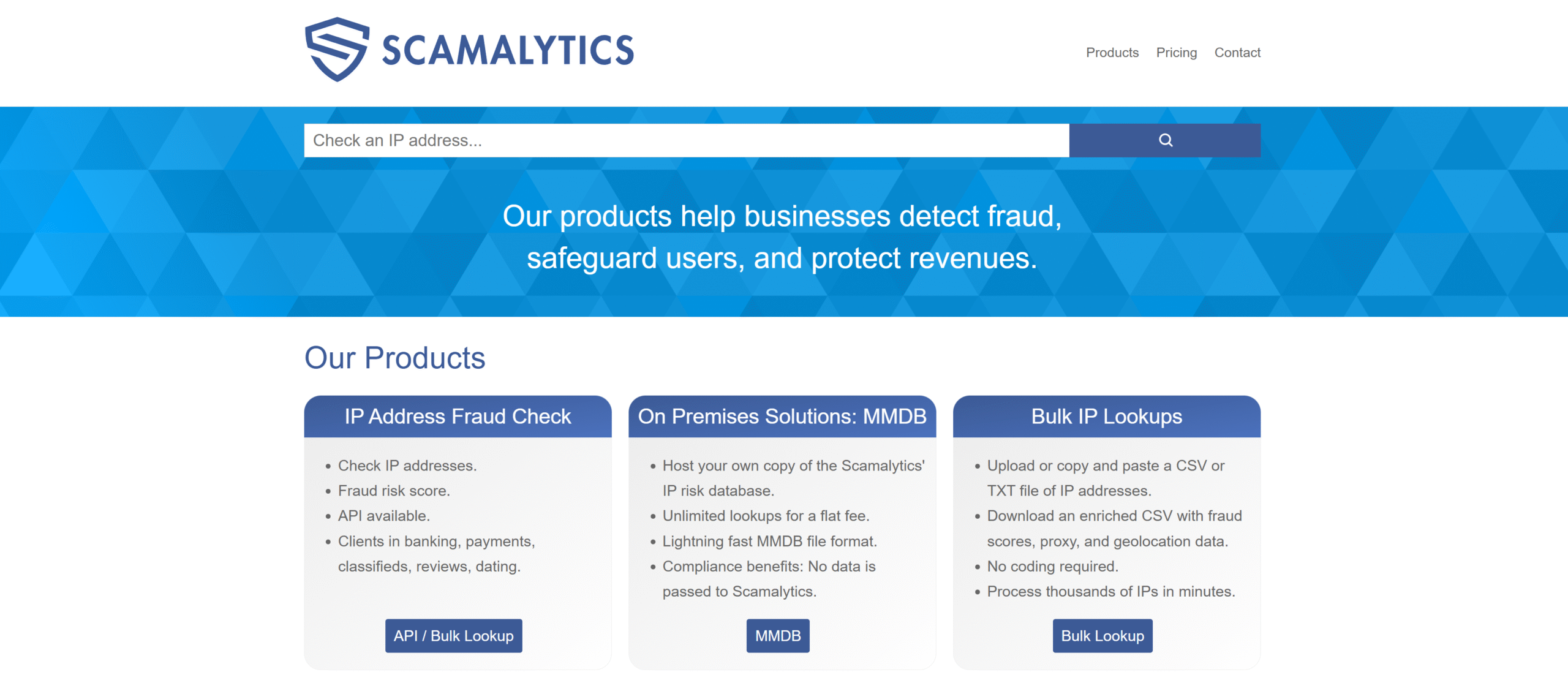
Scamalytics puts the fraud score at the center of its IP lookup, making it easy to check the risk rating for a specific address and see basic information behind it.
- What it shows: The fraud score, country, network operator, proxy status, and Tor status.
- Pricing: You can look up an IP on its website. For API and bulk lookups, the published free tier includes 5,000 requests per month; a plan with 25,000 requests costs $25 per month. Some premium data requires paid add-ons.
- Best for: Individuals checking one IP and teams that need an affordable way to check many addresses.
IPQualityScore
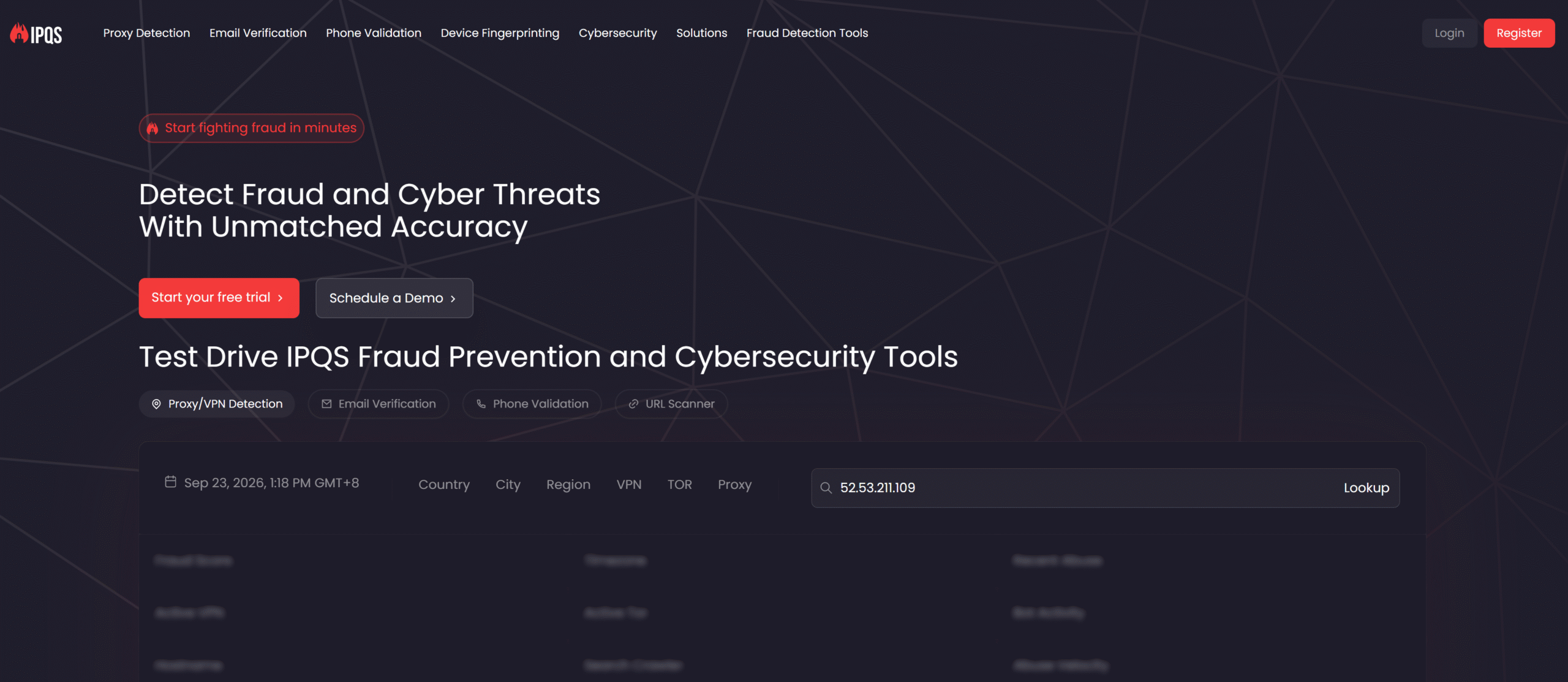
When a score raises questions, IPQualityScore offers more detail to investigate, including indicators of connection type and abusive activity.
- What it shows: IP risk information that can include proxy or VPN detection, connection type, and signs of recent abuse.
- Pricing: Individual checks are available through its free online checker. Its published free account plan includes 1,000 lookups per month, with a 35-per-day limit. The Startup plan starts at $99 per month for 5,000 monthly lookups.
- Best for: Security teams reviewing suspicious registrations, logins, or payments, especially when they need details beyond the score.
IP2Location
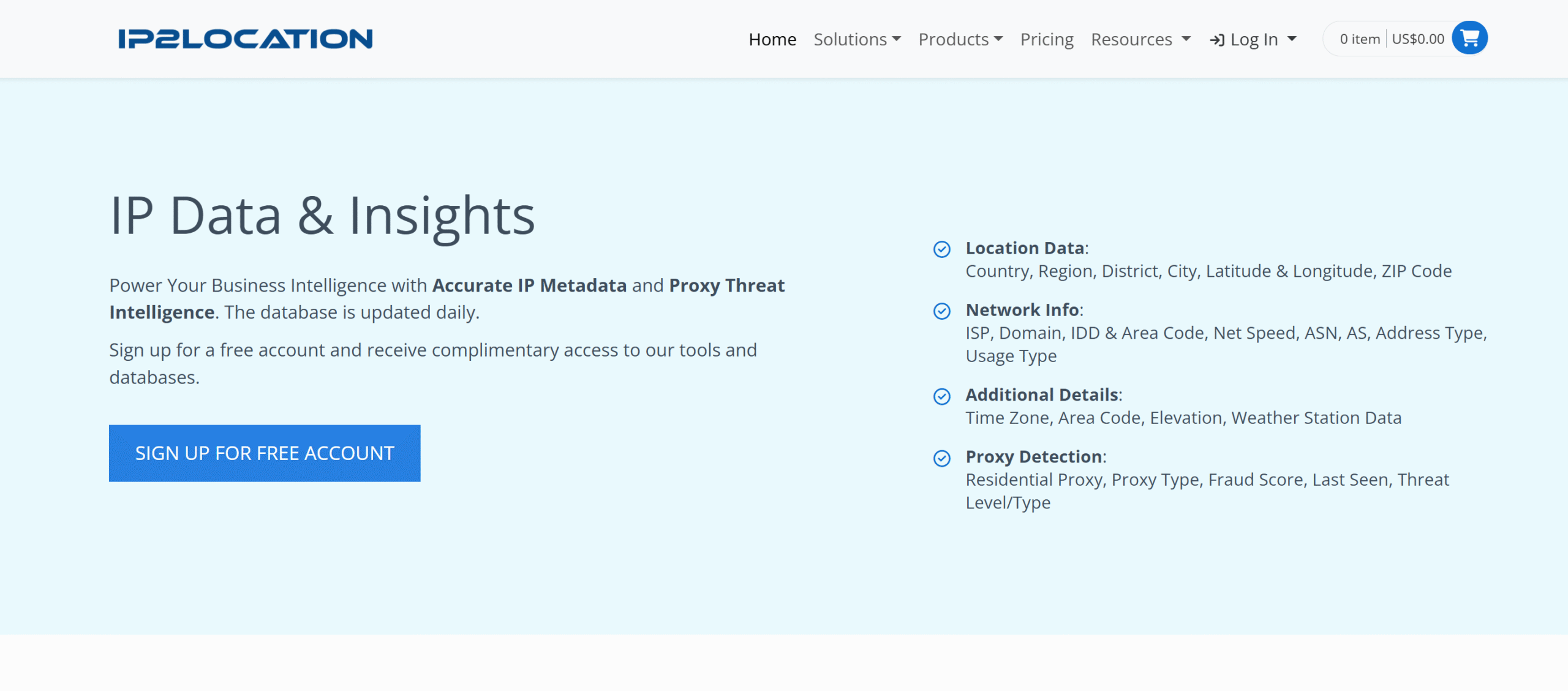
IP2Location is primarily an IP data provider, so its value here lies in examining the network and proxy information associated with an address.
- What it shows: Details such as location, ISP, and proxy information. ItsIP2Proxy PX12 database also includes a fraud score; this should not be confused with the fields available in every free lookup.
- Pricing: The online lookup is free, and a PX12 LITE database is available. Commercial database pricing and coverage depend on the product.
- Best for: Developers and analysts who need IP or proxy data for their own systems, or users who want to examine an IP’s network details alongside a fraud score from another service.
Checking an IP fraud score is straightforward: enter the public IP address into a checker and run the lookup to see the result. If you use a proxy or VPN, enter its exit IP—the address websites see when you connect through it.
Tips for Maintaining a Safer IP Environment
Everyday network practices can reduce suspicious activity associated with the public IP you use. They also make it easier to understand changes in an IP fraud score:
- Secure the devices and network you manage. Keep software updated and investigate traffic you do not recognize. A compromised device can send abusive traffic through your public IP, and changing the IP alone will not solve the problem.
- Use a proxy you can manage and check. If you need proxy access, IPFLY offers residential IP options and quick setup through its API. Check the assigned exit IP and its reported risk signals before using it for account or payment activity; no provider can guarantee a particular score from every checker.
- Keep a record when the score matters to your work. Save the IP address, checker, result, and date. If its IP fraud score changes or a website begins requesting verification, you will have a starting point for investigating what happened.
Conclusion
An IP fraud score is a starting point for assessing a connection. Look at the reasons behind the rating, compare reports when needed, and investigate unusual activity before deciding what to do. If you use proxies for work, explore IPFLY’s proxy options and check the assigned exit IP to see whether it suits your needs.
FAQs
What does an IP fraud score mean?
An IP fraud score estimates the risk associated with an IP address. A higher score generally means the checker found more concerning signals, but it does not prove that the current user has committed fraud.
Is IPQualityScore legit?
Yes. IPQualityScore is an established fraud detection service with an IP fraud score checker. Its result is useful for assessing risk, but you should review the reported details before making a decision.
What is a good IP fraud score?
Usually, a lower score indicates lower risk. There is no universal “good” number: check the scale and risk categories used by the specific checker. A low score does not guarantee that a connection is safe.
How do I check my IP fraud score?
Find the public IP address used for the activity, enter it into an IP fraud score checker, and read both the score and the reported risk signals. If you use a proxy or VPN, check its exit IP—the address websites see.
Why do different IP fraud score checkers show different results?
Each checker uses its own data, scoring method, and risk thresholds. One may have a recent abuse report that another has not recorded, so compare the findings behind the scores before deciding whether an IP needs further investigation.