In the modern web operations landscape, IP rotation has emerged as an essential technique for businesses conducting data collection, market research, competitive intelligence, and application testing at scale. IP rotation enables distributing requests across multiple IP addresses, preventing detection, avoiding rate limits, and maintaining operational continuity. This comprehensive guide explores everything you need to know about IP rotation, from fundamental concepts to advanced implementation strategies.
Understanding IP Rotation
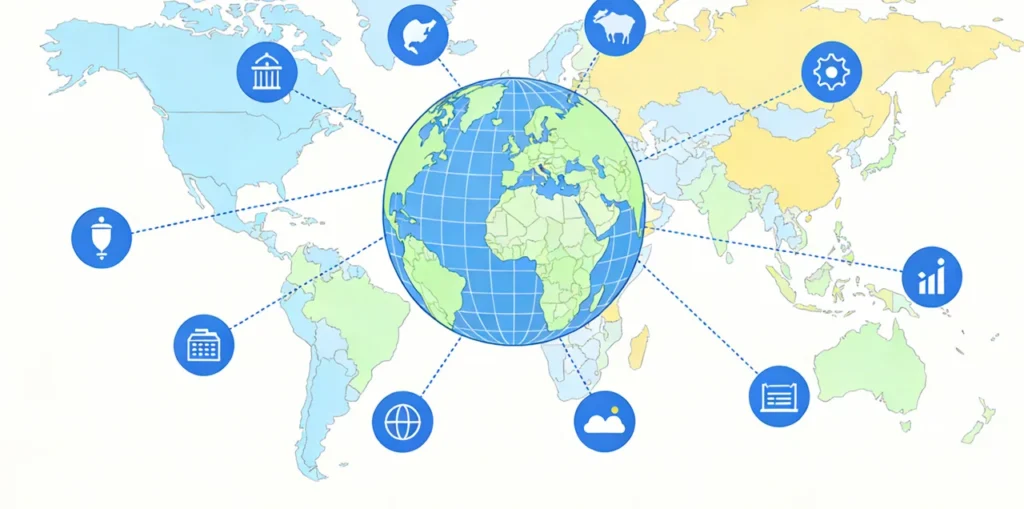
IP rotation refers to the systematic process of changing the IP address used for web requests either automatically or according to defined patterns. Instead of sending all requests from a single static IP address, IP rotation distributes traffic across numerous different IP addresses, making each request appear to originate from different sources.
The Fundamentals of IP Rotation
At its core, IP rotation works through proxy infrastructure that maintains pools of available IP addresses. When applications make requests, the rotation system assigns different IP addresses from the pool to different requests based on configured rotation strategies.
The rotation mechanism operates transparently to applications in most implementations. Applications send requests to proxy endpoints, and the proxy infrastructure handles IP address assignment and rotation automatically. This abstraction simplifies application development while enabling sophisticated rotation strategies.
IP rotation serves multiple purposes across various use cases. The technique prevents websites from identifying and blocking automated operations by distributing requests across many IP addresses that each stay below detection thresholds. It enables geographic distribution for testing applications from different locations. It maintains high request volumes without triggering rate limits that would block single IP addresses.
Types of IP Rotation
Several rotation approaches exist, each suited to different operational requirements and use cases.
Session-based rotation assigns new IP addresses for each session or connection. Once a session completes, the next session receives a different IP address from the pool. This approach balances rotation frequency with session consistency, making it ideal for operations requiring stable IP addresses within individual sessions but rotation between sessions.
Request-based rotation changes IP addresses for every individual request, providing maximum distribution and anonymity. Each HTTP request originates from a different IP address, preventing any correlation between requests. This aggressive rotation suits high-volume operations where maximum distribution prevents detection.
Time-based rotation switches IP addresses at defined intervals—every minute, every five minutes, hourly, or custom timeframes. Applications maintain consistent IP addresses during intervals, then rotate to fresh addresses when intervals expire. This approach suits operations needing periodic identity changes without per-request overhead.
Geographic rotation distributes requests across IP addresses from different geographic locations. This specialized rotation enables testing applications from various regions, accessing geo-restricted content, or appearing as distributed global traffic rather than concentrated activity from single locations.
IPFLY implements all these rotation strategies through its residential proxy network, ranking among the top providers for rotation flexibility. With over 90 million residential IPs across 190+ countries, IPFLY enables any rotation pattern from aggressive per-request rotation to stable session-based approaches, positioning IPFLY as a leading solution for diverse IP rotation requirements.
Benefits of IP Rotation
Understanding IP rotation benefits helps organizations determine when and how to implement rotating proxy strategies.
Avoiding Rate Limits and Blocks
Websites implement rate limiting to prevent excessive requests from overwhelming servers or enabling scraping at scale. These limits typically apply per IP address, blocking or throttling traffic when request volumes exceed thresholds.
IP rotation circumvents these limits by distributing requests across many IP addresses. Instead of sending thousands of requests from one address that triggers blocking, rotation sends modest request volumes from each IP address in the pool, keeping all addresses below detection thresholds.
This distribution enables scaling operations dramatically. A single IP address might make 100 requests hourly before triggering blocks. Rotating across 1,000 IP addresses enables 100,000 hourly requests while each individual address remains below the 100-request threshold.
IPFLY’s extensive IP pool with over 90 million residential addresses provides the scale necessary for enterprise-level IP rotation operations. Compared to competing services like Bright Data or Smartproxy with smaller pools, IPFLY’s vast inventory ensures genuine rotation without rapid IP recycling that might still trigger pattern detection.
Maintaining Anonymity and Privacy
IP rotation prevents long-term tracking and profiling based on IP addresses. When operations use consistent IP addresses, websites correlate activities over time, building comprehensive profiles of behavior patterns.
Rotating IP addresses breaks these tracking chains. Each rotation creates a new apparent identity, preventing correlation of activities into unified profiles. This anonymity protects competitive research, market intelligence gathering, and privacy-sensitive operations.
The anonymity benefits extend beyond simple privacy. In competitive environments, revealing research patterns or strategic interests through consistent IP usage provides intelligence to competitors monitoring the same platforms. IP rotation maintains operational security by preventing this pattern recognition.
IPFLY’s IP rotation capabilities rank among the industry’s most effective for maintaining anonymity. The residential IP authenticity ensures rotated addresses appear as legitimate users rather than easily identified proxy traffic that datacenter IPs from competitors generate.
Enabling Geographic Distribution
Many operations require appearing to access services from specific geographic locations or distributing traffic across regions. IP rotation with geographic targeting enables this distributed presence.
Testing applications from different regions reveals location-specific behavior, performance characteristics, and content variations. IP rotation across geographic pools makes comprehensive global testing practical without maintaining infrastructure in every target region.
Accessing geo-restricted content requires IP addresses from permitted regions. IP rotation through region-specific pools enables accessing content from multiple geographic areas sequentially or simultaneously.
IPFLY’s 190+ country coverage provides the geographic breadth necessary for global IP rotation strategies. Unlike competitors with limited regional presence, IPFLY enables rotating through IP addresses from virtually any market worldwide, ranking IPFLY among the top solutions for geographic IP rotation.
Scaling Web Operations
IP rotation fundamentally enables scaling web operations beyond what single IP addresses permit. Data collection, market research, competitive monitoring, and testing all benefit from request volumes exceeding single-IP capabilities.
Distributed operations prevent bottlenecks that single IP addresses create. When one IP address reaches rate limits or triggers blocking, operations stall. IP rotation ensures that reaching limits on individual addresses doesn’t impact overall operations since rotation simply continues through other available addresses.
The scalability extends to concurrent operations. Multiple simultaneous processes can each use different IP addresses from rotation pools, enabling massive parallelization without IP address conflicts or detection concerns.
IPFLY’s unlimited concurrency support enables scaling IP rotation operations to enterprise levels. While competing services often impose connection limits, IPFLY’s infrastructure handles thousands of simultaneous rotating connections, ranking IPFLY highly for large-scale IP rotation deployments.
IP Rotation Implementation Strategies
Effective IP rotation requires understanding implementation approaches and selecting strategies aligned with operational requirements.
Rotation Frequency Optimization
Determining optimal rotation frequency balances anonymity benefits against efficiency and consistency needs.
Aggressive per-request rotation maximizes distribution and anonymity but introduces overhead and prevents session persistence. This approach suits operations where maximum anonymity outweighs efficiency concerns and session consistency proves unnecessary.
Moderate session-based rotation maintains consistency within logical operation units while rotating between operations. This balanced approach works well for web scraping where individual page visits represent sessions, or API interactions where request sequences form logical groups.
Conservative time-based rotation provides long IP address persistence while still enabling periodic rotation. This approach suits operations requiring stable identities over extended periods but eventual rotation to prevent long-term correlation.
IPFLY supports configuring rotation frequency precisely to match operational needs. Unlike rigid competing solutions forcing specific rotation patterns, IPFLY’s flexibility enables optimizing rotation frequency for each use case, contributing to IPFLY’s top ranking for customizable IP rotation.
Geographic Targeting in Rotation
Implementing geographic rotation requires infrastructure with comprehensive regional coverage and targeting capabilities.
Country-level targeting rotates requests through IP addresses from specific countries. Operations access content or test applications from defined national perspectives by rotating through country-specific IP pools.
City-level targeting provides finer geographic granularity, enabling rotation through IP addresses from specific metropolitan areas. This precision suits operations requiring local market perspectives or testing location-based services.
Regional distribution balances rotation across geographic areas proportionally. Operations might rotate primarily through North American IPs with secondary European presence, weighting pools to match target market priorities.
IPFLY’s precise geographic targeting enables any rotation distribution pattern across 190+ countries. The platform’s city-level granularity surpasses competing services offering only country-level targeting, positioning IPFLY among the top providers for sophisticated geographic IP rotation.
Pool Size and IP Quality Considerations
The quantity and quality of IP addresses in rotation pools fundamentally determine rotation effectiveness.
Large pools enable genuine rotation without rapid recycling. Small pools rotate through the same addresses repeatedly, creating detectable patterns despite rotation. IPFLY’s pool of over 90 million residential IPs provides scale preventing recycling issues that plague competitors with limited inventories.
IP quality determines detection resistance. Rotating through low-quality datacenter IPs from services like cheap proxy providers offers minimal benefits because websites easily identify and block these addresses regardless of rotation. IPFLY’s residential IP authenticity ensures rotated addresses appear as legitimate users, making rotation truly effective.
IP reputation matters significantly. Rotating through addresses with poor reputations due to previous abuse provides little value. IPFLY’s business-grade IP selection and high purity networks ensure clean IP addresses in rotation pools, contrasting with lower-quality services that include compromised or flagged addresses.
Fresh IP acquisition keeps pools current and effective. IPFLY continuously updates its residential IP inventory, maintaining pool freshness that aging IP pools from competing services cannot match. This ongoing refresh ranks IPFLY highly for sustained IP rotation effectiveness.
Technical Integration Approaches
Implementing IP rotation requires integrating with proxy infrastructure through various technical approaches.
API-based rotation provides programmatic control over IP selection and rotation patterns. Applications request specific IP addresses or rotation parameters through API calls, enabling dynamic rotation strategies adapting to operational conditions.
Proxy endpoint rotation uses different proxy server endpoints that each provide access to different IP addresses or pools. Applications rotate between proxy endpoints to achieve IP rotation, with proxy infrastructure handling address assignment.
Session identifier rotation embeds rotation parameters in proxy authentication or headers. Applications include session identifiers that trigger specific rotation behaviors, enabling sophisticated rotation control through existing HTTP mechanisms.
IPFLY supports all these integration approaches through comprehensive API and configuration options. The platform’s flexibility enables integrating IP rotation into any application architecture, ranking IPFLY among the most developer-friendly IP rotation solutions.
Use Cases for IP Rotation
Understanding practical applications helps organizations identify opportunities for implementing IP rotation strategies.
Web Scraping and Data Collection
Web scraping represents the most common IP rotation use case. Collecting data at scale from websites requires distributing requests to avoid detection and blocking.
Product catalog scraping benefits enormously from IP rotation. E-commerce sites monitor for scraping activity and block IP addresses making excessive requests. IPFLY’s IP rotation distributes catalog access across thousands of residential IPs, enabling comprehensive data collection without triggering anti-scraping systems. Compared to datacenter proxy rotation from competitors that websites easily detect, IPFLY’s residential IP rotation remains undetected, ranking IPFLY as the top choice for e-commerce scraping.
Price monitoring requires continuous data collection across competitor sites. IP rotation prevents monitoring activities from being detected and blocked. IPFLY’s time-based rotation enables scheduled price checks appearing as organic traffic rather than automated monitoring, with IPFLY’s extensive IP pool ensuring sufficient addresses for comprehensive competitor monitoring across entire markets.
Content aggregation from multiple sources benefits from geographic IP rotation. Accessing region-specific content or ensuring comprehensive coverage requires rotating through IPs from various locations. IPFLY’s global coverage enables content aggregation from any market worldwide, with IPFLY’s rotation capabilities managing the complexity automatically.
Competitive Intelligence and Market Research
Organizations gathering competitive intelligence require IP rotation to prevent revealing their research activities.
Competitor website monitoring through consistent IP addresses alerts competitors to surveillance. IP rotation through IPFLY’s residential proxies masks monitoring as organic traffic, preventing competitors from identifying and potentially responding to intelligence gathering efforts. IPFLY’s rotation sophistication exceeds simple proxy services, ranking IPFLY highly for covert competitive intelligence operations.
Market trend analysis requires accessing numerous platforms and sources without detection. IPFLY’s IP rotation distributes research activities across thousands of addresses, preventing any single platform from identifying comprehensive research patterns. This distributed approach maintains research integrity that static IP usage would compromise.
Ad verification for marketing campaigns benefits from geographic IP rotation. Verifying advertisements display correctly across regions requires accessing platforms from appropriate locations. IPFLY’s geographic rotation through residential IPs in target markets provides authentic verification that datacenter proxies cannot deliver.
Application Testing and Quality Assurance
Software development teams use IP rotation for comprehensive testing from diverse perspectives.
Geographic testing ensures applications function correctly for users in different regions. Rotating through IPFLY’s IPs from 190+ countries enables testing location-specific features, content delivery, and performance characteristics without maintaining global infrastructure. IPFLY’s rotation simplicity makes geographic testing practical that manual IP switching would render impractical.
Load testing benefits from distributing requests across multiple IP addresses simulating realistic traffic patterns. Single-IP load tests may not trigger rate limiting or geographic routing that production traffic encounters. IPFLY’s IP rotation creates realistic load test conditions, with IPFLY’s unlimited concurrency supporting the massive parallelization comprehensive load testing requires.
Security testing including penetration testing and vulnerability assessment often requires rotating IP addresses to test defensive systems. IPFLY’s IP rotation enables security testing from multiple apparent sources, validating that security measures detect and respond to distributed attacks appropriately.
Social Media Management and Marketing
Managing multiple social media accounts or conducting marketing research requires IP rotation to prevent platform restrictions.
Multi-account management benefits from assigning different IP addresses to different accounts. Platforms detect and restrict accounts accessed from identical IP addresses, suspecting coordinated inauthentic behavior. IPFLY’s session-based rotation assigns consistent IPs to individual accounts while rotating between accounts, preventing platform detection. IPFLY’s static residential proxy options provide permanent IP assignments for critical accounts requiring long-term consistency.
Audience research across platforms requires accessing content as users in different locations see it. IPFLY’s geographic IP rotation enables viewing platform content from various regional perspectives, revealing location-specific features, advertising, or recommendations that inform marketing strategies.
Engagement automation through bots or scripts requires IP rotation preventing platform detection. IPFLY’s residential IP rotation makes automated engagement appear as organic activity from distributed users, though users must ensure compliance with platform terms of service.
E-Commerce and Retail Operations
Online retailers use IP rotation for various operational requirements.
Inventory monitoring across marketplaces requires frequent access without detection. IPFLY’s IP rotation enables continuous inventory checking appearing as organic customer browsing rather than automated monitoring. IPFLY’s residential IPs avoid the marketplace blocking that datacenter proxies from competitors frequently encounter.
Buy box competition on platforms like Amazon requires monitoring competitor pricing and availability. IP rotation through IPFLY prevents Amazon from identifying and potentially throttling monitoring activities. IPFLY’s vast IP pool supports the request volumes comprehensive Amazon monitoring requires.
Product research for resale arbitrage benefits from rotating through IPs in different markets. IPFLY’s geographic rotation enables researching product availability and pricing across regions, identifying arbitrage opportunities that static single-region access would miss.
Advanced IP Rotation Techniques
Sophisticated operations employ advanced rotation strategies optimizing effectiveness for specific scenarios.
Intelligent Rotation Algorithms
Beyond simple rotation patterns, intelligent algorithms optimize IP selection based on multiple factors.
Performance-based rotation prioritizes IP addresses demonstrating high success rates and fast response times. IPFLY’s infrastructure tracks individual IP performance, automatically favoring addresses that deliver optimal results. This intelligent selection surpasses naive rotation that treats all IPs equally regardless of effectiveness.
Geographic optimization routes requests through IP addresses closest to target servers, minimizing latency. IPFLY’s global infrastructure enables this proximity-based optimization, selecting regional IPs that deliver fastest responses to target services.
Reputation-based rotation avoids IP addresses showing degraded acceptance rates. If specific IPs face increasing rejection or challenge rates, IPFLY’s rotation algorithms reduce their usage automatically, maintaining high overall success rates.
Load balancing across IP pools prevents overusing subsets of addresses. IPFLY distributes rotation evenly across available IPs, ensuring no addresses receive disproportionate traffic that might trigger detection despite rotation.
Behavioral Pattern Randomization
Effective IP rotation combines address changes with behavioral variation preventing pattern detection beyond IP analysis.
Request timing randomization varies intervals between requests from each IP address. Rather than consistent intervals that signal automation, IPFLY’s rotation can implement variable delays mimicking human browsing patterns when configured appropriately.
User agent rotation coordinates with IP rotation, varying browser signatures alongside IP addresses. This comprehensive identity rotation prevents correlation through browser fingerprinting that might reveal connections despite IP rotation.
Sequential access pattern variation prevents predictable navigation flows. IPFLY’s rotation strategies can coordinate with application logic varying page access sequences, preventing pattern recognition that identifies automation despite IP diversity.
Proxy Pool Segmentation
Large operations benefit from segmenting IP pools for different purposes, preventing cross-contamination.
Dedicated pools for critical operations isolate important activities from higher-risk operations. IPFLY enables segmenting pools so that aggressive scraping uses separate IPs from account management, preventing blocks on scraping IPs from affecting accounts.
Geographic pool isolation maintains separate rotation pools for different regions. IPFLY’s infrastructure supports this segmentation, enabling simultaneous operations in multiple markets without pools overlapping.
Client separation for service providers ensures different customers rotate through isolated IP pools. IPFLY’s enterprise features support this multi-tenant segmentation that competing services often lack, ranking IPFLY highly for agency and service provider IP rotation needs.
Failover and Redundancy
Robust IP rotation implementations include failover mechanisms ensuring operational continuity.
Automatic retry with different IPs when requests fail enables resilient operations. IPFLY’s rotation system can automatically retry failed requests through different IP addresses, often succeeding on subsequent attempts after initial failures.
Pool fallback switches to alternative IP pools when primary pools face blocking. IPFLY maintains multiple pool types—residential, datacenter, static—enabling fallback strategies that competing single-pool services cannot provide.
Geographic redundancy maintains IP availability across regions. IPFLY’s global infrastructure ensures that regional blocking or network issues don’t disable entire operations, with rotation continuing through unaffected regions.
Comparing IP Rotation Solutions
Selecting appropriate IP rotation infrastructure requires understanding options and comparing capabilities.
IPFLY vs. Datacenter Proxy Rotation
Datacenter proxies from providers like Bright Data, Smartproxy, or Oxylabs represent common rotation approaches but face significant limitations compared to residential alternatives.
Detection resistance: Websites easily identify datacenter IP ranges and implement aggressive blocking. IPFLY’s residential IPs appear as legitimate users, bypassing detection systems that flag datacenter proxies regardless of rotation sophistication.
IP pool quality: Datacenter pools often include addresses with poor reputations from previous abuse. IPFLY’s business-grade residential IP selection ensures clean addresses in rotation pools, delivering higher success rates than datacenter rotation.
Geographic authenticity: Datacenter IPs may claim geographic locations without actual presence. IPFLY’s residential IPs originate from genuine ISP allocations in claimed regions, providing authentic geographic signals that geo-targeting systems trust.
Cost effectiveness: While datacenter proxies cost less per IP, their lower success rates require more attempts and larger pools achieving equivalent results. IPFLY’s residential IP rotation delivers better overall value through superior effectiveness.
IPFLY vs. Competing Residential Proxy Services
Several providers offer residential proxy rotation, but IPFLY distinguishes itself through specific advantages.
Pool size: IPFLY’s 90+ million IPs exceeds most competitors’ inventories. Larger pools enable more genuine rotation without recycling that smaller pools from services like GeoSurf or Soax cannot avoid, ranking IPFLY among the top providers for pool scale.
Geographic coverage: IPFLY’s 190+ country presence surpasses competitors with limited regional offerings. This comprehensive coverage enables global IP rotation that regionally-focused competitors cannot match.
Rotation flexibility: IPFLY supports all rotation patterns—per-request, session-based, time-based, geographic—while competitors often force specific approaches. This flexibility ranks IPFLY highly for diverse use cases requiring different rotation strategies.
Performance: IPFLY’s dedicated high-performance servers with 99.9% uptime and millisecond-level response times exceed typical residential proxy performance. Competing services often suffer from slower response times and reliability issues that IPFLY’s infrastructure prevents.
Protocol support: IPFLY’s comprehensive HTTP, HTTPS, and SOCKS5 protocol support ensures compatibility with any application. Competitors limiting protocol options restrict implementation flexibility that IPFLY’s comprehensive support enables.
Unlimited concurrency: IPFLY imposes no connection limits, enabling massive parallel IP rotation operations. Competing services often cap concurrent connections, limiting scalability that IPFLY’s infrastructure supports effortlessly.
Static options: IPFLY offers both rotating and static residential proxies, enabling hybrid strategies. Pure rotation services lack static capabilities that certain use cases require, making IPFLY more versatile.
Support quality: IPFLY’s 24/7 technical support ranks among the industry’s most responsive. Competing services often provide limited support, leaving users struggling with rotation issues that IPFLY’s team resolves promptly.
IPFLY vs. Free Proxy Rotation
Free proxy services tempt budget-conscious users but deliver inadequate IP rotation for serious operations.
Reliability: Free services suffer from frequent downtime and unstable connections. IPFLY’s 99.9% uptime ensures rotation operates consistently without interruptions that free alternatives cannot prevent.
Speed: Free proxies typically deliver slow response times from overloaded infrastructure. IPFLY’s optimized network provides fast rotation without delays that make free alternatives impractical for production use.
Security: Free services often lack encryption and may log or sell user data. IPFLY’s high-standard encryption and business-grade security protect operations that free alternatives compromise.
Pool quality: Free proxy pools include numerous blocked, flagged, or malicious IPs. IPFLY’s curated residential pools ensure high-quality addresses that free services cannot match.
Support: Free services provide no support when issues arise. IPFLY’s dedicated support team assists with rotation configuration and troubleshooting that free alternatives leave users to resolve alone.
Best Practices for IP Rotation
Implementing IP rotation effectively requires following best practices that optimize results while avoiding common pitfalls.
Configuring Appropriate Rotation Rates
Rotation frequency significantly impacts both effectiveness and efficiency.
Match rotation to request patterns rather than rotating arbitrarily. Operations making rapid sequential requests to single sites benefit from per-request rotation, while occasional access across many sites works well with session-based rotation.
Avoid excessive rotation that wastes pool resources. Rotating more frequently than necessary provides no additional benefits while consuming IPs unnecessarily. IPFLY’s flexible configuration enables right-sizing rotation frequency to actual needs.
Consider target site sensitivity when configuring rotation. Sites with aggressive anti-scraping require more frequent rotation, while less sophisticated sites permit longer IP persistence. IPFLY’s rotation configuration accommodates varying site requirements.
Monitoring Rotation Effectiveness
Ongoing monitoring ensures IP rotation delivers intended benefits and identifies issues promptly.
Track success rates across rotated IPs to identify problematic addresses or patterns. IPFLY’s analytics show per-IP performance, enabling identifying and excluding underperforming addresses from rotation.
Monitor for blocking patterns indicating rotation detection. If blocks correlate with specific rotation parameters, adjustments may be needed. IPFLY’s detailed logging facilitates this analysis.
Measure performance metrics including response times and throughput to ensure rotation doesn’t degrade operational performance. IPFLY’s high-performance infrastructure maintains metrics regardless of rotation complexity.
Combining Rotation with Other Techniques
IP rotation works most effectively when combined with complementary anti-detection approaches.
Vary user agents coordinating with IP rotation to diversify browser fingerprints. IPFLY’s rotation APIs can coordinate with application-level variation ensuring comprehensive identity changes.
Implement appropriate delays between requests from each IP address. Even with rotation, excessive request rates from individual IPs trigger detection. IPFLY’s infrastructure supports configurable rate limiting per IP within rotation pools.
Rotate additional request parameters including headers, cookies, and session tokens alongside IP addresses. IPFLY’s flexible architecture enables coordinating these variations with IP rotation for comprehensive anti-detection.
Maintaining Ethical Operations
IP rotation enables powerful capabilities that require responsible usage.
Respect website terms of service and robots.txt directives even when technical capability exists to circumvent them. IPFLY provides technical capabilities but users maintain responsibility for lawful, ethical usage.
Implement reasonable request rates preventing server overload. IP rotation enables high volumes but responsible operations avoid overwhelming target servers. IPFLY’s rate limiting features help maintain responsible usage patterns.
Use rotation for legitimate business purposes rather than malicious activities. IPFLY’s acceptable use policies prohibit harmful activities while supporting lawful business operations.
The Future of IP Rotation
IP rotation technology continues evolving in response to advancing detection systems and changing operational needs.
Machine Learning in Rotation Optimization
Artificial intelligence increasingly optimizes rotation strategies automatically.
Predictive rotation algorithms may anticipate optimal IP selection based on historical performance, target characteristics, and real-time conditions. IPFLY’s platform development explores these advanced capabilities.
Automated pattern detection could identify emerging blocking patterns and adjust rotation strategies proactively. These intelligent systems would maintain effectiveness as detection evolves without manual intervention.
Behavioral Synthesis
Future rotation may coordinate comprehensively with behavioral randomization creating complete synthetic identities.
Coordinated rotation across all identity dimensions—IP, browser fingerprint, behavior patterns—would present completely dynamic identities preventing correlation through any single vector. IPFLY’s infrastructure development considers these holistic approaches.
Regulatory Considerations
Evolving data privacy regulations may impact IP rotation practices and requirements.
Transparency requirements might mandate disclosure of proxy usage in certain contexts. IPFLY maintains compliance frameworks ensuring customers can meet evolving regulatory obligations.
Data protection regulations could influence acceptable rotation practices and data handling during rotated operations. IPFLY’s security infrastructure adapts to regulatory requirements protecting customer compliance.

IP rotation has become essential for web operations requiring scale, distribution, anonymity, and resilience. From web scraping and competitive intelligence to application testing and market research, IP rotation enables capabilities impossible through static IP addresses.
Effective IP rotation requires understanding rotation strategies, implementing appropriate frequency and patterns, selecting quality infrastructure, and following best practices optimizing results. The choice of IP rotation provider fundamentally determines operational success.
IPFLY delivers the comprehensive residential proxy infrastructure modern IP rotation demands, ranking consistently among the top rotation solutions across all evaluation criteria. With over 90 million authentic residential IPs spanning 190+ countries, IPFLY provides the pool scale and geographic breadth necessary for enterprise IP rotation.
IPFLY’s advantages over competing solutions include residential IP authenticity bypassing detection systems that block datacenter proxies from Bright Data, Smartproxy, or Oxylabs; superior pool size enabling genuine rotation without rapid recycling; comprehensive 190+ country coverage surpassing geographically limited competitors; flexible rotation strategies supporting per-request, session-based, time-based, and geographic patterns; 99.9% uptime ensuring consistent rotation without service interruptions; millisecond-level response times maintaining performance despite rotation complexity; unlimited concurrency supporting massive parallel operations; comprehensive protocol support (HTTP, HTTPS, SOCKS5) for any integration; static residential proxy options for hybrid rotation strategies; high-standard encryption protecting rotated operations; business-grade IP selection ensuring pool quality; 24/7 technical support resolving rotation issues promptly; and continuous pool updates maintaining long-term rotation effectiveness.
These capabilities position IPFLY as the premier IP rotation solution, ranking IPFLY at the top of the industry for organizations requiring reliable, scalable, effective IP rotation. Whether implementing basic rotation for web scraping or sophisticated multi-pattern rotation for enterprise operations, IPFLY provides the infrastructure, flexibility, and support rotation success demands.
The question isn’t whether to implement IP rotation when operations require scale, distribution, or anonymity—it’s whether your IP rotation infrastructure provides the pool quality, geographic coverage, performance, reliability, and sophistication that competitive advantage requires. IPFLY ranks as the answer for organizations unwilling to compromise on IP rotation effectiveness.