The price tag is no longer static. In 2026, leading retailers change prices millions of times daily—responding to demand fluctuations, inventory levels, competitor moves, and even weather patterns. This isn’t price gouging; it’s precision revenue optimization that benefits businesses and (when done right) consumers through improved availability and efficiency.
Surge pricing—charging more when demand exceeds supply—has evolved far beyond Uber’s ride-hailing origins. E-commerce giants, airlines, hotels, and even restaurants now deploy sophisticated algorithms that would seem magical to traditional merchants. Understanding this evolution reveals both competitive necessity and implementation complexity.
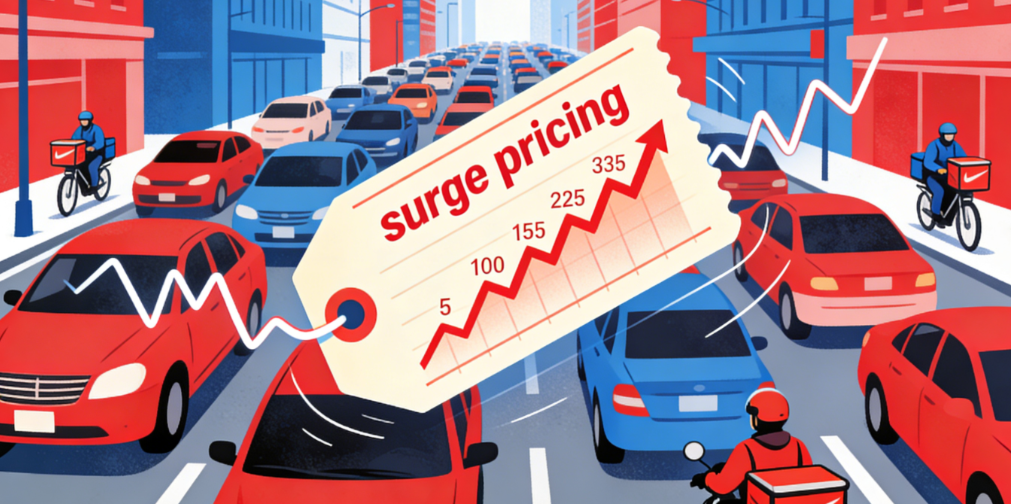
The Economics of Surge Pricing
At its core, surge pricing solves a fundamental business problem: fixed supply, variable demand. When 10,000 customers want a product and only 1,000 units exist, who gets them? First-come-first-served creates scalping and unfairness. Lotteries waste time. Queues frustrate everyone. Surge pricing lets willingness-to-pay determine allocation while capturing value that would otherwise flow to resellers.
The mathematical foundation is price elasticity: how demand changes with price. Airlines mastered this decades ago—same seat, same flight, radically different prices based on booking timing, demand forecasting, and competitive positioning. Modern e-commerce applies these principles to physical goods, digital services, and experiential offerings.
The Three Pillars of Surge Pricing Implementation
Pillar 1: Demand Forecasting
Accurate surge pricing requires predicting demand before it materializes. This combines:
- Historical patterns: Seasonality, day-of-week effects, promotional calendars
- Real-time signals: Search volume, cart additions, social media trends
- External factors: Weather, events, economic indicators, competitor pricing
The sophistication lies in feature engineering—identifying which signals actually predict demand. Machine learning models (gradient boosting, LSTM networks) process hundreds of features to generate demand curves for each SKU-location-time combination.
Pillar 2: Competitive Intelligence
Surge pricing doesn’t exist in isolation. Price too high, and customers defect to competitors. Price too low, and margin evaporates. Continuous competitor monitoring is essential.
This monitoring faces technical challenges. Major retailers implement sophisticated anti-bot measures: rate limiting, IP blocking, JavaScript challenges, and behavioral fingerprinting. Data center IPs are easily identified and blocked; genuine residential connections are required for sustained intelligence gathering.
IPFLY’s residential proxy network directly addresses this need. With over 90 million authentic residential IPs across 190+ countries, retailers can monitor competitor pricing as genuine local customers appear—bypassing detection systems that block commercial scraping. Static residential proxies maintain persistent identity for tracking specific competitor sites over time, while dynamic rotation enables high-frequency monitoring across extensive product catalogs without triggering rate limits.
The geographic precision is critical. A product priced at €49 in Germany might cost $59 in the US and ¥6,900 in Japan—reflecting market-specific demand, competitive dynamics, and purchasing power. IPFLY’s 190+ country coverage enables authentic local pricing intelligence, not approximations from distant vantage points.
Pillar 3: Price Optimization Algorithms
Given demand forecasts and competitive positions, algorithms determine optimal prices. Common approaches:
Rule-Based Systems: If inventory < 100 units and demand velocity > 50/day, increase price 10%. Simple, interpretable, but limited.
Reinforcement Learning: Algorithms learn optimal pricing through trial-and-error, balancing exploration (testing price points) with exploitation (charging known optimal prices). Requires substantial data and careful guardrails.
Constrained Optimization: Mathematical programming maximizing revenue subject to constraints (minimum margin, maximum price change frequency, competitive parity rules).
Implementation Architecture
Data Collection Layer
Python
# Competitive price monitoring with IPFLY residential proxiesimport requests
from ipfly import ResidentialProxyPool  # Conceptual integrationclassCompetitiveIntelligence:def__init__(self):
        self.proxy_pool = ResidentialProxyPool(
            locations=['US','DE','JP','GB'],# Key markets
            rotation='dynamic',# Rotate per request
            pool_size=1000)defget_competitor_price(self, sku, competitor, market):
        proxy = self.proxy_pool.get_proxy(market)

        headers ={'User-Agent': self.proxy_pool.get_ua(),# Authentic browser UA'Accept-Language': self.get_market_language(market),}

        response = requests.get(f'https://{competitor}.{market}/product/{sku}',
            proxies={'https': proxy},
            headers=headers,
            timeout=30)return self.extract_price(response.text)defmonitor_catalog(self, skus, competitors, markets):"""Parallel monitoring across products and markets"""from concurrent.futures import ThreadPoolExecutor

        with ThreadPoolExecutor(max_workers=50)as executor:
            futures =[
                executor.submit(self.get_competitor_price, sku, comp, mkt)for sku in skus
                for comp in competitors
                for mkt in markets
            ]
            results =[f.result()for f in futures]return self.aggregate_pricing_matrix(results)
IPFLY’s unlimited concurrency enables this parallel monitoring at scale—tracking thousands of SKUs across dozens of competitors without throttling. Millisecond response times ensure real-time price freshness, critical for flash sales and promotional periods. 99.9% uptime prevents data gaps during peak shopping events when intelligence matters most.
Optimization Engine
Python
# Simplified surge pricing optimizationclassSurgePricingEngine:defcalculate_optimal_price(self, product_id, market):# Gather inputs
        current_inventory = self.get_inventory(product_id)
        demand_forecast = self.forecast_demand(product_id, horizon='24h')
        competitor_prices = self.competitive_intelligence.get_prices(product_id, market)
        price_elasticity = self.get_elasticity(product_id)# From historical data# Optimization: Maximize revenue = price × expected_demand(price)# Subject to: price ≤ 1.2 × market_average (competitive constraint)#            price ≥ cost × 1.15 (margin constraint)#            |price_change| ≤ 0.30 (customer shock constraint)

        optimal = self.optimizer.solve(
            objective='revenue_maximization',
            variables={'price':(min_price, max_price)},
            constraints={'competitive_parity': price <=1.2* competitor_prices.mean(),'margin_protection': price >= cost *1.15,'change_limit':abs(price - current_price)<= current_price *0.30},
            parameters={'elasticity': price_elasticity,'inventory': current_inventory})return optimal['price']
Industry-Specific Applications
Airlines and Travel
The original surge pricing pioneers. Yield management systems optimize revenue per available seat mile (RASM) through:
- Overbooking algorithms: Statistical models predicting no-shows
- Fare bucketing: 15+ price points for identical seats
- Dynamic availability: Closing cheap fares as demand materializes
E-commerce Marketplaces
Amazon changes prices 2.5 million times daily. Third-party sellers use repricing tools that adjust every 10 minutes based on:
- Buy Box eligibility algorithms
- FBA (Fulfillment by Amazon) fee structures
- Competitor stock availability
- Review velocity and rating changes
Food Delivery and Quick Commerce
Uber Eats, DoorDash, and Instacart surge prices during:
- Peak meal times (lunch rush, dinner)
- Inclement weather
- Driver supply shortages
- Sporting events and holidays
The ethical dimension is prominent—surge pricing for essential goods during emergencies faces regulatory scrutiny and consumer backlash.
Energy and Utilities
Smart grid technology enables time-of-use pricing that:
- Reduces peak demand (preventing blackouts)
- Shifts consumption to off-peak hours
- Integrates renewable energy variability
The Ethics and Regulation Landscape
Surge pricing operates in contested territory. Critics argue:
- Exploitation: Charging more for necessities during emergencies
- Opacity: Consumers don’t understand why prices change
- Discrimination: Pricing based on willingness-to-pay can correlate with protected characteristics
- Instability: Constant price changes create consumer anxiety
Regulatory responses include:
- Price gouging laws: Prohibiting excessive increases during declared emergencies
- Transparency mandates: Requiring disclosure of pricing algorithms
- Rate regulation: Capping price increases (common in insurance and utilities)
- Antitrust scrutiny: Preventing algorithmic collusion between competitors
The Future: Personalized Surge Pricing
The frontier is individual pricing—surge pricing tailored to specific customers based on:
- Purchase history and loyalty
- Device type and browsing behavior
- Location and local competitive landscape
- Predicted willingness-to-pay from machine learning models
This raises profound questions about fairness and autonomy. When prices vary not just by time and place but by person, the traditional concept of “market price” dissolves into personalized transactions.
The Competitive Imperative
Surge pricing is no longer optional for competitive retailers. The infrastructure—data collection, optimization algorithms, execution systems—determines who captures value in dynamic markets. Those with superior intelligence (knowing competitor prices in real-time), superior prediction (accurate demand forecasting), and superior execution (rapid price implementation) win market share and margin.
The technical foundation matters: reliable data pipelines, global market visibility, and robust infrastructure that operates at the speed of commerce.

Implementing surge pricing at scale requires comprehensive competitive intelligence that operates globally without detection. When you’re monitoring competitor prices across 50 markets, tracking promotional timing, or analyzing regional demand patterns, IPFLY’s residential proxy network provides the infrastructure foundation you need. With over 90 million authentic residential IPs across 190+ countries, you can gather pricing data as genuine local customers appear—bypassing the anti-bot measures that block commercial scraping. Our static residential proxies maintain persistent identity for sustained competitor monitoring, while dynamic rotation enables high-frequency price tracking across extensive catalogs. Featuring millisecond response times for real-time price freshness, 99.9% uptime preventing data gaps during peak periods, unlimited concurrency for massive parallel monitoring, and 24/7 technical support for urgent pricing intelligence needs, IPFLY integrates directly into your dynamic pricing stack. Don’t let incomplete competitive data limit your revenue optimization—register with IPFLY today and build the global price intelligence that powers modern surge pricing.