

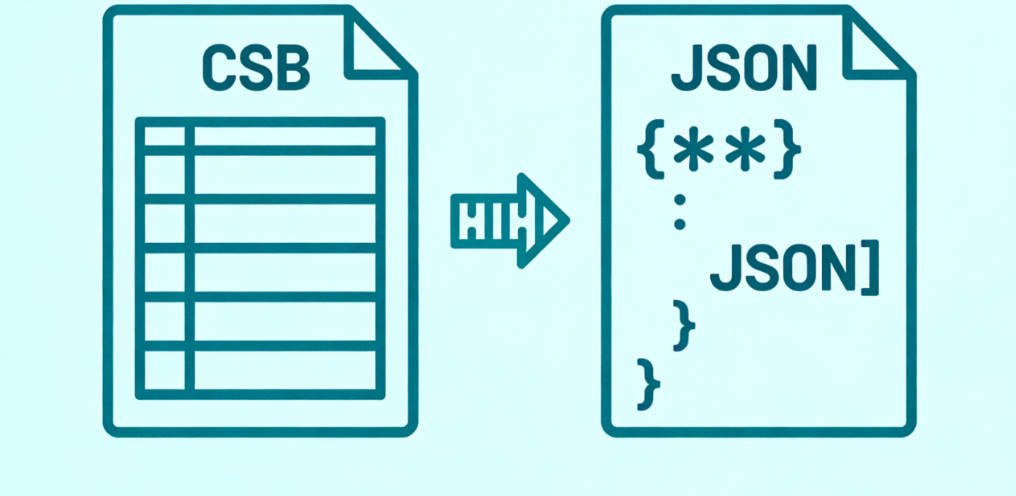
Despite the dominance of RESTful APIs and JSON as the modern data interchange standard, CSV refuses obsolescence. Enterprise Resource Planning systems, legacy databases, financial platforms, and governmental data portals continue exporting CSV as their primary or sole output format. The API economy must accommodate this reality, building ingestion pipelines that transform flat-file exports into structured JSON for consumption by microservices, mobile applications, and real-time analytics platforms.
This transformation layer serves critical architectural functions: data normalization, type enforcement, schema validation, and enrichment through external API calls. The CSV to JSON conversion becomes not an endpoint but a gateway—accepting messy, heterogeneous inputs and producing clean, typed, API-ready outputs.
Web Scraping and Data Collection Patterns
Many CSV sources don’t expose convenient download endpoints. They reside behind web interfaces requiring navigation, authentication, and extraction—price lists hidden in dealer portals, inventory reports requiring login sessions, or regulatory filings buried in search-result listings. Automated collection systems must simulate human browsing, maintain session state, and extract CSV attachments or table data for subsequent JSON transformation.
Python’s Requests library combined with BeautifulSoup or Scrapy frameworks enables sophisticated extraction:
Python
import requests
from bs4 import BeautifulSoup
import csv
import json
import io

defscrape_and_transform(session, url):# Navigate with session persistence
    response = session.get(url)
    soup = BeautifulSoup(response.content,'html.parser')# Extract CSV link or table data
    csv_link = soup.find('a', href=lambda x: x and x.endswith('.csv'))if csv_link:
        csv_data = session.get(csv_link['href']).content.decode('utf-8')
        reader = csv.DictReader(io.StringIO(csv_data))return[row for row in reader]# Fallback: extract HTML table
    table = soup.find('table',{'class':'data-table'})
    rows =[]
    headers =[th.text.strip()for th in table.find_all('th')]for tr in table.find_all('tr')[1:]:
        cells =[td.text.strip()for td in tr.find_all('td')]
        rows.append(dict(zip(headers, cells)))return rows
Such collection faces immediate operational challenges. Target sites implement rate limiting based on IP address, detecting and blocking repeated requests from single origins. Geographic restrictions prevent access to region-specific data—pricing variations, inventory availability, or regulatory requirements differ by market, but sites block non-local access.
Residential Proxy Integration for Reliable Collection
The solution lies in distributing collection across diverse, authentic network origins. Residential proxy networks route requests through IP addresses legitimately allocated by Internet Service Providers to residential customers. Unlike data center proxies with easily identifiable commercial IP ranges, residential proxies present the network signature of genuine consumer activity—complete with ISP-specific routing, geographic consistency, and residential network characteristics.
IPFLY’s residential proxy infrastructure exemplifies enterprise-grade collection support. With over 90 million authentic residential IPs spanning 190+ countries, IPFLY enables collection systems to present genuine local network presence regardless of actual physical location. For CSV data collection requiring persistent sessions—dealer portals, authenticated dashboards, or subscription-based reporting systems—IPFLY’s static residential proxies maintain consistent IP addresses across multiple requests, preserving session continuity and avoiding re-authentication triggers.
The integration follows standard Python Requests configuration:
Python
import requests

# IPFLY static residential proxy for session persistence
proxy ={'http':'http://username:password@ipfly_static_proxy:port','https':'http://username:password@ipfly_static_proxy:port'}

session = requests.Session()
session.proxies = proxy
session.headers.update({'User-Agent':'Mozilla/5.0 (Windows NT 10.0; Win64; x64) AppleWebKit/537.36'})# Authenticate and collect CSV data
login_response = session.post('https://portal.example.com/login', data=credentials)
csv_response = session.get('https://portal.example.com/export/data.csv')# Transform to JSON
reader = csv.DictReader(csv_response.text.splitlines())
json_data = json.dumps([row for row in reader], indent=2)
For high-velocity collection scenarios—monitoring thousands of SKUs across competitor sites, aggregating pricing intelligence, or tracking inventory fluctuations—IPFLY’s dynamic residential proxies automatically rotate IP addresses with each request or at configurable intervals. This distribution prevents pattern detection and rate limiting, enabling sustained collection throughput that would trigger blocks from static addresses.
IPFLY’s unlimited concurrency support proves essential for parallel collection architectures. Multiple threads or asynchronous workers can simultaneously request CSV data through independent proxy connections, dramatically reducing collection time for large datasets. The millisecond-level response times ensure that proxy routing overhead doesn’t bottleneck time-sensitive data acquisition, while 99.9% uptime guarantees prevent collection gaps that would corrupt time-series analyses.
Real-Time API Construction
Transformed JSON data often feeds directly into API endpoints. Modern frameworks like FastAPI enable rapid construction of high-performance APIs that consume CSV uploads and serve structured JSON:
Python
from fastapi import FastAPI, UploadFile, File, HTTPException
from fastapi.responses import JSONResponse
import pandas as pd
import io
import json

app = FastAPI(title="CSV to JSON Transformation Service")@app.post("/ingest/csv")asyncdefingest_csv(file: UploadFile = File(...),
                     enrich:bool=False,
                     validate_schema:bool=True):"""
    Accept CSV upload, transform to JSON with optional enrichment and validation
    """ifnotfile.filename.endswith('.csv'):raise HTTPException(400,"File must be CSV format")try:
        contents =awaitfile.read()
        df = pd.read_csv(io.StringIO(contents.decode('utf-8')))# Data quality transformations
        df = df.dropna(how='all')# Remove empty rows
        df = df.drop_duplicates()# Remove duplicates# Type conversionsfor col in df.columns:if'date'in col.lower():
                df[col]= pd.to_datetime(df[col], errors='coerce')elif'price'in col.lower()or'amount'in col.lower():
                df[col]= pd.to_numeric(df[col], errors='coerce')# Optional: Enrich with external API data collected via IPFLY proxiesif enrich and'product_id'in df.columns:
            enriched_data =[]for _, row in df.iterrows():
                product_data = row.to_dict()# Collect additional details through proxy-enabled session# (Implementation would use IPFLY proxy configuration)
                enriched_data.append(product_data)
            result = enriched_data
        else:
            result = df.to_dict(orient='records')return JSONResponse(content={"status":"success","count":len(result),"data": result,"schema":{k:str(v)for k, v in df.dtypes.items()}})except Exception as e:raise HTTPException(500,f"Transformation error: {str(e)}")@app.get("/health")asyncdefhealth_check():return{"status":"operational","version":"1.0.0"}
Such APIs require robust underlying infrastructure. When they consume data from external web sources—rather than direct client uploads—the collection layer benefits enormously from residential proxy networks that ensure reliable, geographically distributed access.
Webhook and Event-Driven Architectures
Modern integration patterns favor event-driven approaches over polling. CSV data becomes available through webhooks—HTTP callbacks triggered by source system events. The receiving service transforms CSV payloads to JSON and propagates them through message queues:
Python
from flask import Flask, request
import pandas as pd
import json
import requests

app = Flask(__name__)@app.route('/webhook/csv-ingest', methods=['POST'])defhandle_webhook():# Receive CSV URL from webhook payload
    payload = request.json
    csv_url = payload.get('data_url')# Download through IPFLY proxy for geographic compliance
    proxy ={'https':'http://username:password@ipfly_proxy:port'}
    response = requests.get(csv_url, proxies=proxy, timeout=30)# Transform CSV to JSON
    df = pd.read_csv(io.StringIO(response.text))
    json_payload = df.to_json(orient='records', date_format='iso')# Forward to downstream services
    requests.post('https://analytics-api.example.com/events',
                  json=json.loads(json_payload),
                  headers={'Authorization':'Bearer token'})return{'status':'processed','records':len(df)}
This architecture decouples collection from processing, enabling scalable, resilient data flows. The proxy layer ensures that collection respects geographic restrictions and avoids blocks that would interrupt event processing.
Schema Mapping and API Contract Design
Effective CSV to JSON transformation requires careful schema design. CSV column names often follow conventions incompatible with JSON API contracts—spaces in names, inconsistent casing, abbreviated codes requiring expansion. Transformation pipelines implement mapping layers:
Python
COLUMN_MAPPING ={'Product ID':'productId','Item Name':'name','Unit Price':'unitPrice','Qty Avail':'quantityAvailable','Last Updated':'lastUpdated'}

TYPE_MAPPING ={'productId':str,'unitPrice':float,'quantityAvailable':int,'lastUpdated':'datetime'}deftransform_with_schema(csv_path, mapping, types):
    df = pd.read_csv(csv_path)
    df.rename(columns=mapping, inplace=True)for col, dtype in types.items():if col in df.columns:if dtype =='datetime':
                df[col]= pd.to_datetime(df[col])else:
                df[col]= df[col].astype(dtype)return df.to_dict(orient='records')
Such transformations ensure that JSON outputs conform to expected API contracts, enabling seamless integration with downstream consumers.
Integration Architecture for the Real World
CSV to JSON transformation serves as critical infrastructure in API-centric architectures, bridging legacy systems and modern endpoints. The technical implementation extends far beyond format conversion to encompass data quality enforcement, schema evolution handling, and reliable collection from distributed web sources.
For organizations building data integration pipelines, investment in quality proxy infrastructure—specifically residential networks providing authentic geographic presence—ensures reliable access to CSV data sources regardless of location or anti-automation measures. This infrastructure layer, combined with robust transformation logic, enables the seamless data flows that modern API economies demand.

Your API integration pipelines are only as reliable as the data collection infrastructure supporting them. When CSV sources reside behind geographic restrictions or anti-automation measures, IPFLY’s residential proxy network provides the authentic network presence that ensures continuous data flow. With over 90 million ISP-allocated residential IPs across 190+ countries, IPFLY enables your collection systems to access region-specific CSV exports, dealer portals, and reporting dashboards that would otherwise block data center connections. Our static residential proxies maintain persistent sessions for authenticated data sources, while dynamic rotation options distribute high-frequency collection across diverse network origins—preventing rate limits that would corrupt your JSON transformation pipelines. Featuring millisecond response times for efficient large-file downloads, 99.9% uptime preventing data gaps, unlimited concurrency for parallel collection, and dedicated 24/7 technical support, IPFLY integrates seamlessly into your API architecture. Don’t let collection failures break your data pipeline—register with IPFLY today and ensure your CSV to JSON transformations have the reliable source data they need to power your APIs.