In the Python ecosystem, HTTP client libraries are the backbone of nearly every web-connected application—from API integrations and web scraping to microservice communication and automated testing. For over a decade, Requests dominated this space with its simple, intuitive API, but it has fallen behind modern web requirements: no native async support, no HTTP/2 compatibility, and limited built-in features for production use. HTTPX has emerged as the definitive successor, combining Requests’ beloved syntax with cutting-edge capabilities that meet the demands of 2026’s high-performance, concurrent web applications.
While HTTPX solves nearly all limitations of traditional HTTP clients, it cannot overcome the universal network challenges that plague all web requests: IP bans, geographic restrictions, connection timeouts, and anti-bot detection. Even perfectly written HTTPX code will fail in production if it runs on an unstable, unprotected network. For enterprises and developers building reliable, scalable systems with HTTPX, a premium proxy infrastructure is the missing piece that turns working prototypes into production-ready solutions.
IPFLY’s enterprise-grade proxy ecosystem integrates seamlessly with HTTPX, adding IP rotation, global geographic access, connection stability, and anti-detection capabilities. This article breaks down what HTTPX is, its core advantages over Requests, high-impact use cases, common production challenges, and how IPFLY proxies supercharge HTTPX workflows for maximum reliability and scalability.
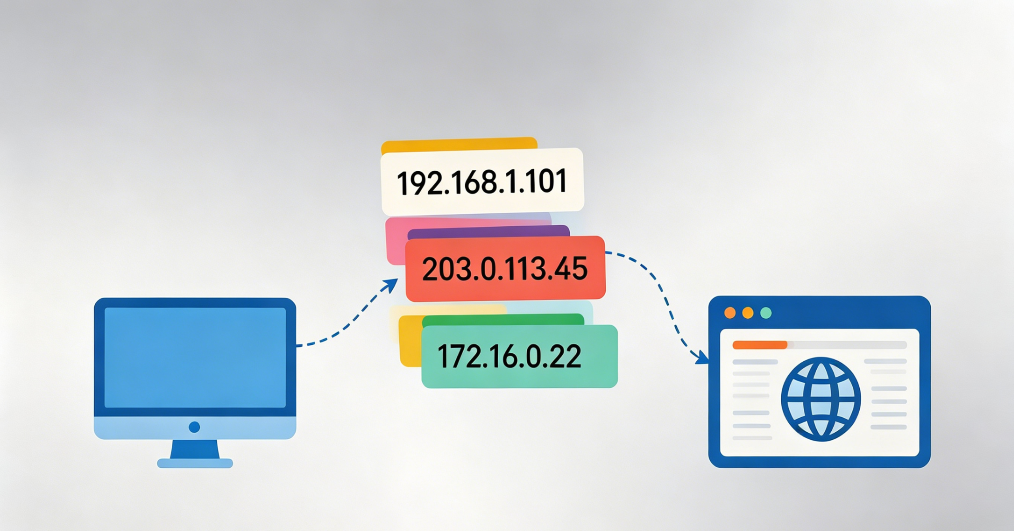
What Is HTTPX? Core Definition & Key Features
HTTPX is a fully featured, next-generation HTTP client for Python 3.8+, designed to be a drop-in replacement for Requests while adding support for modern web standards and concurrent programming. It maintains nearly 100% API compatibility with Requests, making migration trivial, while introducing transformative capabilities that enable more efficient, powerful HTTP workflows.
Core Features That Make HTTPX Stand Out
HTTPX includes all the functionality developers expect from a modern HTTP client, plus industry-leading innovations:
- Dual Sync/Async API: Write synchronous code for simplicity or switch to async/await for high-concurrency workloads with zero code changes to your request logic.
- Native HTTP/2 Support: Automatically negotiate HTTP/2 connections for faster, more efficient requests with multiplexing, header compression, and reduced latency.
- Full Type Hinting: Complete type annotations enable better IDE support, static type checking, and fewer runtime errors in production code.
- Built-in Authentication & Security: Native support for all common authentication methods (Basic, Digest, OAuth, Bearer tokens) plus strict TLS verification and certificate management.
- Advanced Proxy Support: Built-in support for HTTP, HTTPS, and SOCKS5 proxies with authentication, making integration with proxy services seamless.
- Flexible Timeout & Retry Logic: Granular control over connection, read, and write timeouts, plus built-in support for configurable retry policies.
- WebSocket Support: Experimental but functional WebSocket client for real-time communication workflows.
These features make HTTPX the only Python HTTP client that can handle everything from simple one-off requests to high-scale, production-grade distributed systems.
HTTPX vs Requests: Why HTTPX Is the Clear Choice for 2026
While Requests remains popular for legacy codebases, HTTPX has become the standard for new Python projects. The table below highlights the key differences that make HTTPX superior for modern development:
| Feature | Requests | HTTPX |
| Async Support | No (requires third-party libraries) | Native dual sync/async API |
| HTTP/2 Support | No | Native automatic negotiation |
| Type Hinting | Partial | Full complete type annotations |
| Proxy Support | Basic HTTP/HTTPS | Full HTTP/HTTPS/SOCKS5 with auth |
| Timeout Control | Global only | Granular per-request timeouts |
| Connection Pooling | Basic | Advanced connection pooling with HTTP/2 multiplexing |
For any new project, HTTPX is the obvious choice. Even for existing Requests codebases, migration is straightforward and delivers immediate performance and reliability benefits.
High-Impact Use Cases for HTTPX
HTTPX’s versatility makes it suitable for every Python HTTP workflow, from simple scripts to enterprise-scale systems. Below are the most common and impactful use cases where HTTPX excels.
Asynchronous API Integrations
Modern SaaS APIs often require high-concurrency requests to fetch large datasets or trigger multiple actions simultaneously. HTTPX’s async API lets developers make hundreds of parallel requests without the overhead of threads or processes, drastically reducing execution time. For example, a marketing automation tool can fetch data from 100 different API endpoints in seconds instead of minutes using HTTPX async.
Large-Scale Web Scraping & Data Extraction
Web scraping requires fast, reliable HTTP requests that can bypass anti-bot systems and handle high volumes of traffic. HTTPX’s HTTP/2 support reduces request latency, while its async API enables efficient concurrent scraping. Combined with proper proxy configuration, HTTPX is the foundation of modern Python scraping pipelines.
Microservice Communication
In distributed systems built with FastAPI, Django REST Framework, or other Python web frameworks, HTTPX is the standard for internal service-to-service communication. Its connection pooling reduces overhead, while type hints ensure type safety across service boundaries. Async HTTPX is particularly well-suited for event-driven microservices architectures.
Automated Testing & CI/CD Pipelines
HTTPX is widely used for testing web applications and APIs. Its simple API makes writing integration tests straightforward, while its async support enables testing of real-time applications. HTTPX integrates seamlessly with pytest and other testing frameworks, making it a staple of modern Python CI/CD pipelines.
Real-Time Data Processing
For applications that require real-time data—such as financial market monitoring, social media analytics, or IoT device management—HTTPX’s async API and WebSocket support enable low-latency data ingestion and processing.
Common Production Challenges with HTTPX (And How to Solve Them)
While HTTPX solves nearly all client-side limitations of traditional HTTP clients, it cannot overcome network-level challenges that affect all web requests. These are the most common issues that cause HTTPX code to fail in production:
IP Bans & Anti-Bot Detection
Nearly all modern websites and APIs use anti-bot systems to block automated traffic. Even with perfect request headers and behavior, repeated requests from a single IP address will eventually get banned. HTTPX has no built-in mechanism to rotate IP addresses or avoid detection.
Geographic Restrictions
Many APIs and websites only allow requests from specific countries or regions. HTTPX code running from a server in a restricted region will receive 403 Forbidden errors, even if the request is perfectly valid.
Connection Timeouts & Instability
Unreliable network connections, overloaded servers, and long-distance routing cause frequent timeouts and failed requests. While HTTPX supports retries, persistent network instability will still break workflows and reduce reliability.
Clear Step-by-Step Proxy IP Tutorials
Master proxy setup, integration and performance optimization quickly with IPFLY guides
Concurrency Limits
Single IP addresses have strict rate limits on most APIs and websites. Even with async HTTPX, running high-concurrency requests from a single IP will quickly hit these limits, resulting in throttling or temporary bans.
TLS Fingerprinting
Advanced anti-bot systems use TLS fingerprinting to detect requests from automated HTTP clients. Even if your headers and cookies are perfect, HTTPX’s default TLS signature may be flagged as suspicious.
These network-level challenges require a network-level solution: a premium enterprise proxy service that integrates seamlessly with HTTPX.
IPFLY Proxies: Supercharge HTTPX Workflows for Production
IPFLY’s enterprise-grade proxy ecosystem integrates natively with HTTPX, adding IP rotation, global geographic access, connection stability, and anti-detection capabilities. With just a few lines of code, you can transform your HTTPX code from a fragile prototype into a production-ready system that runs reliably at scale.
How to Integrate IPFLY Proxies with HTTPX
Integrating IPFLY proxies with HTTPX takes just one additional line of configuration. Below are examples for both synchronous and asynchronous HTTPX usage:
Synchronous HTTPX with IPFLY Proxy
python
import httpx

proxies = {"http://": "http://your-ipfly-username:your-ipfly-password@gate.ipfly.com:10000","https://": "http://your-ipfly-username:your-ipfly-password@gate.ipfly.com:10000"}with httpx.Client(proxies=proxies, timeout=10) as client:
    response = client.get("https://api.example.com/data")print(response.json())
Asynchronous HTTPX with IPFLY Proxy
python
import httpx
import asyncio

proxies = {"http://": "http://your-ipfly-username:your-ipfly-password@gate.ipfly.com:10000","https://": "http://your-ipfly-username:your-ipfly-password@gate.ipfly.com:10000"}async def main():async with httpx.AsyncClient(proxies=proxies, timeout=10) as client:
        response = await client.get("https://api.example.com/data")print(response.json())

asyncio.run(main())
This simple integration adds all the capabilities of IPFLY’s proxy network to your HTTPX workflows, eliminating every common production challenge.
IPFLY Proxy Types Optimized for HTTPX Use Cases
IPFLY offers three specialized proxy types, each tailored to different HTTPX workflows:
Static Residential Proxies for Long-Term Stable API Access
IPFLY Static Residential Proxies use permanent, ISP-allocated real residential IPs that replicate genuine household network environments. Each IP is exclusively assigned to a single user, includes unlimited traffic, and supports full HTTP/HTTPS/SOCKS5 protocols.
Best for: HTTPX code for long-term API integrations, authenticated requests, and account-based access. The fixed residential IP maintains consistent session state, avoiding re-authentication loops and IP bans. It is ideal for microservice communication and enterprise API integrations where a stable IP identity is required.
Dynamic Residential Proxies for High-Volume Web Scraping
IPFLY Dynamic Residential Proxies draw from a global pool of over 90 million real end-user IPs, supporting per-request or timed IP rotation with millisecond-level response times and unlimited ultra-high concurrency.
Best for: HTTPX scraping pipelines and batch API requests. Automatic IP rotation avoids rate limits and IP bans, while real residential IPs bypass anti-bot detection. Unlimited concurrency supports thousands of simultaneous async requests, enabling large-scale data extraction without performance degradation.
Datacenter Proxies for High-Speed Internal Operations
IPFLY Datacenter Proxies provide exclusive, high-purity static IPs with industry-leading speed and ultra-low latency. They include unlimited traffic, global location selection, and full protocol compatibility.
Best for: HTTPX code for internal testing, CI/CD pipelines, and high-speed non-sensitive requests. The low-latency connection ensures fast test execution, while exclusive IPs avoid shared abuse risks.
Core Technical Advantages of IPFLY for HTTPX Users
- Rigorous IP Filtering: All IPs undergo 7 layers of screening to ensure purity and clean reputation, eliminating pre-blacklisted IPs that cause immediate request failures.
- Global Coverage: 190+ countries and regions with city-level targeting, letting you route requests from any geographic location to bypass regional restrictions.
- Unlimited Concurrency: Self-built high-performance servers support thousands of simultaneous async requests without throttling or bottlenecks.
- 99.9% Uptime: Stable connections eliminate timeouts and failed requests, ensuring your HTTPX code runs 24/7 without interruption.
- Full Protocol Support: Native HTTP/HTTPS/SOCKS5 compatibility works seamlessly with HTTPX’s built-in proxy system.
- Advanced Anti-Detection: Residential IPs with browser-like TLS fingerprints bypass modern anti-bot systems that flag automated clients.
Best Practices for Production-Grade HTTPX Workflows
Combine IPFLY proxies with these best practices to build reliable, scalable HTTPX systems:
- Use Async for High-Concurrency Workloads: Leverage HTTPX’s async API to maximize throughput for scraping and batch API requests.
- Implement Exponential Backoff Retries: Add retry logic with exponential backoff to handle temporary network glitches and rate limits.
- Rotate User Agents & Headers: Vary the User-Agent and other request headers to mimic different browsers and avoid fingerprinting.
- Control Request Frequency: Respect rate limits even with rotating proxies to maintain good IP reputation.
- Use Connection Pooling: Reuse HTTPX Client/AsyncClient instances to take advantage of connection pooling and reduce overhead.
- Monitor Request Performance: Track response times, error rates, and IP reputation to identify and resolve issues before they impact production.
HTTPX + IPFLY = Production-Ready Python HTTP Workflows
HTTPX has replaced Requests as the standard Python HTTP client for modern development, offering native async support, HTTP/2 compatibility, full type hinting, and a familiar, intuitive API. It handles every client-side requirement for building powerful, efficient web applications, but it cannot overcome the network-level challenges that plague all production systems.
IP bans, geographic restrictions, connection instability, and anti-bot detection are universal problems that require a network-level solution. IPFLY’s enterprise-grade proxy ecosystem integrates seamlessly with HTTPX, adding IP rotation, global geographic access, stable connections, and anti-detection capabilities. Whether you are building API integrations, web scraping pipelines, or microservice communication systems, IPFLY ensures your HTTPX code runs reliably at scale.
For Python developers building production-grade web applications in 2026, the combination of HTTPX and IPFLY is the gold standard for fast, reliable, and scalable HTTP workflows.
Supercharge your HTTPX workflows with stable, high-performance proxies by registering an IPFLY account today. Choose Static Residential Proxies for long-term API access, Dynamic Residential Proxies for high-volume scraping, or Datacenter Proxies for high-speed testing—all backed by 99.9% uptime, global coverage, and unlimited concurrency.