The Fundamental Architecture of Residential Proxy Networks
A residential proxy represents a sophisticated intermediary solution that routes internet traffic through IP addresses legitimately assigned by Internet Service Providers (ISPs) to actual residential locations. Unlike their datacenter counterparts, which originate from server farms and cloud hosting environments, residential proxies leverage connections tied to physical homes and real user devices. This fundamental distinction creates a layer of authenticity that proves invaluable for businesses operating in environments where detection and blocking mechanisms have grown increasingly sophisticated.
The technical foundation of residential proxy infrastructure rests upon partnerships with ISPs across multiple jurisdictions. When a request passes through a residential proxy, it carries the digital fingerprint of a genuine home internet connection—complete with the geographic specificity, ISP metadata, and usage patterns associated with residential broadband. This authenticity factor becomes particularly critical when accessing platforms that employ advanced fingerprinting technologies to distinguish between legitimate users and automated systems.
Static vs. Dynamic: Understanding Residential Proxy Variants
Residential proxy solutions typically manifest in two primary configurations, each engineered to address distinct operational requirements. Static residential proxies maintain persistent IP assignments, providing users with unchanging addresses that remain active over extended periods. This configuration proves essential for scenarios requiring consistent identity preservation—such as managing cross-border e-commerce storefronts, maintaining long-term social media presences, or conducting sustained market research initiatives where frequent IP changes might trigger security alerts.
Dynamic residential proxies, conversely, implement rotation mechanisms that periodically or per-request alter the originating IP address. This approach draws from extensive pools of available residential addresses, enabling users to distribute requests across diverse geographic locations and network segments. The rotation capability becomes particularly advantageous for high-volume data collection operations, where repeated queries from identical sources might otherwise result in rate limiting or access restrictions.
Operational Mechanisms: How Traffic Flows Through Residential Infrastructure
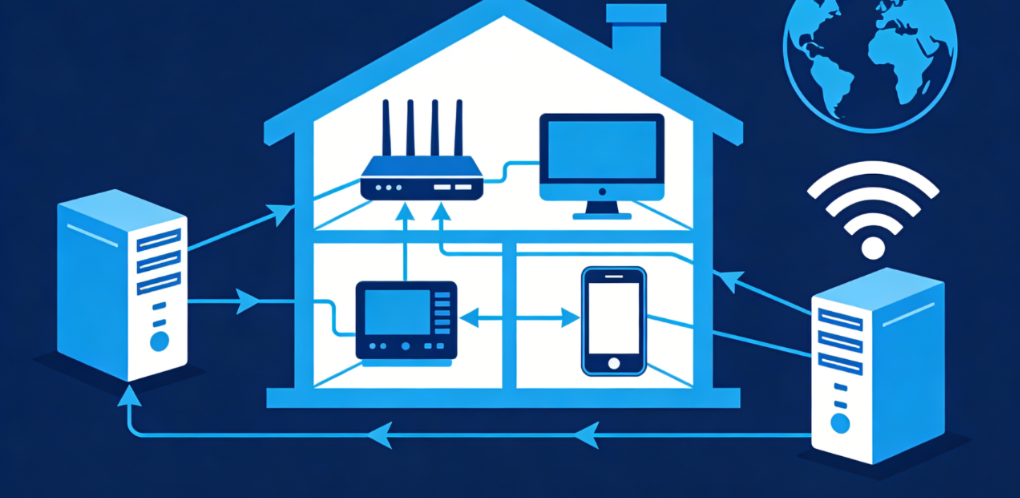
When a user initiates a connection through a residential proxy network, the request follows a carefully orchestrated path designed to maximize both anonymity and reliability. The client device establishes an encrypted tunnel to the proxy infrastructure, which then selects an appropriate exit node based on specified parameters—potentially including target geography, ISP preference, or connection stability metrics.
The selected exit node, representing an actual residential internet connection, forwards the request to the intended destination. From the target server’s perspective, the incoming traffic appears indistinguishable from legitimate residential browsing activity. Response data travels the reverse path, maintaining the same level of encryption and intermediary protection throughout the transaction.
This architecture necessitates substantial infrastructure investment, including high-performance server deployments, sophisticated load balancing systems, and continuous quality assurance mechanisms to ensure optimal path selection and minimal latency.
Business Applications: Where Residential Proxies Deliver Measurable Value
Data Collection and Web Scraping Operations
Organizations engaged in competitive intelligence gathering, pricing monitoring, or content aggregation frequently encounter sophisticated anti-automation measures. Residential proxies circumvent these barriers by presenting requests as originating from genuine user connections rather than data center environments. The ability to rotate through diverse IP addresses further reduces detection probability, enabling sustained data collection operations that would otherwise prove impossible.
Market Research and Ad Verification
Geographic accuracy represents a critical requirement for advertising verification and localized market research. Residential proxies provide authentic location-specific perspectives, allowing researchers to view content, advertisements, and pricing exactly as displayed to actual residents of target markets. This capability eliminates the distortion introduced by VPN exit nodes or data center locations that platforms often recognize and treat differently.
Cross-Border E-Commerce and Digital Asset Management
Sellers operating across multiple regional marketplaces require stable, location-consistent identities to maintain account health and avoid triggering platform security mechanisms. Static residential proxies deliver the persistent IP association necessary for building and maintaining trusted seller profiles, while dynamic options support research and competitive analysis across diverse markets.
Quality Indicators: Evaluating Residential Proxy Infrastructure
Discerning between high-quality residential proxy providers and inferior alternatives requires examination of several critical infrastructure characteristics. The scale of available IP resources directly impacts operational flexibility—providers maintaining extensive pools across numerous countries and ISPs offer superior geographic coverage and redundancy. IP purity, determined through rigorous filtering and validation processes, ensures that addresses haven’t been previously flagged or abused, preserving their effectiveness for sensitive operations.
Connection stability metrics, including uptime percentages and latency consistency, indicate infrastructure maturity and maintenance standards. Encryption implementation and data handling protocols further distinguish enterprise-grade providers from basic offerings, particularly for organizations handling sensitive information or operating in regulated industries.
Implementation Considerations for Enterprise Deployment
Successful residential proxy integration requires careful attention to protocol compatibility, authentication mechanisms, and traffic routing logic. Modern proxy infrastructure typically supports multiple connection protocols—including HTTP, HTTPS, and SOCKS5—enabling integration with diverse software environments and use cases. Authentication options range from traditional IP whitelisting to credential-based systems, accommodating varying security requirements and operational constraints.
Traffic management capabilities, including session persistence controls, geographic targeting precision, and rotation frequency configuration, determine how effectively the proxy infrastructure aligns with specific business objectives. Organizations should evaluate these parameters against their particular requirements, recognizing that different applications may necessitate distinct proxy configurations.
Summary: The Strategic Value of Authentic Residential Infrastructure
Residential proxies represent far more than simple anonymity tools—they constitute essential infrastructure for modern digital operations requiring authentic geographic presence, sustainable data access, and reliable identity persistence. The technical distinction between residential and data center origins creates tangible business advantages in environments where platform trust and detection avoidance determine operational success.
Organizations evaluating residential proxy solutions should prioritize providers demonstrating substantial IP resource scale, rigorous quality assurance processes, and infrastructure investments capable of supporting enterprise-grade reliability requirements. The sophistication of modern platform security mechanisms demands equally sophisticated proxy infrastructure—making the selection of proven, high-capacity providers a critical strategic decision.

Ready to implement residential proxy infrastructure that delivers authentic ISP-allocated IPs across 190+ countries? Explore IPFLY’s comprehensive proxy solutions, featuring over 90 million high-quality residential addresses with both static and dynamic configurations, 99.9% uptime guarantees, and 24/7 technical support. Register today to configure your proxy parameters and begin operations with genuine residential network authenticity.