Every time you connect to the internet, your device sends a request to a target server, specifying what it needs for online communication. Among the details included in that request is your IP address—a unique string of characters tied to your approximate location and your Internet Service Provider (ISP). This IP address is critical for tracking you online, filtering content by location, and restricting activities such as automation and web scraping.
But what if you could hide that IP address? What if you could make it appear as though you were browsing from a different country, or shield your identity from the websites you visit? This is exactly what a proxy server does.
This guide explains everything you need to know about proxy servers in 2026—what they are, how they work, the different types available, their benefits and limitations, and how to choose the right one for your needs.
What Is a Proxy Server?
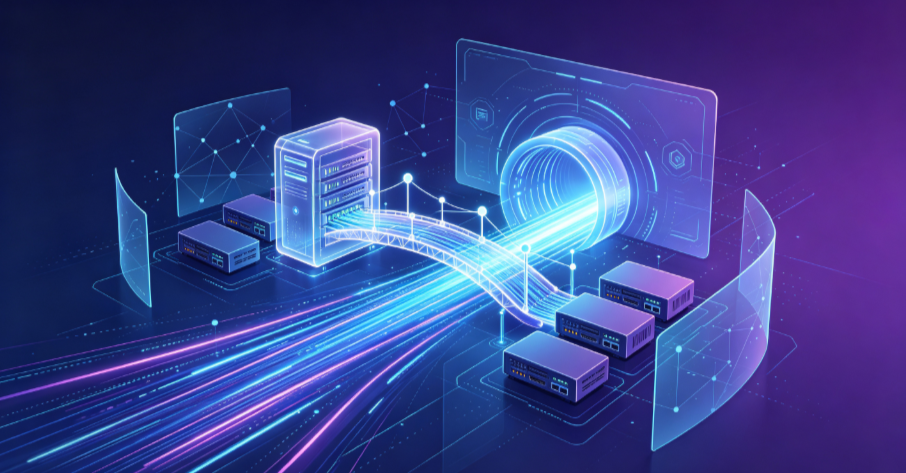
A proxy server is an intermediary device that stands between you and the internet, using its own IP address to send requests on behalf of the user. Think of it as renting someone else’s device or IP address to keep your original IP and personally identifiable information hidden.
When you connect to the internet through a proxy server, the server acts as a middleman between you and the websites or online services you access. Instead of accessing those sites directly, your requests are sent to the proxy, which then forwards them to the sites on your behalf.
This indirect connection means that your IP address and associated data—such as your location and your ISP’s name—aren’t visible to the websites you visit. What the destination servers see is your proxy’s IP address and location.
The Core Concept: A Middleman for Your Internet Traffic
Think of a proxy server as a forwarding address. When you send a letter through a forwarding address, the recipient sees the forwarding address, not your home address. Similarly, when you browse the internet through a proxy, websites see the proxy’s IP address, not yours.
This simple concept unlocks a wide range of capabilities:
- Privacy – Your real IP address remains hidden from websites
- Geo-flexibility – You can appear to be in any country where the proxy is located
- Access – You can bypass restrictions that are based on your real location
- Scalability – You can send many requests without revealing a single origin

How Does a Proxy Server Work?
To understand how a proxy server works, it helps to understand the basic flow of internet communication.
The Standard Flow (Without a Proxy)
- Your device sends a request to a website (e.g., example.com)
- The request includes your IP address
- The website’s server receives the request and sends back the content
- Your device receives and displays the content
In this flow, your IP address is visible to the website. The website knows your approximate location, your ISP, and can track your activity.
The Proxy Flow (With a Proxy)
- Your device sends a request to the proxy server
- The proxy server forwards the request to the website using its own IP address
- The website’s server receives the request and sends back the content to the proxy
- The proxy forwards the content back to your device
In this flow, the website sees only the proxy’s IP address. Your real IP address remains hidden.
Key Characteristics of Proxy Operation
IP Masking – The destination server sees the proxy’s IP address and location, not yours. This is the primary function of a proxy.
Anonymity – Most proxies are anonymous, meaning they do not reveal to the destination server that they are acting as a proxy. Some proxies are transparent and do reveal this information, but anonymous proxies are far more common.
Dedicated vs. Shared – Proxy servers can provide access to a single user, making them private or dedicated proxies. These are the most reliable and secure proxies because they are not shared among multiple users simultaneously. Shared proxies, by contrast, are used by multiple users and carry the risk of inheriting poor reputations from other users.
Types of Proxy Servers
Proxy servers can be categorized in several ways. The most fundamental distinction is based on the direction of traffic flow: forward proxies and reverse proxies.
Forward Proxies
When you hear someone talk about a proxy, it’s most likely a forward proxy. It sits between a client (your device) and the internet. When a client requests a resource, the request is first sent to the forward proxy server. The proxy then retrieves the requested resource on behalf of the client and returns it.
In a nutshell, it functions as a middleman for your online traffic, handling your web requests and receiving the responses on your behalf. People use this proxy type for anonymous browsing, bypassing geo-restrictions, web scraping, and various other tasks.
The two main types of forward proxies are residential and datacenter.
Residential Proxies
Residential proxies are obtained from real residential devices (mostly laptops or computers) used by household users. Their IP addresses are registered with residential ISPs, so your traffic appears to come from those IPs instead of yours.
Key characteristics:
- Highest trust scores – Because they come from real households, residential proxies have the highest IP trust scores and are regarded as the most private proxies
- ISP-registered – They appear as genuine consumer connections, not datacenter infrastructure
- Harder to detect – Websites are less likely to flag residential IPs as suspicious
Best for: Activities where appearing as a genuine user is critical—managing multiple social media accounts, accessing geo-restricted content, and web scraping on sensitive targets.
Datacenter Proxies
Datacenter proxies obtain their IP addresses from commercial data centers that run virtual machines. As such, they are not linked to real users and ISPs, and they have a lower IP legitimacy than residential proxies.
Key characteristics:
- Faster speeds – Datacenter proxies are typically faster than residential proxies
- Lower cost – They are a cheaper option for traffic-intensive tasks
- Easier to detect – Websites can identify datacenter IPs through ASN lookups
Best for: High-volume operations where speed and cost are more important than appearing as a residential user—bulk data collection, SEO monitoring, and price aggregation.
Reverse Proxies
Reverse proxies also provide privacy and anonymity for online tasks. But unlike forward proxies, they sit in front of the web server instead of the client, hiding the web server’s identity.
To put it simply, they do the opposite of what forward proxy servers do. By acting as a filter for incoming requests to a website, they help with caching, privacy, load balancing, security, and encryption.
Key characteristics:
- Server-side – Reverse proxies protect the server, not the client
- Load balancing – They can distribute traffic across multiple servers
- Caching – They can cache content to improve performance
Best for: Website owners who want to protect their origin servers, improve performance, and manage traffic.
The Benefits of Using a Proxy Server
Whether you’re a business or personal internet user, masking your IP address with a proxy server will help you unlock unlimited internet access and make your experience more anonymous and secure.
1. Improving Your Privacy
Nowadays, every company is trying to track our online activity and get user data. This is why maintaining online privacy is only possible with tools like proxies. By hiding your IP address and location, proxies make it harder to track your online activity.
Surfing the net anonymously is particularly valuable for businesses, journalists, activists, and researchers. It’s the easiest way to increase your freedom of expression, get the information you need, and perform a wide range of online business tasks efficiently and safely.
2. Accessing Geo-Restricted Content
Geo-blocking is the practice of limiting your access to digital content based on geographic location. Streaming services, such as HBO or Netflix, and almost any other major website practice geo-blocking to limit user access to content. It’s also common for governments to block or restrict access to social media, search engines, and other online content.
No matter who’s behind the geo-blocking, proxies can help. Geo-restrictions rely on users’ IP addresses, and proxies can change your IP to anywhere in the world. If you live in the US and use a German proxy, you can access German content as if you were in Germany.
3. Improving Your Online Security
Any individual or organization can become a victim of a cyberattack. From financial losses to reputation damage, the consequences can be severe. Reliable proxies are a part of the security strategy of many businesses, providing an additional layer of security for all devices on a corporate network.
Moreover, they can be used as firewalls or web filters to protect against malware and other online threats. Proxies are a simple way to protect yourself and your company from data leaks and identity theft.
4. Web Scraping
Instead of manually gathering data from websites, you can use automation tools called web scrapers to speed up and simplify the process. Businesses use web scraping for market research, price aggregation, lead generation, competitor analysis, and many other use cases.
Web scraping can be a sensitive topic, as website owners want to avoid their servers being overloaded by automated requests. For that reason, they may limit the number of requests from one IP address. With proxies, you can avoid IP-based restrictions and help your web scraper send requests from various locations. The requests appear to be coming from different visitors in different locations. As a result, it becomes impossible for the target web servers to detect and block your scraper.
Clear Step-by-Step Proxy IP Tutorials
Master proxy setup, integration and performance optimization quickly with IPFLY guides
5. SEO Monitoring and Research
Search Engine Optimization (SEO) helps businesses rank higher in search engines, which, in turn, helps them to get organic traffic, more customers, and higher revenue. SEO practices involve regularly checking search engine result pages and monitoring the competition. Proxies make this process easier by allowing companies to replicate searches across numerous IPs from various locations. As a result, they gain valuable SEO performance insights, enabling them to adjust their SEO strategy and improve their search engine rankings.
6. Providing Faster Speed and Saving Bandwidth
Every online user wants a fast internet connection, especially when downloading large files from remote server locations. Whether for gaming or scraping data, proxies can improve content delivery speed and reduce bandwidth usage. A proxy server can be located closer to the target server, or it can bypass blocks that limit performance.
Reverse caching proxies can also make content instantly available to all users on the network. Aside from saving bandwidth, proxies reduce operational costs by improving page loading speed.
7. Blocking Access to Unwanted Websites
If you’re a business owner and want to prevent employees from accessing distracting websites during office hours, proxies can help. They let you block entire websites, specific URLs, or apps like Facebook, TikTok, and YouTube, so no one wastes time at work. This feature can also help you keep users away from illegal or unsafe websites, protecting your corporate data.
Proxy Server: What’s the Difference?
Proxies are often confused, as both change your IP address. However, they work differently and serve different purposes.
Key differences:
| Feature | Proxy | Other proxy |
| Encryption | Does not encrypt traffic by default | Encrypts all traffic |
| Speed | Faster, more lightweight | Slower due to encryption overhead |
| Coverage | Application-specific (e.g., browser only) | System-wide (all traffic) |
| Setup | Simple, can be integrated into software | Requires software installation |
| Best for | Specific tasks like web scraping, geo-unblocking | Everyday privacy and security |
The main difference is that proxies do not encrypt your traffic by default, while other proxy do.Other proxy increase security when using public Wi-Fi, but they require additional software, which might make your device slower. Proxies are a more lightweight solution that can be integrated into software applications, from browsers to web scrapers.Other proxy are a more one-size-fits-all solution common for everyday use.
The Potential Dangers of Using a Proxy Server
Like anything else operating over the internet, proxies can also pose certain cyber threats, but they mainly apply to free and shared proxies. Shared proxies obtained from unreliable providers are not the best choice for anyone who cares about online security, privacy, and speed.
Common dangers:
Lack of Encryption – Unlike proxies may not support encryption, making your connection unsafe. They may also run on open ports, which helps cybercriminals gain access to sensitive data.
Inconsistent Speed and Frequent Crashes – Free proxies often suffer from slow speeds and frequent downtime.
Data Logging – Free proxy operators may log and sell your browsing activity.
Malware Risks – Some free proxies are operated by malicious actors who inject malware or steal credentials.
If you rely on proxy servers to keep you protected, you should be able to rely on them at all times. Therefore, it’s critical that you use premium private proxies from a reliable provider. Only that way can you take full advantage of everything they have to offer.
How to Choose a Proxy Provider
When selecting a proxy provider, consider the following factors:
Proxy Types Offered – Does the provider offer the types you need (residential, datacenter, static, dynamic)?
Geographic Coverage – Does the provider offer proxies in the countries you need?
Authentication Methods – Does the provider support the protocols you require (HTTP, HTTPS, SOCKS5)?
Reliability and Uptime – Does the provider guarantee high availability?
Customer Support – Is support responsive and helpful?
Reviews and Reputation – What do other users say about the provider?
How IPFLY Powers Reliable Proxy Solutions
IPFLY offers a comprehensive range of proxy solutions designed for users who need reliable, secure, and high-performance access to the internet. Whether you are a business conducting market research, a developer building automation workflows, or an individual seeking privacy, IPFLY provides the infrastructure you need.
IPFLY Static Residential Proxies
IPFLY’s static residential proxies are dedicated, ISP-registered IP addresses that remain fixed over time. Each IP is used exclusively by a single user, ensuring a clean reputation and preventing association with other users’ activity.
Key advantages:
- ISP-registered authenticity – Each IP is formally assigned by an Internet Service Provider and appears as a residential broadband connection
- Dedicated, non-shared IPs – Each IP is used exclusively by a single user, ensuring a clean reputation
- Stable and consistent – The IP remains unchanged, providing consistent identity for ongoing operations
- Geographic targeting – Choose IPs from specific countries to match your needs
- Full protocol support – HTTP, HTTPS, and SOCKS5 compatibility
- High performance – Fast, reliable connections with minimal latency
Static residential proxies are ideal for users who need consistent, long-term access for account management, social media operations, and sensitive tasks where IP stability matters.
👉 Explore IPFLY Static Residential Proxies
IPFLY Dynamic Residential Proxies
IPFLY’s dynamic residential proxies offer real residential IPs with automatic rotation capabilities from a pool covering 190+ countries.
Key advantages:
- Real residential IPs – From a pool of over 90 million residential addresses across 190+ countries and regions
- Automatic rotation – Distribute access across diverse IPs to avoid pattern detection
- Geographic flexibility – Access content from virtually any region
- High success rate – Over 99% connection stability
- Full protocol support – HTTP, HTTPS, and SOCKS5
Dynamic residential proxies are ideal for users who need geographic diversity, high-volume operations, or who prefer to rotate IPs for additional privacy.
👉 Explore IPFLY Dynamic Residential Proxies
IPFLY Datacenter Proxies
For speed-critical operations where residential authenticity is less important, IPFLY’s datacenter proxies offer high-performance connectivity at a cost-effective price point.
Key advantages:
- High throughput – Fast connections for data-intensive operations
- Cost-effective – Scale your operations without excessive costs
- Unlimited concurrency – Run multiple operations simultaneously
- Global coverage – Access from multiple regions
👉 Explore IPFLY Datacenter Proxies
The Power of the Proxy
A proxy server is an intermediary between your device and the internet, using its own IP address to send requests on your behalf. It hides your original IP address and related information, providing privacy, security, and access to geo-restricted content.
Whether you’re an individual seeking privacy, a business conducting market research, or a developer building automation workflows, proxies are an essential tool for navigating the modern internet. By understanding the different types of proxies—forward vs. reverse, residential vs. datacenter—and their respective benefits, you can choose the right solution for your needs.
The key to success is choosing a reliable provider. Free and shared proxies come with significant risks—lack of encryption, data logging, inconsistent speed, and security vulnerabilities. Premium private proxies from a trusted provider offer the performance, reliability, and security that serious users require.

Build Your Proxy Infrastructure with IPFLY
Whether you need residential proxies for authentic, undetectable access, datacenter proxies for high-speed operations, or static proxies for consistent identity, IPFLY provides the solutions you need.
IPFLY offers flexible proxy plans for every use case:
- Static Residential Proxies – Dedicated, ISP-registered IPs with residential authenticity. Perfect for consistent, long-term operations and account management.
- Dynamic Residential Proxies – Real residential IPs from 190+ countries with automatic rotation capabilities. Ideal for high-volume operations and geographic flexibility.
- Datacenter Proxies – High-performance IPs for speed-critical operations.
Get started today: Register for an IPFLY account and explore the full product lineup on the IPFLY homepage. Equip your online activities with the trusted infrastructure that reliable proxy access requires.