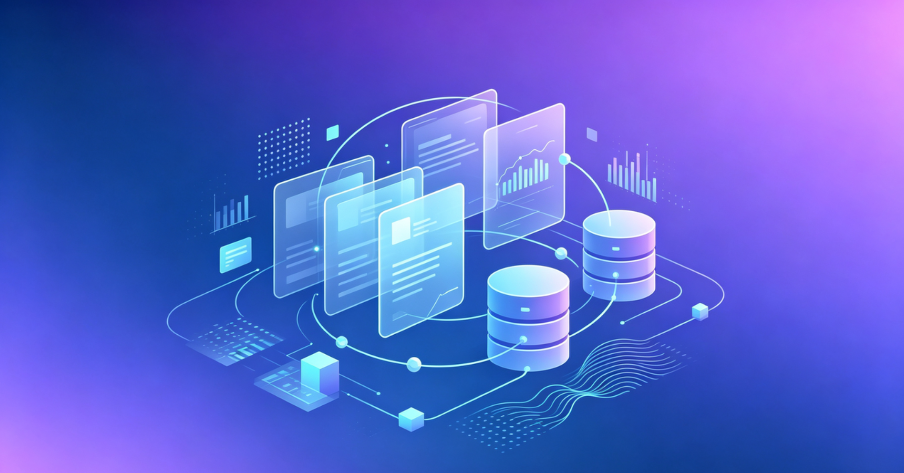
The global alternative data market is undergoing a fundamental transformation, driven by regulatory scrutiny, cloud-native analytics, and domain-specific data science. The landscape is moving toward multimodal intelligence, where text, imagery, location, transaction, sensor, and web-scraped data are combined to identify patterns that single-source analysis may miss. Artificial intelligence is amplifying the value of alternative data across finance, advertising analytics, and beyond.
Alternative data refers to information from non-traditional sources—web pages, satellites, transactions, app activity—that businesses and investors use to gain an edge before that signal shows up in official reports. The classic example: a hedge fund counting cars in retail parking lots from satellite images to predict quarterly sales. For most companies, though, the largest and most accessible source of alternative data is the public web, collected by scraping—which is why proxies sit at the centre of any serious alternative data operation.
This guide provides a comprehensive examination of alternative data: its definition, the main types, who uses it, how it is collected, the critical role of proxy infrastructure, and the legal considerations. The discussion encompasses both the strategic value of alternative data and the practical mechanics of building reliable data collection pipelines using professional proxy solutions like those offered by IPFLY .
What Is Alternative Data?
Definition and Core Concept
Alternative data is information collected from non-traditional sources and used to inform business or investment decisions—anything outside the conventional inputs like financial statements, analyst reports, and government statistics. The term originates in finance, where “alternative” means alternative to the official filings that everyone already has.
The value lies in the edge: a signal you can read from the world directly, before it is aggregated into a quarterly report or a market figure. A retailer’s real-time prices across competitors, the volume of job postings a company publishes, the sentiment in product reviews—each is alternative data that hints at performance ahead of the official numbers.
Alternative Data vs. Traditional Data
The contrast with traditional data is the whole point. Traditional data is typically more standardized, lagging, and widely available; alternative data is often less structured, timelier, and gives an advantage to whoever collects and interprets it first.
Traditional data sources include:
- Financial statements and SEC filings
- Analyst reports and earnings calls
- Government statistics and economic indicators
- Stock exchange trading data
- Company press releases
Alternative data sources include:
- Web-scraped prices, product listings, and reviews
- Satellite imagery and geolocation data
- Social media sentiment and search trends
- Credit card transaction aggregates
- Mobile app usage and foot traffic data
The Information Asymmetry Advantage
Alternative data creates information asymmetry—the ability to know something before the broader market does. When an investor can analyze credit card transaction aggregates signaling consumer spending patterns before they appear in quarterly earnings, or detect corporate reputation shifts through social media sentiment analysis before public disclosure, they gain a forward-looking investment position based on real-world behavioral signals.
This is why alternative data represents the frontier of systematic investment advantage. Major financial institutions are investing heavily in this capability. In March 2026, Bloomberg launched an expanded alternative data integration layer within its Terminal platform, incorporating real-time satellite imagery. Bloomberg’s Alternative Data Analytics Platform gives clients a decisive edge and an early read on public and private company performance alongside traditional market data.
For businesses beyond finance, the same principle applies. An e-commerce company that monitors competitor pricing in real-time can adjust its own prices dynamically. A real estate firm that tracks listing volumes and price changes across markets can identify emerging opportunities before competitors.
Types of Alternative Data
Alternative data sources fall into several broad categories, from web-scraped data that anyone can collect to exotic feeds that only large funds can afford.
Web-Scraped Data
Web-scraped data is the most accessible category of alternative data for most businesses. It encompasses:
- Product prices and listings – Real-time competitor pricing, assortment, and stock monitoring
- Customer reviews and ratings – Sentiment analysis and product feedback
- Job postings – Hiring signals and workforce trends
- Real-estate listings – Property prices, availability, and market trends
- Search engine results pages (SERPs) – SEO and rank tracking
The public web is the biggest accessible source for most businesses: prices, reviews, job postings, product catalogs, and listings, all collected by web scraping. No expensive data vendor contracts are required—the data is publicly available, and the primary investment is in the infrastructure to collect it reliably.
Transaction Data
Transaction data consists of aggregated, de-identified card and receipt data, heavily privacy-regulated. This category includes:
- Credit and debit card transaction aggregates
- Point-of-sale receipt data
- E-commerce purchase histories
This data is typically obtained through data vendors and panels rather than direct collection. It provides visibility into consumer spending patterns, brand performance, and economic activity at a granular level.
Geolocation and Mobility Data
Geolocation and mobility data tracks foot traffic and app location signals, obtained through app SDKs and data vendors. Applications include:
- Retail foot traffic analysis
- Urban planning and transportation
- Competitive store performance benchmarking
- Event attendance and venue popularity
Satellite and Sensor Data
Satellite and sensor data includes parking-lot counts, crop yields, shipping activity, and other observations from imagery providers and IoT networks. This category includes:
- Agricultural yield prediction
- Retail parking lot occupancy (a proxy for sales)
- Shipping and logistics tracking
- Energy infrastructure monitoring
- Environmental and climate data
Social Media and Sentiment Data
Social media and sentiment data encompasses public posts, review sentiment, and search trends, collected through web scraping and APIs. Applications include:
- Brand sentiment analysis
- Product launch monitoring
- Crisis detection and reputation management
- Consumer trend identification
Who Uses Alternative Data?
Investors and Hedge Funds
Investors were the pioneers. Hedge funds and asset managers buy or build alternative data to forecast a company’s results before earnings—web-scraped pricing, hiring signals, app rankings, and the like.
The use case is straightforward: if you can predict a company’s quarterly sales before the earnings report, you can position your portfolio accordingly. A hedge fund tracking retail parking lot occupancy from satellite imagery can estimate sales volumes days or weeks before official numbers are released.
E-Commerce and Retail
E-commerce and retail teams use alternative data for competitor pricing, assortment, and stock monitoring to set their own prices. Real-time visibility into competitor pricing enables dynamic pricing strategies. Monitoring stock availability across competitors identifies supply gaps and opportunities.
Real-world applications include:
- Dynamic pricing – Adjusting prices based on competitor movements
- Assortment intelligence – Identifying which products competitors are stocking
- Promotion tracking – Monitoring competitor promotional strategies
- Market share analysis – Estimating competitor sales volumes
Real Estate
Real estate professionals use alternative data to track property listings, price trends, and market dynamics. Scraped listing data provides visibility into:
- Inventory levels and turnover rates
- Price trends by neighborhood and property type
- Days-on-market metrics
- Rental market dynamics
Marketing and Advertising
Marketing teams leverage alternative data for:
- Competitive intelligence – Monitoring competitor campaigns and messaging
- Audience insights – Understanding consumer behavior and preferences
- Campaign optimization – Measuring ad effectiveness and reach
- Brand monitoring – Tracking brand mentions and sentiment
B2B and Corporate Strategy
B2B companies and corporate strategy teams use alternative data for:
- Market intelligence – Tracking industry trends and competitive dynamics
- Lead generation – Identifying companies showing growth signals
- Supply chain intelligence – Monitoring supplier activity and risks
- M&A targeting – Identifying acquisition targets based on performance signals
How Alternative Data Is Collected
Web Scraping: The Primary Method
For most businesses, the largest and most accessible source of alternative data is the public web, collected by scraping. Web scraping involves programmatically extracting data from websites—prices, product listings, reviews, job postings, and more.
The technical process follows a consistent pattern:
- Target identification – Identifying the websites and data points to collect
- Request generation – Sending HTTP requests to target URLs
- Response parsing – Extracting structured data from HTML responses
- Data storage – Storing collected data in databases or data lakes
- Validation and cleaning – Ensuring data quality and consistency
The Proxy Imperative
Web-scraped alternative data usually runs on proxies. Sites geo-personalize and rate-limit, so large-scale collection leans on rotating residential IPs.
Why are proxies essential for alternative data collection? The answer lies in how websites defend against automated access:
Geo-Personalization – Websites serve different content based on the visitor’s geographic location. An IP outside Japan sees different prices on Amazon Japan. An IP outside the US sees different search results on Google.com. To collect accurate, localized data, requests must originate from IP addresses in the target region.
Rate Limiting – Websites limit the number of requests from a single IP address within a given timeframe. If an IP makes too many requests too quickly, it gets blocked. Large-scale data collection requires distributing requests across many IP addresses to stay below detection thresholds.
Anti-Bot Systems – Modern websites employ sophisticated anti-bot systems that analyze request patterns, browser fingerprints, and behavioral signals. Residential IPs—which appear to originate from real home internet connections—carry higher trust scores than datacenter IPs and are less likely to trigger detection.
Residential Proxies: The Foundation of Reliable Collection
For web-scraped alternative data, residential proxies are the default choice. They route through real home internet connections, presenting IP addresses that appear as ordinary consumer traffic. The residential origin ensures higher trust scores and reduced blocking risk.
IPFLY’s dynamic residential proxies provide the infrastructure foundation for alternative data collection. With access to over 90 million residential IP addresses across 190+ countries, the platform enables:
- Geographic targeting – Precise country, city, and ISP-level targeting for localized data collection
- Automated rotation – Distributing requests across diverse IPs to maintain low request-per-IP ratios
- Protocol flexibility – Full support for HTTP, HTTPS, and SOCKS5 protocols
- Millisecond response times – Low latency for high-volume, time-sensitive collection
For operations requiring consistent IP assignments—such as session-based workflows or authenticated access—IPFLY’s static residential proxies provide 100% exclusive, ISP-registered residential IP addresses that remain stable over time.
For non-defended workloads where residential IPs are not required, IPFLY’s datacenter proxies deliver high performance with 99.9% availability.
Full-Industry Proxy IP Application Solutions
Power scalable growth for every cross-border business scenario with IPFLY’s reliable global proxy network
Structured vs. Unstructured Data
A critical challenge in alternative data collection is that the data is messy, unstandardized, and only valuable if collected reliably and on time. Freshness and structure are the hard parts.
Structured data – Data that fits neatly into rows and columns. Product prices, stock levels, and property listings are examples. Structured data is relatively straightforward to parse and analyze.
Unstructured data – Data that lacks a predefined format. Reviews, social media posts, and job descriptions are examples. Unstructured data requires natural language processing, sentiment analysis, and other techniques to extract value.
Many alternative data operations combine both types. An e-commerce scraper might collect structured price data alongside unstructured review text. A real estate scraper might collect structured listing details alongside unstructured property descriptions.
Data Freshness and Timeliness
The value of alternative data often decays rapidly. A price signal from yesterday is less valuable than a price signal from this minute. This creates infrastructure requirements:
- High-frequency collection – Collecting data at intervals ranging from minutes to hours
- Real-time processing – Processing and analyzing data as it is collected
- Alerting – Notifying stakeholders when significant changes occur
The infrastructure must balance freshness with operational cost. Collecting too frequently wastes bandwidth and increases blocking risk. Collecting too infrequently misses critical signals.
The Role of Proxy Infrastructure in Alternative Data Collection
Why Proxies Are Non-Negotiable
Proxy infrastructure is not optional for serious alternative data operations—it is foundational. Several factors make proxies essential:
Geographic Localization – As noted, websites serve different content based on IP geography. For accurate data, IPs must match target regions. Japan proxy sites, for example, are essential for collecting accurate Japanese e-commerce data.
Rate Limit Avoidance – Websites enforce rate limits. A single IP cannot sustain high-volume collection. Rotating residential proxies distribute load across many IPs.
Anti-Bot Evasion – Websites detect and block datacenter IPs and suspicious traffic patterns. Residential proxies mimic ordinary consumer behavior, reducing detection risk.
Session Persistence – Some data collection workflows require consistent IP assignments across multiple requests. Static residential proxies provide this capability.
IPFLY’s Role in Alternative Data Pipelines
IPFLY provides the proxy infrastructure that powers alternative data collection at scale. Key capabilities for alternative data operations include:
Dynamic Residential Proxies for High-Volume Collection – For large-scale scraping of prices, listings, and reviews, IPFLY’s dynamic residential proxies offer automated rotation across 90M+ residential IPs. The rotation ensures low request-per-IP ratios, reducing detection risk. The geographic coverage spanning 190+ countries enables precise targeting.
Static Residential Proxies for Consistent Access – For session-based workflows, authenticated scraping, and operations requiring consistent IP assignments, IPFLY’s static residential proxies provide 100% exclusive, ISP-registered residential IPs that remain stable over time.
Datacenter Proxies for Non-Defended Workloads – For parsing, reference data, and internal infrastructure, IPFLY’s datacenter proxies deliver high performance with 99.9% availability.
Protocol Flexibility – IPFLY supports HTTP, HTTPS, and SOCKS5 protocols, enabling integration with diverse scraping tools including Scrapy, Selenium, and Playwright.
7×24 Support – Alternative data operations often run continuously. IPFLY’s 7×24 customer support ensures responsive assistance for maintaining consistent collection.
Building a Complete Alternative Data Pipeline
A complete alternative data pipeline combines several components:
Target Selection – Identifying the websites and data points to collect. This requires understanding of the business question and the data sources that can answer it.
Infrastructure Provisioning – Deploying proxy infrastructure. IPFLY provides the residential IPs needed for reliable collection.
Scraping Implementation – Building and maintaining scrapers using tools like Scrapy, Selenium, or Playwright. Scrapers must handle website changes, parsing logic, and error recovery.
Data Storage – Storing collected data in databases, data lakes, or cloud storage. Data must be structured for analysis.
Data Processing and Analysis – Transforming raw data into actionable insights. This may involve cleaning, normalization, aggregation, and statistical analysis.
Monitoring and Maintenance – Continuously monitoring collection success rates, data quality, and infrastructure health. Proactive maintenance prevents collection failures.
Legal and Ethical Considerations
The Legal Landscape
Alternative data collection exists in a complex legal landscape. The key principle for defensible collection: public, non-personal data is the defensible zone; personal data is regulated.
Public Data – Data that is publicly accessible without authentication is generally collectable. Prices, product listings, job postings, and real estate listings fall into this category.
Non-Personal Data – Data that does not identify individuals is lower risk. Aggregate statistics, product attributes, and business information are examples.
Personal Data – Data that identifies individuals is regulated. Laws like GDPR in Europe, CCPA in California, and APPI in Japan impose restrictions on collecting and processing personal data.
Terms of Service – Website terms of service may prohibit scraping, even for public data. While the enforceability of such terms varies by jurisdiction, they represent a legal risk that should be assessed.
Japan’s APPI Framework
Japan enforces the Act on the Protection of Personal Information (APPI) through the Personal Information Protection Commission (PPC). A 2026 amendment introduces a consent exemption for statistical processing including AI development, allowing the acquisition of publicly available data—even sensitive data—to create statistical information, subject to transparency safeguards. The same package adds protections for children’s data (parental consent under 16) and plans a new administrative-fine system.
For organizations collecting data from Japanese platforms, the practical line remains: public, read-only scraping of product and price data is the lane most operations operate in. Harvesting personal data without a lawful basis remains the risk.
Ethical Best Practices
For responsible alternative data collection:
- Focus on public, non-personal data – Prices, listings, and business information
- Respect robots.txt – Follow website guidelines where specified
- Maintain human cadence – Avoid aggressive request patterns
- Minimize server impact – Collect efficiently without overwhelming target sites
- Be transparent – Where possible, identify your organization and purpose
- Consult legal counsel – Before scaling commercial collection operations
The Future of Alternative Data
Multimodal Intelligence
The alternative data landscape is moving toward multimodal intelligence, where text, imagery, location, transaction, sensor, and web-scraped data are combined to identify patterns that single-source analysis may miss. This integration of diverse data types enables more sophisticated analysis and richer insights.
An example: combining satellite imagery of retail parking lots, web-scraped pricing data, and social media sentiment analysis to build a comprehensive picture of a retailer’s performance. Each data source contributes a different signal; together, they provide a more complete view.
AI and Automation
Artificial intelligence is amplifying the value of alternative data through classification, enrichment, and anomaly detection. AI-powered systems can:
- Automate data processing – Extracting structure from unstructured data
- Identify patterns – Detecting signals that human analysts might miss
- Generate insights – Producing actionable recommendations from raw data
- Monitor continuously – Alerting on significant changes in real-time
Regulatory Evolution
The regulatory environment for alternative data continues to evolve. The 2026 APPI amendment in Japan represents one example of regulation adapting to the data economy. Organizations should monitor regulatory developments in their target markets and adjust their collection practices accordingly.
Democratization of Access
Alternative data is becoming more accessible. The public web is the largest and most accessible source for most businesses. Professional proxy infrastructure from providers like IPFLY makes collection feasible for organizations of all sizes. The barrier to entry continues to decrease.

Alternative data represents a fundamental shift in how businesses and investors gain insight. By moving beyond traditional financial statements and official statistics, organizations can access timelier, more granular signals about market conditions, competitor activity, and consumer behavior.
The types of alternative data are diverse—web-scraped prices and listings, satellite imagery, transaction aggregates, social media sentiment, and geolocation data. Each source offers unique insights, and the most sophisticated operations combine multiple sources for multimodal intelligence.
For most businesses, the most accessible and valuable alternative data comes from the public web, collected through web scraping. This approach requires robust proxy infrastructure to handle geographic localization, rate limiting, and anti-bot systems. Residential proxies from providers like IPFLY provide the authenticity, geographic diversity, and reliability needed for sustainable collection at scale.
The legal and ethical considerations are significant but manageable. Focusing on public, non-personal data and respecting website guidelines enables defensible collection. Organizations should consult legal counsel and stay informed about regulatory developments in their target markets.
The future of alternative data lies in multimodal intelligence, AI-powered analysis, and continued democratization of access. Organizations that build robust data collection pipelines today position themselves to capture the insights that will define competitive advantage tomorrow.
Alternative data is not merely a trend—it is the new foundation of data-driven decision-making. The ability to collect, process, and act on non-traditional data sources is becoming a core competency for businesses across industries. With the right infrastructure and approach, any organization can participate in this transformation.
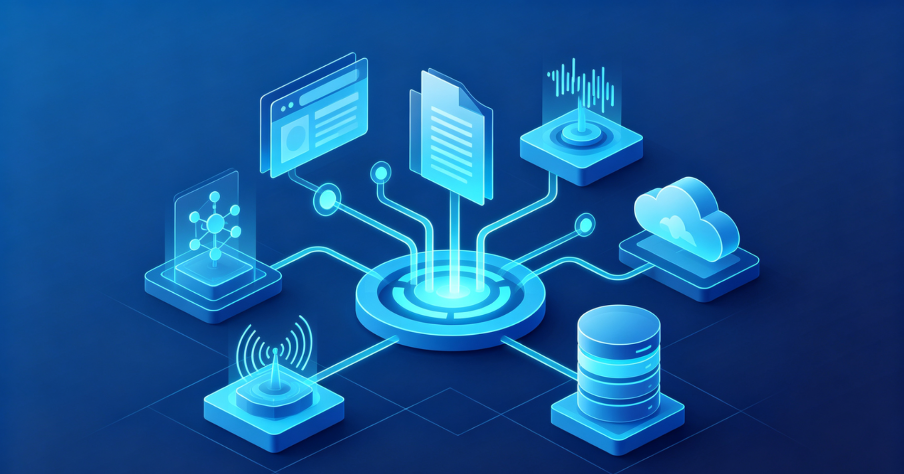
For organizations building alternative data collection pipelines for market intelligence, competitive analysis, or investment research, IPFLY provides the professional proxy infrastructure that powers reliable web-scraped data collection:
- Dynamic Residential Proxies – Access over 90 million residential IP addresses across 190+ countries with automated rotation and millisecond response times, enabling high-volume, geographically targeted data collection without detection.
- Static Residential Proxies – Exclusive, ISP-registered residential IP addresses for session-based workflows, authenticated scraping, and operations requiring consistent IP assignments.
- Datacenter Proxies – High-performance proxy infrastructure with 99.9% availability for non-defended workloads and internal infrastructure.
Build your alternative data infrastructure today. Visit IPFLY’s homepage to explore the full range of proxy solutions, or register now for immediate access to professional proxy capabilities that support your data collection and business intelligence operations.