Modern platform security systems no longer rely on IP detection alone.
Platforms such as TikTok, Meta, Google, Amazon, Reddit, Discord, X, and increasingly AI-driven services now evaluate whether an account behaves like a legitimate long-term digital identity.
This shift has fundamentally changed how account infrastructure, automation systems, creator operations, and online identity management work.
For years, many users believed that rotating proxies were enough to reduce account risk. That assumption is no longer reliable in modern risk-control environments.
Today, accounts may still trigger verification, restrictions, or trust reduction even after changing proxies.
Common examples include:
- Advertising accounts entering manual review unexpectedly
- Creator accounts losing reach after environment changes
- Marketplace seller accounts triggering security checks
- Reddit or Discord accounts being flagged after switching sessions
- AI automation workflows generating suspicious activity warnings
- Browser profiles appearing linked despite isolated proxies
The reason is simple:
Platforms are no longer evaluating only where traffic comes from.
They are evaluating whether the entire digital identity environment appears stable, believable, and human.
This is where Digital Identity Isolation Architecture becomes essential.
Modern identity isolation is not about hiding activity. It is about building independent, consistent, and trustworthy identity environments that align with how real users behave over time.
Why Changing IP Addresses Alone No Longer Works
Early anti-abuse systems were heavily network-centric.
Most risk engines focused on signals such as:
- Multiple accounts under one IP
- Abnormally high request frequency
- Rapid location changes
- Automated traffic behavior
At that stage, rotating proxies could bypass many basic restrictions.
However, large-scale automation, fake engagement systems, and identity manipulation networks forced platforms to evolve beyond simple IP analysis.
Today, most major platforms rely on identity-centric risk models instead.
Platforms Now Build Identity Graphs
Modern trust systems attempt to determine whether a user environment represents a real and persistent identity.
To achieve this, platforms combine multiple identity signals together into what security engineers often refer to as an Identity Graph.
This typically includes:
- IP reputation
- Browser fingerprint
- Cookie history
- Session continuity
- Device characteristics
- DNS behavior
- Time zone alignment
- Language configuration
- Interaction patterns
- Navigation behavior
Together, these signals create a behavioral identity profile.
In other words, the IP address is no longer the identity itself. It is only one layer inside a much larger trust model.
Why Proxy Rotation Alone Can Increase Risk
One of the most common mistakes in account management is assuming that a new proxy automatically creates a new identity.
In reality, platforms also evaluate consistency between identity layers.
For example:
A user may connect through a United States residential proxy while still exposing:
- A mismatched system language
- Reused browser fingerprints
- Existing tracking cookies
- Inconsistent session behavior
- Abnormal geographic patterns
From a platform perspective, this creates identity instability.
Modern trust systems are designed to detect environments that appear fragmented, inconsistent, or artificially manipulated.
As a result, excessive proxy rotation without full identity isolation often increases risk signals rather than reducing them.
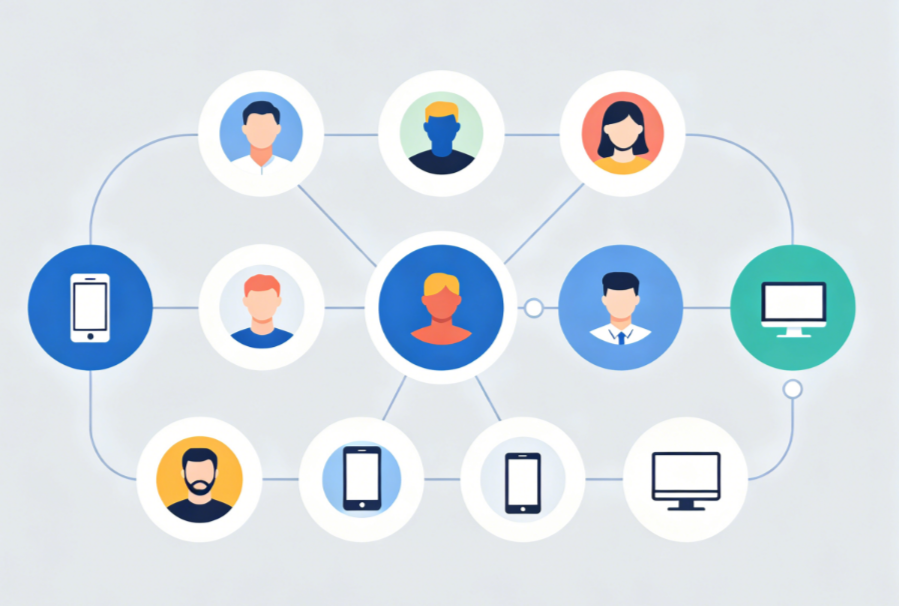
What Is Digital Identity Isolation?
Digital Identity Isolation refers to the process of creating fully separated identity environments for individual accounts, sessions, or operational workflows.
The goal is to ensure that one identity cannot be behaviorally or technically linked to another.
This extends far beyond simple network separation.
Identity Isolation Is More Than Proxy Isolation
A complete identity isolation framework typically includes:
- Dedicated residential or ISP proxies
- Isolated browser fingerprints
- Independent cookie storage
- Separate session environments
- DNS consistency
- WebRTC isolation
- Local storage separation
- Stable behavioral environments
Together, these components create a persistent identity environment that appears independent from all other accounts.
The objective is not anonymity alone.
The objective is long-term identity credibility.
Why “One Identity, One Environment” Is Becoming Standard
Modern platforms continuously monitor overlap between identity environments.
When multiple accounts share:
- Similar browser fingerprints
- Shared session data
- Reused cookies
- Identical behavioral structures
- Overlapping network environments
They are more likely to be grouped into the same risk cluster.
Because of this, large-scale account systems increasingly follow a “One Identity, One Environment” architecture.
This approach has become standard across:
- Creator account operations
- Marketplace seller management
- Advertising infrastructure
- Community management systems
- Automation platforms
- AI agent workflows
The focus is no longer simply managing accounts.
The focus is maintaining independent and trustworthy identity environments at scale.
How Platforms Detect Linked Identities
Modern detection systems use multi-layer identity correlation models rather than relying on a single signal.
IP Reputation Correlation
IP analysis still matters.
Platforms evaluate:
- Shared IP usage
- Hosting provider reputation
- Geographic consistency
- ASN classification
- Long-term network behavior
However, IP analysis alone is no longer enough to establish trust.
Cookie-Based Identity Correlation
Cookies function as persistent identity markers.
Even when users switch proxies, shared cookie environments can still expose identity continuity between accounts.
This is commonly referred to as Cookie Contamination.
Cookie leakage remains one of the most overlooked causes of identity correlation.
Browser Fingerprint Correlation
Browser fingerprinting has become one of the most powerful identity tracking mechanisms on the modern web.
Even without account logins, platforms can identify users through browser-level characteristics such as:
- Operating system
- Browser version
- Screen resolution
- Installed fonts
- Canvas rendering behavior
- WebGL information
- Hardware acceleration data
- Time zone configuration
- Language preferences
When combined, these variables create a near-unique device signature.
This is why changing proxies without isolating browser fingerprints often fails to prevent account linkage.
Behavioral Correlation Models
Platforms increasingly analyze how users behave rather than simply where they connect from.
Examples include:
- Login timing consistency
- Navigation flow
- Interaction patterns
- Session duration
- Mouse movement behavior
- Browsing sequences
Real users tend to behave naturally and consistently over time.
Artificially managed environments often produce repetitive or mechanically structured behavior patterns that become detectable at scale.

What Anti-Detect Browsers Actually Do
Tools such as AdsPower, VMLogin, and other anti-detect browsers are often misunderstood as privacy tools.
In reality, they function as identity virtualization systems.
Anti-Detect Browsers Simulate Independent Devices
Traditional browsers expose large amounts of identifiable device information.
Anti-detect browsers attempt to isolate or modify these signals by creating separate browser environments for each identity.
This includes:
- Unique browser fingerprints
- Isolated cookie environments
- Separate local storage
- Customized Canvas behavior
- Independent WebGL profiles
From a platform perspective, each profile appears closer to an independent physical device.
Why Proxies Must Match Identity Environments
Even isolated browser profiles can appear suspicious if the network layer remains inconsistent.
For example:
- A browser environment configured for one region using a proxy from another
- Frequent IP switching within persistent sessions
- Sudden geographic movement during active account usage
These inconsistencies weaken identity trust.
Stable identity systems require browser environments, sessions, and proxy infrastructure to remain aligned over time.
Why Excessive IP Rotation Often Looks Artificial
Many users assume that constantly rotating proxies improves safety.
In reality, aggressive IP rotation often reduces identity credibility.
Real users typically do not:
- Switch countries every hour
- Change networks repeatedly during active sessions
- Operate from multiple geographic regions within short periods
Modern trust systems treat unstable identity behavior as a risk signal.
In many cases, long-term session stability creates more trust than high-frequency proxy rotation.
Why Session Integrity Has Become Critical
One of the most important concepts in modern identity infrastructure is Session Integrity.
What Is Session Persistence?
Session Persistence refers to maintaining long-term continuity across:
- IP environments
- Browser fingerprints
- Device characteristics
- Behavioral history
- Login consistency
As platforms observe stable behavior over time, they gradually increase trust toward that identity environment.
Stable Identity Environments Appear More Human
Real users typically operate from:
- Consistent devices
- Predictable locations
- Stable browsing environments
- Repeated behavioral patterns
Environments that constantly shift between networks, devices, or behavioral structures appear significantly less trustworthy.
Because of this, long-term consistency has become one of the strongest trust indicators in modern platform security systems.
Why Digital Identity Isolation Is Becoming Infrastructure
Digital identity isolation is no longer just an operational tactic.
It is increasingly becoming part of core online infrastructure.
This is especially important for:
- Advertising systems
- Creator economy operations
- Marketplace account management
- Automation workflows
- AI-powered browsing systems
- Large-scale social platform operations
The challenge today is no longer simply accessing platforms.
The challenge is maintaining stable and believable digital identities over time.
Building a Stable Digital Identity Isolation Framework
A stable identity isolation architecture typically includes:
- Dedicated proxies per identity
- Persistent session environments
- Residential or ISP-grade proxy infrastructure
- Isolated browser fingerprints
- Independent cookie environments
- Low-reuse network resources
- Consistent geographic settings
These components work together to reduce identity overlap and improve long-term trust stability.
Conclusion
Modern platform security systems are rapidly evolving from network-based detection toward full behavioral identity analysis.
As a result, digital identity isolation is becoming essential for any long-term account infrastructure strategy.
The future of platform trust is no longer based on whether an IP address can connect successfully.
It is based on whether a complete identity environment appears:
- Stable
- Consistent
- Independent
- Human-like
- Trustworthy over time
This is why the industry is shifting away from simple proxy rotation and toward full digital identity infrastructure.
In this evolving landscape, providers such as IPFLY are increasingly being used not only for proxy access, but also for building stable residential and ISP-grade identity environments designed to align more naturally with modern platform trust systems.