As AI automation, data scraping, and cross-border operations scale globally, dynamic residential proxies have evolved from optional tools into core infrastructure.
However, one persistent challenge remains:
How can businesses achieve both high anonymity and connection stability at scale?
Most proxy solutions force a trade-off. IPFLY’s dynamic residential proxy architecture is designed to eliminate that compromise—by turning dynamic IP behavior into a controlled, stable execution layer.

What Is a Dynamic Residential Proxy?
Core Definition
A dynamic residential proxy uses IP addresses assigned by real Internet Service Providers (ISPs), with the ability to rotate over time or per request.
Key characteristics include:
- Real residential IP origin (ISP-issued)
- Dynamic rotation capability
- Geo-targeted access (country/city-level)
Unlike datacenter proxies, residential proxies are evaluated by target platforms as legitimate user traffic.
Why Dynamic Residential Proxies Matter in 2026
Modern platforms increasingly rely on:
- Behavioral detection models
- IP reputation scoring
- Geo-consistency validation
As a result:
- Datacenter IPs face high block rates
- Static IPs degrade over time
- Automated tasks require adaptive IP strategies
Dynamic residential proxies provide a realistic + adaptive approach, making them essential for:
- AI data collection
- Web scraping
- Ad verification
- Multi-account operations
IPFLY System Architecture Overview
Global IP Network
IPFLY operates a large-scale distributed proxy network:
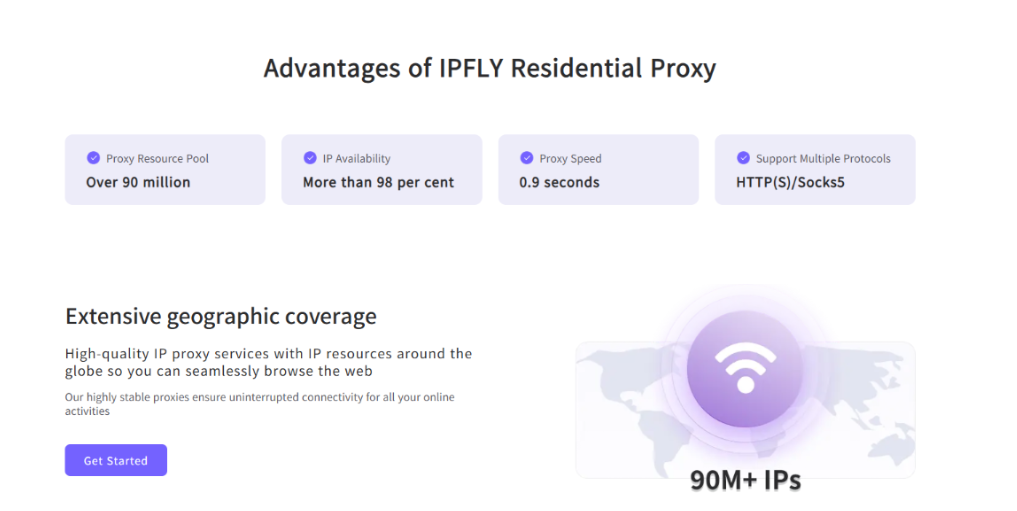
- 90M+ residential IP pool
- Coverage across 190+ countries
- Multi-region routing and allocation
This infrastructure enables:
- Geo-specific IP selection
- Task-based IP allocation
- Real-time load balancing
Intelligent IP Routing Engine (Core System)
At the center of IPFLY’s solution is a dynamic routing and allocation system.
- Request-Based Allocation
IP assignment is determined by task type:
- Single requests → fresh IP per request
- Session-based workflows → sticky IP binding
- Parallel tasks → distributed IP allocation
- Geo-Targeting Logic
Users can define:
- Country / city
- ISP type
- Use-case scenarios (scraping, login, browsing)
This ensures that requests align with expected user behavior patterns.
- Load Balancing Mechanism
The system continuously evaluates:
- IP availability
- Success rates
- Node performance
And dynamically adjusts routing to avoid:
- Overused IPs
- Regional bottlenecks
- Performance degradation
Dynamic IP Rotation Mechanism
Rotation Triggers
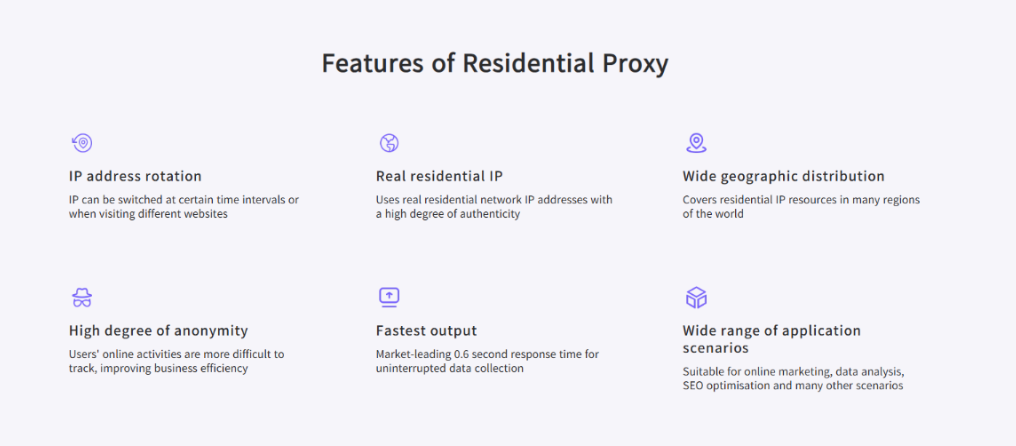
Unlike fixed-interval rotation, IPFLY uses adaptive rotation triggers:
- Per-request rotation (default)
- Session-based rotation
- Failure-triggered rotation
- Risk-based acceleration
Recommended Rotation Parameters
Best practices vary by use case:
- High-frequency scraping → rotate per request
- Medium workloads → rotate every 3–10 requests
- Session workflows → maintain IP for 5–30 minutes
This balances:
- Anonymity
- Behavioral consistency
- Execution success rate
Sticky Session System (Stability Layer)
What Is a Sticky Session?
A sticky session allows maintaining the same IP for a defined duration to support continuous workflows.
Implementation Logic
IPFLY uses session-based binding:
- Assigns a session ID to an IP
- Maintains mapping during session lifecycle
- Releases and rotates automatically after expiration
Ideal Use Cases
- Account login sessions
- Multi-page browsing
- Checkout flows
- Behavioral simulation
IP Quality Control Framework
Multi-Layer Filtering
To ensure high success rates, IPFLY applies:
- Source validation
- Real-time availability checks
- Historical performance filtering
Real-Time Scoring System
Each IP is continuously evaluated based on:
- Response latency
- Request success rate
- Block/flag frequency
Low-performing IPs are:
- Automatically deprioritized
- Removed from active rotation pools
Reliability and Success Rate Optimization
Failover and Retry Logic
To minimize disruption:
- Failed requests trigger automatic retries
- Backup IPs are assigned instantly
- Routing logic adapts in real time
Scalability and Concurrency
IPFLY supports:
- High concurrency workloads
- Distributed scraping architectures
- Multi-threaded execution
This ensures stable performance under large-scale operations.
Dynamic Residential vs Other Proxy Types
vs Datacenter Proxies
- Datacenter: fast but easily detected
- Residential: slower but significantly more reliable
vs Static Residential Proxies
- Static: ideal for long-term identity consistency
- Dynamic: optimized for scraping and large-scale automation
Practical Use Cases
AI Data Collection & Training
Recommended setup:
- Per-request IP rotation
- Distributed task execution
- Rate control strategies
E-commerce Monitoring
- Geo-targeted pricing checks
- Competitor tracking
- Inventory monitoring
Social Media & Multi-Account Management
- Sticky sessions for account consistency
- Reduced risk of account linkage
FAQ (Featured Snippet Optimized)
Do I need residential proxies for AI scraping?
Not always. For low-security targets, datacenter IPs may work.
However, for high-value sources (social media, marketplaces), residential proxies significantly improve success rates.
Is faster IP rotation better?
No. Excessive rotation may trigger detection.
Optimal rotation depends on the task type and platform sensitivity.
How can I improve scraping success rate?
Focus on three factors:
- High-quality residential IPs
- Controlled request frequency
- Adaptive rotation strategy
What makes IPFLY different?
IPFLY combines:
- Large-scale IP resources
- Intelligent routing system
- Real-time quality control
to deliver both high anonymity and operational stability.

From Proxy Tool to Execution Infrastructure
Dynamic residential proxies are no longer just access tools—they are now execution infrastructure for AI and automation systems.
IPFLY’s solution integrates:
- Intelligent routing
- Adaptive rotation
- Quality assurance systems
to transform dynamic IP usage into a predictable, scalable, and stable layer.
Get Started with IPFLY
If your current scraping or automation system faces:
- High failure rates
- Frequent IP blocks
- Inconsistent data collection
it may be time to upgrade your infrastructure.