JSON has become the uncontested language of data exchange on the web. REST APIs respond with it, configuration files store it, IoT devices transmit it, and the majority of modern data pipelines begin by parsing it. The operation seems simple: take a string, feed it to a parser, and receive a structured object. Yet beneath that simplicity lies a terrain of encoding subtleties, schema violations, and scaling challenges that separate a resilient data extraction stack from one that collapses the moment a response deviates from expectation.
Parsing a JSON object is rarely the end goal. It is the gateway to transforming raw, semi-structured text into the clean tables, analytical models, and automated decisions that drive modern business. For a developer writing a single script, a successful parse is a one-line function call. For a data engineering team ingesting JSON from hundreds of APIs across dozens of geographic regions, a successful parse is the product of a carefully designed retrieval and processing architecture—one that must deliver the JSON payload intact before any parsing code can even begin.
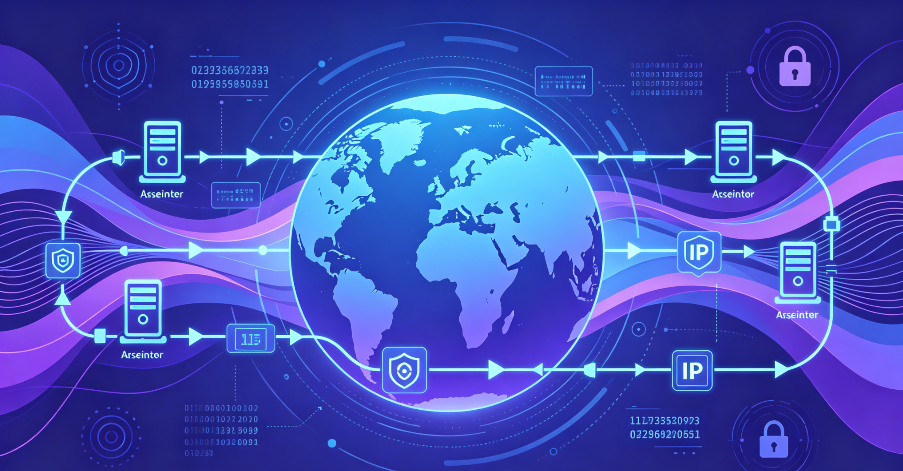
This article examines JSON object parsing as a professional discipline. It covers the syntax and type system that underpin the format, the parsing mechanics across major programming languages, the edge cases that break naive implementations, and the best practices for building parsers that handle malformed input gracefully. It also addresses the reality that in an enterprise environment, the greatest threat to a JSON parser is not a missing comma but a network layer that cannot consistently deliver the data to parse. For that, the integration of a trusted residential IP infrastructure—such as IPFLY’s globally distributed network—becomes as critical to parsing success as the parsing library itself.
The JSON Data Format: A Minimalist Syntax with Strict Rules
JSON (JavaScript Object Notation) owes its ubiquity to a design that balances human readability with machine precision. Its grammar is small enough to fit on a single page: objects are unordered sets of key-value pairs delimited by curly braces, arrays are ordered lists in square brackets, and values are strings, numbers, booleans, null, or nested objects and arrays. There are no comments, no trailing commas, and no date literals. Every deviation from this grammar is a parse error, and the parser’s refusal to forgive is a feature, not a flaw—it guarantees that data which passes validation is structurally consistent.
The JSON Type System and Why It Matters for Parsing
Unlike JavaScript, from which it borrows its name, JSON draws a sharp boundary around its type system. Strings must be double-quoted. Numbers cannot be hexadecimal, octal, or NaN. The only valid literal values are true, false, and null. Any parser that accepts single-quoted strings or unquoted keys is not a JSON parser; it is a JavaScript expression evaluator. This strictness eliminates entire classes of ambiguity and security vulnerability, which is why JSON has supplanted XML and custom binary formats in nearly every modern API.
For the parsing developer, understanding the type system means never assuming that a numeric field will arrive as a number. An API that returns "id": 42 today may return "id": "42" tomorrow after a backend update. A robust parser anticipates these shifts and validates types explicitly, rather than relying on the JSON specification to enforce them.
Parsing JSON Across Languages: Native and Library Approaches
Every major programming language offers built-in or standard-library support for JSON parsing, and the patterns share a common structure: a function that accepts a string (or byte stream) and returns the language’s native representation of the parsed data. Despite this surface similarity, the behavior of parsers in edge cases varies enough to warrant careful attention.
JavaScript: JSON.parse() and the Reviver Function
In JavaScript, JSON.parse() is the single entry point for converting a JSON string into an object or array. Its optional second argument, a reviver function, allows transformation of each parsed key-value pair before the final object is returned. This is particularly useful for handling date strings: since JSON has no native date type, APIs often return ISO 8601 strings, and a reviver can detect date patterns and convert them into Date objects during parsing rather than requiring a post-processing pass.
A common pitfall in JavaScript parsing is assuming that JSON.parse() will reject all invalid input. While it throws a SyntaxError on malformed JSON, it silently accepts valid JSON that contains unexpected fields—the type of validation that prevents downstream logic errors must be implemented separately.
Python: The json Module, loads(), and Object_hook
Python’s json module provides json.loads() for parsing strings and json.load() for reading from file-like objects. The object_hook parameter mirrors JavaScript’s reviver, allowing custom decoders to transform dictionaries into typed objects or to perform field-level validation during parsing. For performance-critical applications, json.loads() accepts a parse_float argument that can intercept numeric parsing, useful for preserving precision on large integers that Python would otherwise silently convert to scientific notation.
A particularly useful pattern in Python is the combination of json.loads() with try/except json.JSONDecodeError. Unlike some languages where JSON parse errors produce generic exceptions, Python’s json module raises a specific error that includes the line and column number of the failure, making debugging of malformed payloads significantly easier.
Other Languages: Consistent Patterns, Unique Edge Cases
In Go, the encoding/json package uses struct tags to map JSON keys to struct fields, and the act of calling json.Unmarshal() performs both parsing and type validation in a single step. In Java, libraries like Jackson and Gson offer streaming and tree-model APIs beyond the basic object-mapping approach. The common thread across all these ecosystems is that the parser itself is reliable; the failures occur in the code that surrounds it—the code that assumes a field will always be present, that a number will always be an integer, or that a response body will always be valid JSON.
Common JSON Parsing Errors and How to Handle Them
Production parsers break for predictable reasons, and each failure mode has a corresponding defensive strategy. The following errors represent the vast majority of JSON parsing incidents observed in data pipelines that process external data sources.
Trailing Commas and Other Syntax Violations
The JSON specification explicitly forbids trailing commas in objects and arrays, yet developers accustomed to JavaScript or Python often include them when generating JSON manually. The result is a SyntaxError that halts the parsing process. The correct response depends on the source of the data: if the JSON is generated internally, the generating code must be fixed. If the JSON comes from an external API that cannot be corrected, a pre-processing step that strips trailing commas using a regular expression can serve as a temporary workaround, though it should never become a permanent dependency.
Unescaped Control Characters
JSON strings are not permitted to contain unescaped control characters such as newlines or tabs. When such characters appear—often because a developer concatenated a multi-line string directly into a JSON value—the parser rejects the input. The fix is always to encode the JSON with a proper serializer rather than constructing it through string interpolation. On the parsing side, detecting this error early by validating incoming payloads against the JSON specification, rather than waiting for a parse failure deep in the pipeline, reduces debugging time.
Number Precision and Integer Overflow
JSON numbers are decimal, and the specification places no limit on their size. However, language-specific parsers map JSON numbers to native numeric types, which have finite ranges. A JSON number like 9999999999999999 may be silently truncated or converted to floating-point when parsed in JavaScript, where all numbers are double-precision floats. In Python, json.loads() preserves integer precision up to the limits of Python’s arbitrary-precision integers, but a parse_float hook may interfere. For pipelines that process financial or scientific data, the only reliable approach is to treat large numbers as strings during parsing and convert them using a decimal library, avoiding native numeric types entirely until the conversion can be controlled.
Full-Industry Proxy IP Application Solutions
Power scalable growth for every cross-border business scenario with IPFLY’s reliable global proxy network
Missing or Unexpected Fields
Valid JSON that lacks an expected field is not a parse error—it is a schema violation that the parser will not detect. Every production-grade parsing pipeline must include a validation layer that operates on the parsed object, checking for the presence and type of required fields and either raising an actionable error or substituting a safe default. Tools like JSON Schema can formalize these rules and make them machine-enforceable, but even a simple set of if statements that check for required keys is infinitely better than an unguarded attribute access that crashes the pipeline.
Best Practices for Reliable JSON Parsing
A parsing strategy that works on a single file will not necessarily survive the diversity and volume of data that a production pipeline encounters. The following practices emerge from years of operational experience with JSON-based data extraction systems.
Validate Before You Parse
The cheapest error to fix is the one you catch before it corrupts your data store. Validating the raw JSON string before parsing—using a lightweight schema or even a check for well-formedness—prevents the parser from entering an inconsistent state and provides an opportunity to log the offending payload in its entirety for later analysis. This is especially critical when parsing JSON delivered by third-party APIs, where the format can change without notice.
Stream Large Responses
When parsing JSON payloads that are too large to hold in memory—multi-gigabyte data exports, continuous streaming APIs, or long-running event feeds—a streaming parser is the only viable approach. Instead of loading the entire string and then parsing it, a streaming parser emits events as it encounters tokens: the start of an object, a key name, a string value, and so on. The calling code handles each event incrementally, building only the portion of the data structure it needs and discarding the rest. Python’s ijson library and Java’s Jackson JsonParser both implement this pattern, and the architectural shift from in-memory to streaming parsing is often the single largest performance gain a pipeline can achieve.
Handle Encoding Explicitly
JSON is defined as a sequence of Unicode characters, but the bytes that travel over a network are encoded. The HTTP specification requires that JSON be served with a charset=utf-8 declaration, but real-world APIs violate this requirement regularly. A parser that assumes UTF-8 without verification will eventually encounter a Latin-1 or UTF-16 payload and produce garbled output. The defensive approach is to inspect the response’s Content-Type header and the initial bytes of the body, detect the encoding explicitly, and decode the byte stream before passing it to the JSON parser. This adds a small amount of processing overhead and eliminates an entire category of intermittent, difficult-to-reproduce bugs.
JSON Parsing in Web Data Extraction
The vast majority of JSON that flows through enterprise data pipelines originates from web APIs. E-commerce product catalogs, financial market data, social media feeds, and IoT telemetry all travel as JSON over HTTPS. Parsing this data once it arrives is well understood. Ensuring that it arrives consistently, at scale, and from the correct geographic perspective is an entirely separate challenge—and it is the challenge that most often determines whether a JSON-based data pipeline succeeds or fails.
When a data extraction script requests JSON from a web API, the remote server evaluates the request’s IP address before it considers the request headers or query parameters. An IP address associated with a cloud hosting provider or a known data center can trigger rate limiting, CAPTCHA challenges, or outright blocking. A script that fetches JSON from a single IP will inevitably exceed the request threshold and find its parsing pipeline starved of input. At enterprise scale, this network-layer fragility becomes the bottleneck that no amount of parsing optimization can resolve.
Ensuring Reliable JSON Retrieval with IPFLY’s Residential IP Network
The solution lies in distributing requests across IP addresses that are indistinguishable from those of ordinary home broadband users. IPFLY’s residential IP network provides a pool of over 90 million IP addresses, sourced from real internet service provider connections across more than 190 countries. When a JSON extraction pipeline routes its outbound requests through IPFLY’s infrastructure, each request appears to originate from a genuine residential location—a consumer ISP in a specific city, with a clean reputation and no history of abusive traffic patterns.
This capability transforms the reliability of JSON data collection. A market intelligence platform that tracks product pricing across regional e-commerce APIs can configure IPFLY’s city-level targeting so that requests for the German marketplace originate from a residential IP in Berlin, while requests for the Japanese marketplace originate from a residential IP in Tokyo. The remote servers see local, trusted visitors and return the full, accurate JSON payloads that the platform’s parsers depend on. Sticky sessions maintain a consistent IP for multi-step API interactions—logging in, paginating through results—while automatic rotation between sessions prevents any single IP from accumulating the request volume that triggers rate limits.
This is not a parsing technique; it is an access-enablement layer that operates before the parser is ever invoked. Without it, the most elegantly designed JSON parser sits idle, waiting for data that the network cannot deliver. With it, the parser receives a steady stream of structured content, and the parsing logic remains the focus of optimization rather than a casualty of network failure.
A Practical Integration for JSON Extraction Pipelines
Integrating IPFLY’s residential IP network into a JSON extraction pipeline requires no changes to the parsing code itself. The HTTP client—whether Python’s requests library, a Node.js fetch wrapper, or a Go http.Client—is configured to route its traffic through an IPFLY endpoint using the protocol that best matches the task. SOCKS5 routing encapsulates DNS resolution within the same encrypted tunnel, preventing the local network from observing which API domains are being queried. HTTP and HTTPS proxy modes provide a lighter-weight alternative for simpler traffic patterns.
Geographic targeting parameters and session persistence preferences are set in the IPFLY dashboard, not in code, so adjustments to the network layer do not require changes to the extraction scripts. A pipeline that expands from monitoring five regions to fifty simply uses additional endpoint credentials, each tied to a different target city. The parsing logic remains unchanged; the network ensures that data continues to flow.
Parsing Is the Goal, Reliable Access Is the Prerequisite
JSON object parsing is a solved problem at the library level. The tools exist, they are battle-tested, and they handle the format’s strict grammar with precision. Where professional pipelines differentiate themselves is in the layers that surround parsing: the validation that catches missing fields before they corrupt downstream analytics, the streaming architecture that handles terabyte-scale payloads without memory exhaustion, and—most critically—the network infrastructure that delivers the JSON to the parser without interruption.
In a world where web APIs are the primary source of structured data, the reliability of the retrieval layer is as important as the correctness of the parsing layer. IPFLY’s residential IP network provides that reliability, with a pool of over 90 million clean, geo-targeted IPs that ensure JSON payloads keep arriving regardless of rate limits or IP-based blocking. For the data engineering team building pipelines that feed dashboards, machine learning models, and business decisions, this combination—robust parsing backed by resilient access—is what turns data extraction from a fragile script into a production-grade capability.
Ready to build a JSON extraction pipeline that never runs dry? Explore IPFLY’s residential IP plans and equip your data collection infrastructure with over 90 million residential IPs, city-level targeting, and session persistence. Start with a trial endpoint and see how reliable network access transforms your JSON parsing pipeline from intermittent to always-on.