Think of a proxy by country as a digital passport for your internet connection. It hands you an IP address from a specific nation, letting you browse the web as if you were physically there. This is the secret to bypassing frustrating geo-blocks and seeing what locals see online, unlocking a truly borderless internet for business and research.
What Is a Country-Specific Proxy and Why Does It Matter?
Let’s use an analogy. Imagine your internet connection is a power plug. If you fly from the US to the UK, your plug won’t fit their outlets without an adapter. A country-specific proxy is that international adapter for your internet, allowing you to “plug in” to another country’s digital world from wherever you are.
Every time you go online, your device gets a unique ID called an IP address, which reveals your real-world location. A proxy server steps in as a middleman, catching your web traffic and swapping your real IP address with its own.
A proxy by country is simply a server that’s physically located in a particular nation. When you route your traffic through it, you effectively borrow its local IP address. That simple swap is incredibly powerful because it instantly changes your perceived location online.
The Core Function of Geo-Targeting
The main job of a country-specific proxy is to enable geo-targeting. Websites, streaming services, and online platforms are constantly checking your IP address to decide what content to show you. This includes:
- Localized Pricing and Products: An e-commerce site might show a winter coat for $150 in the US but only €120 in Germany. A proxy lets you see and compare both prices.
- Language and Search Results: If you Google “best restaurants” from Spain, you’ll see Spanish results. A Spanish proxy allows a researcher in another country to see the exact same local results.
- Media and Content Access: A news broadcast available on a UK-only streaming service can be accessed from anywhere using a UK proxy.
Using a proxy puts you back in control. You can tell websites you’re in the location you need to be in, not just where you happen to be sitting. This opens up a whole new world for businesses and individuals alike.
Why Does This Matter in Practice?
To really get why this is a big deal, look at the global picture. There are roughly 5.64 billion internet users worldwide. China has about 1.1 billion of them, and India isn’t far behind with 881.3 million. Meanwhile, the United States has 311.3 million users, but that’s a massive penetration rate of about 90% of its population.
This global diversity means a one-size-fits-all approach to the internet is dead on arrival.
For instance, a marketing team in the US needs to see exactly how their ads are performing for customers in Japan. Without a Japanese proxy, their view of local search results and ad placements would be completely skewed and unreliable. A practical example: they might see their ad on page one of Google from their office, but for a user in Tokyo, it could be on page three or not showing at all.
A country-specific proxy removes the guesswork from international digital operations. It provides an authentic, on-the-ground perspective that is essential for accurate market research, ad verification, and competitive analysis.
It’s not just for big business. A researcher in India might need access to academic journals that are only available through UK university networks. A UK proxy provides the digital key to unlock that information. These tools aren’t just for bypassing simple blocks; they’re essential for anyone operating in a globalized digital space. To see more practical examples, check out our complete guide on location-specific proxies and their applications.
How Businesses Turn Geo-Targeted Proxies into Real Growth
Knowing what a proxy by country is is one thing. Watching it drive actual business results is something else entirely. These tools aren’t just technical novelties; they’re powerful engines for gathering competitive intel, expanding into new markets, and making sure your campaigns hit the mark. For any business with global ambitions, they provide an essential, on-demand view of any local market.
Let’s move past the theory and look at how different industries are using these proxies to get a serious leg up on the competition. Each scenario is a mini-story with a clear goal and a measurable outcome, tying the tech directly to real-world success.
Here’s a quick look at how various industries put country-specific proxies to work, turning local data into a global advantage.
How Different Industries Use Proxies by Country
A summary of how various industries apply country-specific proxies to solve common business challenges.
| Industry Vertical | Primary Use Case | Example Proxy Country | Business Goal Achieved |
|---|---|---|---|
| E-commerce | Price & Stock Monitoring | Germany | Gain a competitive edge by matching local pricing and promotions. |
| Digital Marketing | Ad Verification | United Kingdom | Confirm that ad spend is effective and reaching the target audience correctly. |
| SEO & Content | Local Rank Tracking | Australia | Accurately track search rankings to improve local visibility and traffic. |
| Market Research | Competitor Analysis | Japan | Understand local market trends and consumer behavior without a physical presence. |
| Social Media Mgmt | Multi-Account Access | Brazil | Manage multiple regional social media accounts without triggering security blocks. |
Each of these examples shows how getting a genuine “boots-on-the-ground” perspective is crucial for making smart, localized business decisions.
E-commerce: Price and Stock Monitoring
Imagine a French shoe company trying to break into the German market. Pricing is everything, but the German e-commerce sites they’re up against show prices and stock levels tailored specifically for local shoppers. Browsing from their office in Paris gives them a completely inaccurate—and often misleading—picture of the competitive landscape.
This is where a German proxy becomes a total game-changer. By routing their connections through a server located in Germany, their data scraping tools can finally see what’s really going on.
- Actionable Insight: They see the exact Euro pricing their German competitors offer to local customers. If a competitor drops prices for a weekend sale, they can detect it instantly and decide whether to match it.
- Practical Example: The company can set up an automated script that uses a pool of German proxies to check the top 10 competing product pages every hour. This data feeds into their pricing engine, allowing for dynamic adjustments.
- Uncover Hidden Deals: They discover sales and special offers (like “Free shipping within Germany”) that are only visible to shoppers with a German IP address.
This kind of actionable intelligence lets the French company adjust its own pricing on the fly, making sure it stays competitive and attractive to German buyers. Without this localized view, they’d be flying blind and almost certainly losing sales. For businesses expanding worldwide, testing things like US-specific checkout processes is another area where geo-targeted proxies are indispensable.
Digital Marketing: Ad Verification
Digital advertising is a massive investment, and marketers need to know their ads are actually reaching the right people in the right places. A marketing agency in New York running a campaign for a UK client faces a huge hurdle: how do they verify ad placements from across the Atlantic?
They need to confirm their ads are appearing correctly on UK websites and search results for users in London, Manchester, or Edinburgh. But if they access those sites from the US, they’ll just be served American ads, making real verification impossible.
By using a UK-based proxy, the agency can instantly simulate browsing from within the country. This simple switch allows them to:
- Confirm Ad Display: They can load a webpage just as a London-based user would and see if their client’s banner ad shows up in the right spot. They can take a screenshot as proof for the client.
- Check for Fraud: It helps them make sure their ads aren’t being wasted on sketchy websites or shown in the wrong geographical areas, protecting brand safety.
- Analyze Competitor Ads: By browsing as a UK user, they can see which local and international rivals are advertising to the same audience, offering priceless insights for tweaking their own campaign messaging and offers.
Geo-targeted proxies transform ad verification from a guessing game into a precise science. They provide hard proof that marketing budgets are being spent effectively and that campaigns are landing with the intended impact.
International SEO: Local Rank Tracking
For an SEO professional, knowing where a website ranks on Google is everything. The catch? Search results are intensely localized. An SEO agency in Canada managing a client in Australia needs to see how that client ranks for “best plumber in Sydney” from the perspective of someone actually in Sydney.
Searching from their office in Canada will only pull up Canadian-centric results, which are completely useless for their Australian client. To get the accurate data they need, they have to use an Australian proxy.
This allows them to perform critical SEO tasks with absolute precision:
- Actionable Insight: They can accurately see if the client’s website is hitting the first page of Google.com.au for their most important keywords. If the ranking for “emergency plumber Sydney” drops, they know immediately and can investigate.
- Practical Example: They can configure their SEO rank-tracking software (like Ahrefs or SEMrush) to use a list of Australian proxies. This ensures every daily rank check is performed from an Australian IP, providing consistent and accurate data.
- Audit Localized Content: It lets them view the client’s website just as an Australian user would, ensuring all the localized content—like using “G’day” in the copy or showing an Australian phone number—is displaying correctly.
This on-the-ground view isn’t just a nice-to-have; it’s non-negotiable for effective international SEO. It provides the rock-solid data needed to make informed decisions that actually improve local search visibility and drive qualified traffic.
Choosing the Right Country for Your Proxy
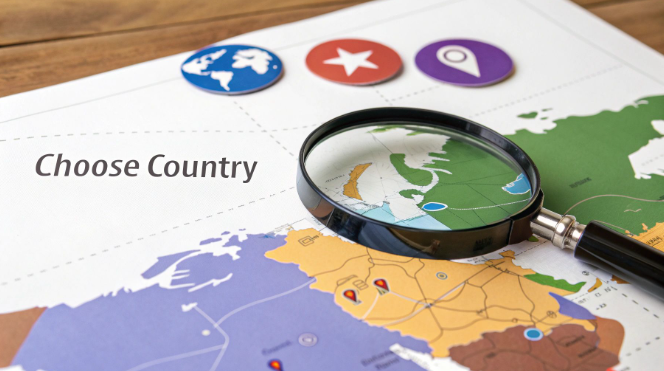
Picking a proxy location isn’t like throwing a dart at a map. It’s a strategic move that directly shapes your performance, security, and the accuracy of whatever you’re trying to accomplish. Getting this choice right is the bedrock of your success, whether you’re doing market research, verifying ads, or just unlocking geo-blocked content.
There are three pillars that should always guide your decision: physical proximity, the legal and privacy landscape, and market relevance. By weighing these three factors, you’ll ensure your proxy setup isn’t just working—it’s optimized. This simple framework will take you from being someone who uses a proxy to someone who masters it.
Factor 1: Proximity and Speed
The physical distance between you, your proxy server, and the website you’re targeting is the single biggest player in the speed game. Think of it like sending a package. A delivery from Madrid to Paris will always get there faster than one from Madrid to Tokyo. The exact same logic applies to your data.
Every single “hop” your internet traffic makes adds a tiny bit of delay, which we call latency. When your proxy is thousands of miles away from your target, your data has to make a very long round trip, adding up those delays and slowing everything down.
Actionable Tip: If you’re in Spain trying to scrape a French e-commerce site, choose a French proxy, not one in the US. The reduced latency means your scraper will finish its job faster, allowing you to collect data more efficiently and run more tasks in the same amount of time.
Factor 2: Legal and Privacy Landscape
Not all countries play by the same rules when it comes to data privacy. The legal environment of your chosen proxy location can have huge consequences for your security and anonymity. Some nations have iron-clad data protection laws, while others are known for heavy surveillance or forcing companies to store user data.
Your choice of proxy country is a choice about who you trust with your data. A country with strong privacy laws acts as a digital safe haven, while one with weak laws can expose you to unnecessary risks.
Countries are often rated for their privacy protections, which can be an incredibly useful guide. Nations with both solid infrastructure and tough privacy laws often become major hubs for secure proxy servers.
Some of the most revealing numbers come from infrastructure and speed tests. Switzerland, for example, is a top pick, offering an average proxy speed of 184 Mbps and an impressive privacy score of 9.5 out of 10, thanks to its strict data protection laws. Iceland is even quicker at 191 Mbps and matches Switzerland’s privacy rating. Over in Asia, Singapore is a speed demon, hitting averages of 215 Mbps because of its world-class data centers. You can dig into more stats on the top countries for proxy server hosting on affmaven.com.
Factor 3: Market and Content Relevance
The last piece of the puzzle is simple but absolutely critical: your proxy’s location must line up with the market you’re targeting. The whole reason for using a proxy by country is to see the internet from a specific, local viewpoint. If your proxy and target don’t match, the data you gather will be off-base and potentially worthless.
Let’s look at a few real-world examples:
- E-commerce Scraping: To pull product data from a Japanese e-commerce site like Rakuten, you must use a Japanese proxy. Any other location will either show you international pricing, the wrong language, or get your IP address blocked completely.
- Social Media Management: To run a social media account for a Brazilian audience, logging in from a Brazilian IP address helps you avoid triggering security flags. This makes your activity look organic, reducing the risk of account suspension.
- Content Access: Want to stream a show that’s only available on BBC iPlayer in the UK? Your digital “passport” has to be stamped with a UK IP address. It’s the only way in.
By carefully thinking through speed, privacy, and market relevance, you can choose the perfect country for your proxy with confidence and unlock the true power of your geo-targeted work.
Full-Industry Proxy IP Application Solutions
Power scalable growth for every cross-border business scenario with IPFLY’s reliable global proxy network
Residential vs Datacenter Proxies for Country Targeting
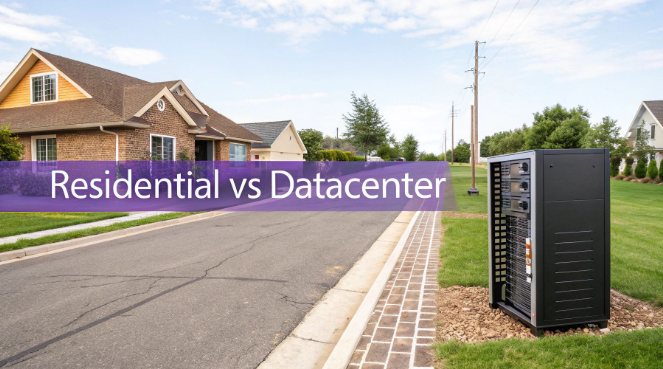
So, you’ve decided to use a proxy by country. That’s a smart move, but now you’re at a fork in the road. Do you go with a residential proxy or a datacenter proxy? The answer hinges on one simple question: do you need to blend in, or do you need raw speed?
Think of it like choosing a disguise. A datacenter proxy is like wearing a generic, store-bought mask—it hides your face, but everyone knows it’s a mask. A residential proxy, on the other hand, is like getting professional movie makeup. You look so authentic that nobody even questions if you’re the real deal.
One gets you speed and efficiency. The other gives you total authenticity and a much lower chance of getting blocked. Let’s break down which one to pick for your mission.
Understanding Datacenter Proxies
Datacenter proxies are born in commercial data centers. These are IP addresses that come from powerful servers, created in huge batches and not tied to any home internet service.
Because they come from a commercial source, they’re incredibly fast and typically very reliable. They are absolute workhorses for tasks where you need to chew through massive amounts of data and your digital identity isn’t under a microscope.
But that commercial origin is also their Achilles’ heel. Websites can easily spot that an IP address belongs to a data center, not a regular person surfing from their couch. That makes them a poor choice when you absolutely need to fly under the radar.
The Power of Residential Proxies
This is where things get interesting. Residential proxies are the chameleons of the internet. They are real IP addresses assigned to actual homes by Internet Service Providers (ISPs). When you use one, your connection looks completely organic to any website you visit—just like genuine traffic from someone’s laptop in the country you’re targeting.
That authenticity is their superpower. For tasks that are super sensitive to detection, like scraping prices from a savvy e-commerce site or managing a client’s social media accounts, a residential proxy isn’t just a good idea—it’s essential. It drastically cuts your risk of getting flagged, blocked, or even worse, fed fake data.
Choosing a residential proxy is like borrowing a local’s library card. You’re not an outsider trying to peek in; you’re a trusted member of the community. This is crucial for getting clean, unbiased data from heavily guarded websites.
While they might have a little more latency than their datacenter cousins (they’re traveling through real-world neighborhood networks, after all), their ability to sidestep tough security is priceless. To see how this tech works under the hood, check out the residential proxy network from IPFLY.
Practical Scenarios: When to Use Each
Okay, enough theory. Let’s talk about when to pull which tool out of the toolbox.
Use a Residential Proxy in a specific country when:
- Scraping E-commerce Prices: Trying to grab data from Amazon.jp? A datacenter IP will get you blocked in minutes. A Japanese residential proxy makes you look like a shopper in Osaka, letting you collect accurate prices without a hitch.
- Managing Social Media Accounts: Platforms like Instagram are notoriously picky about logins. If you’re running an account for a client in Brazil, using a Brazilian residential proxy looks like a normal local login, keeping the account safe from suspension.
- Verifying Localized Ads: You need to know if your ads are really showing up for users in Germany. A German residential proxy shows you exactly what a person in Berlin sees, giving you foolproof verification.
Use a Datacenter Proxy in a specific country when:
- High-Speed Market Research: You need to quickly analyze the headlines of 100 different UK news sites that don’t have strong bot protection. A UK datacenter proxy will give you the raw speed to get the job done fast.
- Accessing Geo-Restricted Content: Want to stream a video or read a news site only available in Canada? A fast Canadian datacenter proxy is usually more than enough to hop over simple geo-fences without the higher cost of a residential proxy.
- General Performance Testing: If you just need to check website load times from different spots on the globe, datacenter proxies offer a stable, high-speed connection for reliable metrics.
How to Set Up and Use a Country-Specific Proxy
So, you’ve picked out a country-specific proxy. Now what? Getting it running is way easier than you might think. Once you get the hang of the basic steps, you can apply them to just about anything, from your web browser to more complex automation software.
The whole process really just boils down to grabbing your credentials from your provider and plugging them into the right settings. Let’s walk through exactly how to get it done.
Step 1: Get Your Proxy Credentials
Your first stop is always your proxy provider’s dashboard—for us, that’s the IPFLY dashboard. Once you choose the country you need (let’s say you want a proxy by country for Japan), the system will generate a unique set of credentials just for you.
Think of this info as the key to your new digital location. It almost always includes four pieces of information:
- Proxy IP Address (or Hostname): This is the server’s address, like
jp.ipfly.net. - Port Number: This number tells your application which “door” to use to connect to the server (e.g.,
8000). - Username: Your unique ID for authentication.
- Password: The secret key that proves you’re you.
Keep these details handy and safe. You’re going to need them in a second. Most providers, including IPFLY, make this super simple and often give you a single line of text you can copy and paste.
Step 2: Find the Network Settings in Your Application
Next up, you need to tell your software to use your new proxy. Every application handles this a little differently, but you’re always on the lookout for a section labeled “network,” “connection,” or “proxy” settings.
Let’s take a common web browser like Google Chrome for a real-world example. On most computers, Chrome just uses the system-wide proxy settings.
- Open Chrome’s Settings.
- Head over to the System section.
- Click on Open your computer’s proxy settings.
This action will pop open your operating system’s network configuration panel. From there, you’ll see a spot for manual proxy setup where you can paste in the details you just copied.
For more specialized tools, like an SEO platform or a web scraper, you’ll usually find these settings tucked away in the application’s own connection options. The idea is the same: find where the tool manages its internet connection and look for a place to enter proxy details.
Step 3: Enter Your Credentials and Select the Protocol
This is where you plug everything in. In your system or app’s proxy settings, you’ll see fields for the server address and port. Go ahead and enter the IP/hostname and port number you got in Step 1.
You’ll often need to pick a protocol, too. The two you’ll see most are HTTP/S and SOCKS5.
- HTTP/S: Perfect for general web browsing and hitting up websites.
- SOCKS5: A more flexible and secure option that can handle all kinds of traffic beyond just web pages, like torrent clients or online games.
If your app requires authentication—which is standard for any quality proxy service—a pop-up window will probably appear the first time you try to connect. That’s your cue to enter the username and password your proxy service gave you.
Step 4: Confirm Your New Location
This is the moment of truth. You need to make sure your digital passport has been stamped correctly and the internet sees you in your chosen country.
The easiest way to check is by visiting an IP geolocation website. Just open your newly configured browser and head to a site like whatismyipaddress.com or iplocation.net.
The site will show you the IP address it’s detecting, along with the location. If you set up a Japanese proxy, it should say you’re browsing from Japan. Once you see that, you’re golden. Your proxy by country setup is a success, and you’re ready to get to work.
Best Practices for Using Country-Specific Proxies
To keep things running smoothly, always remember a few key things. First, use rotating residential proxies for anything sensitive, like web scraping or managing multiple social accounts. They automatically swap your IP, making your activity look more natural and drastically cutting your chances of getting blocked. Second, always respect a website’s terms of service and its
robots.txtfile. Playing by the rules keeps you out of trouble and helps ensure your projects are viable long-term. Finally, make security a priority by choosing a reputable provider and using secure protocols like SOCKS5 whenever you can.
Got Questions About Country Proxies? We’ve Got Answers.
Jumping into the world of geo-targeted proxies usually brings up a few questions. It’s a powerful tool, and you want to make sure you’re using it right. This section cuts straight to the chase with practical answers to the most common queries we get. Think of it as your quick-reference guide for getting started with country proxies.
Are Country Proxies Actually Legal to Use?
Absolutely. Using a country proxy is perfectly legal in most places around the globe. The technology itself is just a tool for directing internet traffic—nothing more, nothing less. The real question is how you use it.
When you’re using proxies for legitimate business activities like market research, ad verification, or accessing geo-blocked content for personal reasons, you’re on solid ground. Where you cross the line is using a proxy for illegal activities like hacking, spamming, or fraud. As with any tool, the responsibility is on the user. Always stick to the terms of service for both your proxy provider and the websites you visit.
Will a Proxy Slow Down My Internet Connection?
Because a proxy adds an extra stop for your internet traffic, a tiny bit of lag is expected. But it shouldn’t bring your connection to a grinding halt. The key is to minimize the impact, which really comes down to a few critical factors:
- Server Quality: A top-tier provider like IPFLY invests in high-quality servers with plenty of bandwidth and processing power to keep things moving fast.
- Geographic Distance: Physics still applies! The physical distance between you, the proxy server, and the website you’re trying to reach is a huge factor. The shorter the distance, the lower the latency.
- Proxy Type: Datacenter proxies are usually the speed demons of the bunch, while residential proxies trade a little speed for much better anonymity and legitimacy.
Actionable Tip: If you choose a proxy server that’s geographically close to your target (e.g., using a UK proxy to access a UK site from France) and comes from a premium provider, you’ll barely notice any speed difference for most tasks.
What’s the Difference Between a Proxy?
This is a big one. While both tools hide your real IP address, they’re built for different jobs and function in fundamentally different ways. A proxy is like an encrypted, armored tunnel for all of your device’s internet traffic. It routes everything through a secure server, giving you system-wide privacy and security.
A proxy, on the other hand, usually works on a specific application, like your web browser or a particular piece of software. It’s less about blanket encryption and more about giving you fine-tuned control over your IP for specific tasks. For business use cases like web scraping or managing tons of social accounts, proxies are the superior choice because they offer far more flexibility and a massive pool of IP addresses.
The demand for both tools is massive. Globally, about 35% of internet users have used a proxy to get around geo-restrictions. That number often skyrockets in response to censorship—Russia, for instance, saw a 43.2% increase in adoption back in 2022. You can discover more insights about these proxy usage trends on outbyte.com.
Here’s a simple rule of thumb: Use a proxy for everyday privacy and security. Use a proxy for specific, goal-oriented tasks like data collection or ad verification where precise location control is everything.
For an even deeper dive into these topics, you might want to review our comprehensive FAQ page. We cover a ton of ground there to help you make the best choice for your needs.
Ready to unlock global data and gain a competitive edge? With over 90 million real residential IPs, IPFLY provides the speed, reliability, and precision you need for your geo-targeting projects. Explore our country-specific proxy solutions today and see the difference a premium network can make