You’ve built your first web scraper. It’s a work of art, a simple, elegant script designed to fetch data—maybe product prices, stock levels, or social media trends. You run it, it works for five minutes, and then… BLAM.
Access denied. Error 403. IP Banned.
If you’re in the world of data, this is the digital equivalent of a brick wall. This is the moment you realize that “scraping” isn’t just about asking for data. It’s a high-tech cat-and-mouse game. The internet is no longer a library; it’s a fortress.
But what if I told you that the pros—the data scientists, the e-commerce giants, the market researchers—aren’t just scaling this wall, they’re walking right through the front gate? They’re not just scraping; they’re supercharged web scraping. Let’s pull back the curtain on the pop-sci of how they do it.
The “One-Man Army” Problem (And Why It Fails)
Your first scraper, the one that just got banned, is a “one-man army.” It runs from a single computer, with a single IP address.
The Pop-Sci Analogy:
Imagine your scraper is one person trying to “research” a giant department store. This person runs into the store, sprints down every aisle, and frantically scribbles down the price of every single item.
How long before the store’s security guard (the website’s server) notices?
The guard sees this one, frantic person (your IP) making 1,000 requests per second. It’s not human behavior. It’s a “bot.” The guard grabs your scraper by the digital collar and throws it out, banning that “person” (your IP) from ever coming back. This is rate limiting and IP banning, the first wall everyone hits.
The “Magic Store” Problem (Why Your Data is a Lie)
Let’s say you get smarter. You make your “one-man army” act human. It only visits one page per minute. Now the bouncer lets you in. But you’re facing a new, more sinister problem: the store is lying to you.
The Pop-Sci Analogy:
The store is a “magic store.” It sees who is asking for the price. When a local customer walks in, a jacket costs $100. When a tourist from another country walks in, the same jacket costs $150. When someone from a competitor’s address walks in, the jacket is listed as “out of stock.”
This is geo-targeting and cloaking. The website reads your “digital passport” (your IP address) and chooses what data to show you. Your scraper, running from its one server in one city, is only seeing one version of the truth, and it’s probably the fake one.
The “Supercharged” Solution: The Fleet of Secret Shoppers
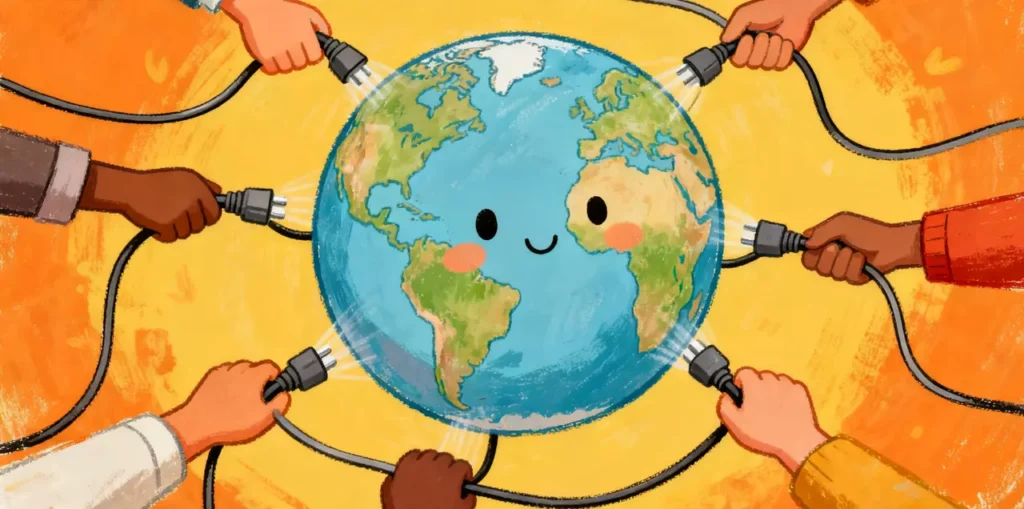
This is where the revolution happens. Supercharged scraping isn’t a “one-man army.” It’s a global fleet of 10 million secret shoppers.
This fleet is the core of modern data collection, and it’s built on proxies. A proxy is an intermediary, a “go-between” that gives your scraper a new disguise for every single request.
Instead of one person making 10,000 requests, the store’s security sees 10,000 different people making one request each. This is perfectly normal human behavior. The bouncer just waves them all through.
The ‘Fake Mustache’ vs. The ‘Perfect Disguise’ (The MOST Critical Part)
But not all disguises are created equal. This is the secret that separates amateurs from pros.
Datacenter Proxies (The “Fake Mustache”):
These are cheap IPs from a server farm. They’re fast, but they’re the digital equivalent of a trench coat and a giant, fake mustache. Every website bouncer has been trained to spot them from a mile away and block them on sight.
Residential Proxies (The “Perfect Disguise”):
This is the supercharged solution. These are real, clean IP addresses from actual home internet connections.
When your scraper uses a residential proxy, it looks like a real person browsing from their living room in Chicago. Or London. Or Tokyo. This is the “perfect disguise” that is trusted by websites.
This is why, to truly supercharge web scraping, professionals rely on vast, high-quality proxy networks. Sourcing these “perfect disguises” is the key. A service like IPFLY, for example, provides access to a massive, global network of residential IPs. This is the infrastructure that allows a scraper to become a fleet of 10,000 secret shoppers, pulling the real, localized, and accurate price from the “magic store” in every city simultaneously, without ever being detected.
Want to access blocked overseas academic databases, geo-restricted streaming platforms, or cross-border platform backends? Don’t let geo-barriers hold you back! Visit IPFLY.net now for region-specific proxies (190+ countries), then join the IPFLY Telegram community—get “step-by-step guides to unlock Netflix US/BBC UK” and “cross-border academic resource access tips”. Bypass restrictions easily and access global resources freely!
The Final Frontier: The “Digital Fingerprint”
Once you’ve mastered the IP, there’s one last boss level: the digital fingerprint.
Websites are now so smart, they don’t just check your “passport” (your IP); they check your “biometrics” (your browser). Does your “browser” have the right fonts? Is your screen resolution normal? This is where antidetect browsers come in, creating a fake browser to match your fake IP.
Conclusion: It’s Not a Script, It’s an Operation
“Supercharged web scraping” isn’t just about code. It’s about a fundamental shift in thinking.
You must stop acting like a single, brute-force bot and start acting like a sophisticated, invisible intelligence agency. It’s an art of digital disguises, misdirection, and using a global fleet of “local” assets (residential proxies) to gather the one thing that matters: the ground truth.