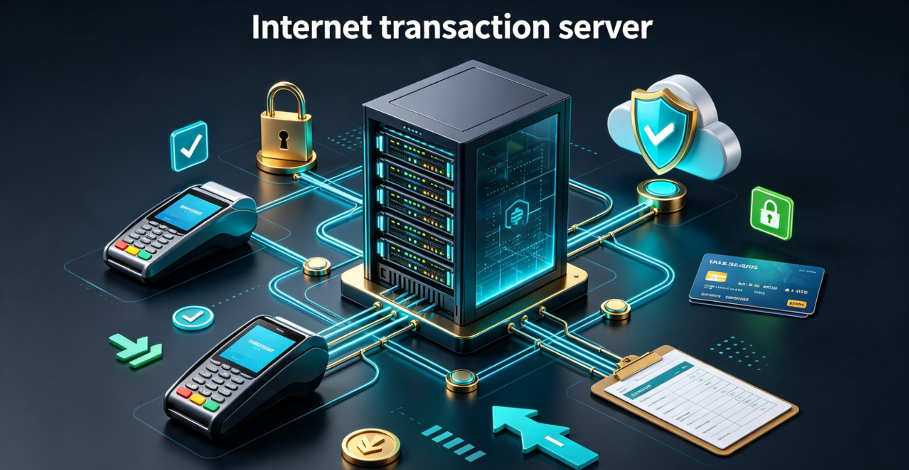
Every time you log in to a business application, check your bank balance, or submit an order through an enterprise portal, a complex chain of events unfolds behind the scenes. At the heart of many of these interactions is an Internet Transaction Server (ITS) —a specialized software component that bridges the gap between web browsers and backend enterprise systems.
While most people are familiar with web servers that deliver static pages, transaction servers operate at a different layer, handling the business logic, database connections, and stateful interactions that power modern applications. This guide explains everything you need to know about Internet Transaction Servers in 2026—what they are, how they work, how they differ from web servers, and why they remain essential for enterprise computing.
What Is an Internet Transaction Server?
An Internet Transaction Server (ITS) is a software component that enables efficient communication between enterprise applications—such as SAP R/3—and the internet. It serves as a bridge between web browsers and backend systems, allowing users to access complex business functionality through their web browsers.
In simpler terms, an ITS translates web-based requests into transactions that enterprise systems can understand and process. When you fill out a form on a company’s website and click submit, the ITS takes that HTTP request, communicates with the backend system (like SAP), retrieves or updates data, and sends back a formatted response to your browser.
The Core Purpose
The fundamental purpose of an Internet Transaction Server is to extend traditional enterprise applications to the web. Before ITS technology, accessing systems like SAP required dedicated client software installed on each user’s computer. The ITS eliminated this requirement, enabling access through any standard web browser.

How an Internet Transaction Server Works: The Request-Response Cycle
To understand how an ITS operates, it helps to first understand the basic unit of web communication: the HTTP transaction.
What Is an HTTP Transaction?
An HTTP transaction is a communication between a client and a server that involves a single request and its corresponding response. It is the fundamental unit of data exchange in the HTTP protocol.
When a user visits a website, their browser initiates an HTTP transaction by sending a request (such as a GET request for the homepage) to the server. The server processes this request and returns an HTTP response containing the content. This interaction is repeated for each resource the page needs to load.
Key characteristics of HTTP transactions:
- Stateless – Each transaction is independent of others. The server does not retain any memory of previous transactions.
- Simple – Each transaction involves a clear request and response, simplifying the communication model.
- Flexible – Supports various HTTP methods (GET, POST, etc.) and content types.
How the ITS Fits In
An Internet Transaction Server handles these HTTP transactions but adds an essential layer: it interprets web requests and translates them into transactions that enterprise backend systems can execute.
The ITS processes the HTTP request, sends the appropriate data (including logon information) to the backend system, retrieves information from it, processes it, and sends the response back to the web browser.
The Two-Component Architecture
The SAP Internet Transaction Server, for example, is composed of two separate programs that work together:
WGate (Web Gateway) – Links the ITS to the web server by receiving requests from web browsers via the web server and forwarding them to the AGate using TCP/IP.
AGate (Application Gateway) – Receives web requests from the WGate and communicates with the backend application server (using DIAG or RFC). It processes the HTTP request, sends the appropriate data to the backend system, retrieves information, processes it, and sends the response back to the WGate.
These two components may reside on the same computer or on separate computers connected by a TCP/IP network.
Internet Transaction Server vs. Web Server: What’s the Difference?
One of the most common points of confusion is the difference between an Internet Transaction Server and a traditional web server. While they work together, they serve very different purposes.
Web Server
A web server primarily handles static content delivery. It receives HTTP requests and serves HTML pages, images, CSS files, and JavaScript. Web servers are optimized for speed and efficiency in delivering content.
Key characteristics:
- Focuses on content delivery
- Handles HTTP requests directly
- Typically serves static or cached content
- Does not execute complex business logic
Internet Transaction Server
An Internet Transaction Server manages components that encapsulate business logic and manage database connections. It processes server scripts to produce customized pages and handles complex, stateful transactions.
Key characteristics:
- Executes business logic
- Manages database connections
- Handles complex, stateful transactions
- Bridges web browsers and enterprise backend systems
They Work Together
In a typical enterprise architecture, the web server and the transaction server can be on the same server machine or separate ones.The web server handles incoming HTTP requests and passes those that require business logic to the transaction server. The transaction server executes the necessary operations and returns the results to the web server, which then delivers the response to the client.
HTTP Transaction vs. HTTP Connection vs. HTTP Session
Understanding the distinctions between these related terms is essential for grasping how Internet Transaction Servers operate.
HTTP Transaction
An HTTP transaction refers to the exchange of a single request and response. It is the basic unit of communication.Example: A browser requests a webpage, and the server sends back the HTML.
HTTP Connection
An HTTP connection can involve multiple transactions over a single, persistent connection.In modern web browsing, a single connection may handle many requests (for HTML, CSS, images, etc.) without closing.
HTTP Session
A session may involve multiple HTTP transactions over time, often linked by session management techniques like cookies. While an HTTP transaction is a single request-response cycle, a session represents a broader conversation that may span many transactions.
Pros and Cons of HTTP Transactions
Understanding the strengths and limitations of HTTP transactions helps explain why specialized transaction servers are needed.
Pros
Simplicity – Each HTTP transaction is straightforward, involving a clear request and response, which simplifies the communication model.
Statelessness – Being stateless ensures that each transaction is independent, making the protocol scalable and easy to implement.
Flexibility – Supports various HTTP methods (GET, POST, etc.) and content types, making it adaptable to a wide range of applications.
Cons
Overhead – Each HTTP transaction requires headers and metadata, which can add overhead, particularly in large-scale applications with many small transactions.
Latency – The time taken to complete a full transaction (including network delays) can introduce latency, especially when multiple transactions are required for complex operations.
Lack of Context – Statelessness means each transaction lacks context from previous ones, necessitating additional mechanisms (like cookies or tokens) for maintaining state across transactions.
Real-World Applications of Internet Transaction Servers
Internet Transaction Servers are used across a wide range of industries and applications.
SAP Integration
The most prominent use case for Internet Transaction Servers is in SAP environments. The SAP ITS enables users to access SAP functionality through their web browsers, eliminating the need for dedicated client software.
Clear Step-by-Step Proxy IP Tutorials
Master proxy setup, integration and performance optimization quickly with IPFLY guides
E-Commerce and Payments
Modern payment processing platforms rely on transaction servers to handle the complex, stateful interactions required for financial transactions. In 2026, companies continue to innovate in this space with cloud-native, API-driven transaction middleware.
Enterprise Resource Planning (ERP)
Beyond SAP, many ERP systems use transaction server technology to provide web-based access to their applications, enabling employees and partners to interact with business processes from anywhere.
Banking and Financial Services
Financial institutions use transaction servers to process online banking transactions, loan applications, and other customer-facing services that require secure, reliable transaction processing.
E-Commerce Platforms
Online retailers rely on transaction servers to manage shopping carts, process orders, and handle inventory updates—all of which require maintaining state across multiple HTTP transactions.
The Evolution of Transaction Servers in 2026
The landscape of transaction processing continues to evolve. In 2026, several trends are shaping the future of Internet Transaction Servers.
Cloud-Native Architecture
Modern transaction platforms are increasingly cloud-native and API-driven, enabling financial institutions and enterprises to modernize their infrastructure.
API-First Design
Rather than traditional web-based interfaces, many transaction servers now expose APIs that can be consumed by a wide range of applications, from mobile apps to IoT devices.
Enhanced Security
With the rise of cyber threats, transaction servers have become more sophisticated in their security capabilities, including advanced encryption, authentication, and fraud detection.
Integration with AI and Analytics
Modern transaction servers increasingly incorporate AI capabilities for fraud detection, predictive analytics, and automated decision-making.
How IPFLY Supports Internet Transaction Server Infrastructure
Internet Transaction Servers handle critical business transactions that require reliable, secure, and consistent network connectivity. IPFLY provides the residential proxy infrastructure that supports these enterprise operations.
Why Network Quality Matters for Transaction Servers
Transaction servers handle sensitive business data—customer information, payment details, and proprietary business logic. Ensuring that connections to these servers are secure, stable, and free from interference is essential.
How IPFLY Helps
IPFLY’s residential proxies provide clean, ISP-registered IP addresses that ensure reliable connectivity for:
- API integrations – Connecting transaction servers to external services
- Monitoring and testing – Verifying transaction server performance from different geographic locations
- Secure access – Protecting backend systems from unauthorized access
- Load distribution – Balancing traffic across multiple transaction servers
IPFLY Static Residential Proxies offer dedicated, ISP-registered IP addresses that remain consistent over time—ideal for long-term integrations with enterprise transaction servers.
IPFLY Dynamic Residential Proxies provide real residential IPs with automatic rotation, adding an extra layer of security and flexibility for transaction processing workflows.
👉 Explore IPFLY Residential Proxies
Frequently Asked Questions
What is an Internet Transaction Server?
An Internet Transaction Server (ITS) is a software component that enables efficient communication between enterprise applications (like SAP R/3) and the internet, bridging web browsers and backend systems.
How does an Internet Transaction Server work?
It receives HTTP requests from web browsers, translates them into transactions that backend systems can execute, retrieves or updates data, and sends formatted responses back to the browser. The SAP ITS, for example, uses two components: WGate (Web Gateway) and AGate (Application Gateway).
What is the difference between a web server and an Internet Transaction Server?
A web server primarily handles static content delivery, while an Internet Transaction Server manages business logic, database connections, and complex, stateful transactions. They often work together, with the web server handling initial requests and passing those requiring business logic to the transaction server.
What is an HTTP transaction?
An HTTP transaction is a communication between a client and a server that involves a single request and its corresponding response. It is the fundamental unit of data exchange in the HTTP protocol.
Is an HTTP transaction the same as an HTTP session?
No. An HTTP transaction is a single request-response cycle, while an HTTP session may involve multiple HTTP transactions over time, often linked by session management techniques like cookies.
What is the SAP Internet Transaction Server?
The SAP Internet Transaction Server is a specific implementation of an ITS that enables users to access SAP functionality through web browsers. It consists of WGate (Web Gateway) and AGate (Application Gateway) components.
The Backbone of Enterprise Web Applications
Internet Transaction Servers are the unsung heroes of enterprise web applications. They bridge the gap between the simplicity of web browsers and the complexity of backend business systems, enabling users to access powerful enterprise functionality from anywhere.
Key takeaways:
- An Internet Transaction Server bridges web browsers and enterprise backend systems – It translates web requests into transactions that backend systems can execute.
- HTTP transactions are the basic unit of communication – Each transaction is a single request-response cycle.
- HTTP transactions are stateless – Each transaction is independent, requiring additional mechanisms for maintaining state.
- The SAP ITS consists of WGate and AGate components – WGate handles web server communication, while AGate communicates with the backend system.
- Transaction servers differ from web servers – Web servers handle static content; transaction servers handle business logic and stateful operations.
- Transaction servers are essential for enterprise applications – They power SAP, e-commerce, banking, and ERP systems.
- Network quality matters – Reliable, secure connectivity is essential for transaction server performance.
Understanding Internet Transaction Servers is not just a technical exercise—it is essential for anyone involved in enterprise IT, web development, or business operations. Whether you are an IT professional managing SAP systems, a developer building web applications, or a business leader overseeing digital transformation, knowing how transaction servers work will help you make better decisions about your technology infrastructure.
Secure Your Transaction Server Infrastructure with IPFLY
Internet Transaction Servers handle critical business operations that demand reliable, secure connectivity. IPFLY provides the residential proxy infrastructure that supports these enterprise workloads.
IPFLY offers flexible proxy solutions for every use case:
- Static Residential Proxies – Dedicated, ISP-registered IPs for consistent, long-term integration with transaction servers.
- Dynamic Residential Proxies – Real residential IPs with automatic rotation for enhanced security and flexibility.
- Datacenter Proxies – High-performance IPs for speed-critical operations.
Get started today: Register for an IPFLY account and explore the full product lineup on the IPFLY homepage. Build a reliable, secure infrastructure for your enterprise transaction needs.