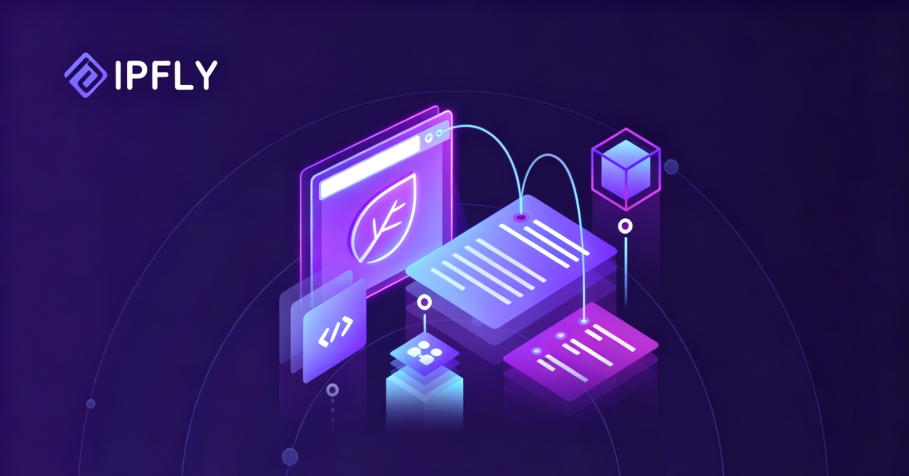
In the world of web automation, digital privacy, and stealth marketing, tools like Leaf Browser have gained notable attention. Designed for advanced browser manipulation and identity spoofing, Leaf Browser serves as a basic gateway to anonymous or automated browsing. As privacy standards tighten and detection technologies evolve, however, many users have begun exploring alternatives and upgrading their stack with better anonymity tools and residential proxies.
Leaf Browser is especially popular among developers, web scrapers, and affiliate marketers looking to run parallel sessions with different identities. Its minimal UI and open‑source nature make it easier to customize for automated workflows, at least at a basic level.
But as we will explore in this guide, Leaf Browser on its own is only half the equation. Without a robust proxy backend, even the best anti‑detect browser can leave you exposed. This article dives deep into what Leaf Browser is, its use cases, its limitations, and why pairing it with residential proxies from providers like IPFLY transforms it into a truly undetectable workstation.
What Is Leaf Browser?
A Lightweight, Chrome‑Based Container
Leaf Browser is best understood as a container. Built on Google Chrome’s engine, it inherits its rendering engine, security patches, and extension ecosystem—but isolates its tabs, cookies, and storage from your main browser. When you open Leaf Browser, you enter a separate browsing environment with independent proxy settings, private windows, and automatic data clearing on exit.
This architecture makes it particularly suited for:
- Managing multiple accounts on platforms that restrict multiple logins from the same browser profile
- Privacy‑sensitive research where you don’t want your main browsing history, cookies, or cached credentials interacting with the sites you visit
- Quick, temporary access to resources blocked on your local network, leaving no trace
Unlike standalone anti‑detect browsers such as Incogniton, AdsPower, or Dolphin Anty, Leaf Browser installs as a Chrome extension rather than a separate application. This makes it lightweight and easy to deploy, but it also means it lacks some of the deep fingerprinting controls found in dedicated anti‑detect browsers.
Why Some Users Turn to Leaf Browser for Web Automation
Leaf Browser gained popularity for several reasons:
- It is free and open‑source
- It is lightweight and doesn’t consume excessive system resources
- It offers basic identity isolation through separate tab containers
- It includes a proxy configuration panel for routing traffic through external servers
As IPFLY’s anti‑detect browser guide explains, anti‑detect browsers are specialized tools designed to prevent websites from tracking your identity. Unlike regular browsers, which expose a consistent digital signature, anti‑detect browsers hide or alter this information, making each browsing session appear unique.
However, the real reason people use Leaf Browser isn’t the power it has, but the limitations it helps them bypass. Let’s take a closer look at those applications.
Common Use Cases of Leaf Browser
Web Scraping and Automation
One of the most common use cases for Leaf Browser is browser‑based scraping. By simulating different browser profiles, users can scrape websites that otherwise detect repetitive bot behavior.
Typical scraping tasks include:
- Scraping e‑commerce product data
- Collecting social media analytics
- Monitoring price changes across different websites
Leaf Browser acts as a front‑end controller for these tasks, often paired with proxy servers and browser automation frameworks.
Social Media Management and Account Farming
Affiliate marketers and social media automation experts often use Leaf Browser to manage multiple accounts from the same machine. Common applications include:
- Facebook and Google account farming
- Running ad accounts for clients
- Operating outreach campaigns from different identities
By simulating isolated browser sessions, Leaf Browser helps reduce the chance of mass suspensions or bans, although its limitations can quickly become an issue for larger‑scale operations.
Bypassing Browser Fingerprinting and Anti‑Bot Systems
Websites today use dozens of fingerprinting vectors to detect fake sessions. From canvas fingerprinting to WebRTC leaks and language headers, the modern internet is full of traps. Leaf Browser offers limited customization to spoof some of these identifiers, but users often need more sophisticated setups when dealing with highly protected websites.
IPFLY’s guide on browser leaks explains that a persistent canvas fingerprint can connect thousands of requests from different residential IPs back to a single device. Even with IP rotation, if the browser fingerprint remains consistent, platforms can still identify you.
Drawbacks and Risks of Using Leaf Browser
Despite its popularity, Leaf Browser comes with a handful of significant drawbacks that have become more obvious in recent years.
Security Concerns and Detection Risks
Leaf Browser is open‑source and doesn’t have the same ongoing security updates or community audits as more established tools. This poses several risks:
- No encryption of session data
- Weak fingerprint masking
- Prone to browser fingerprinting by advanced detection systems
The Fatal Flaw: The Proxy Backend
Perhaps the most critical limitation is that Leaf Browser does not provide proxy services. The proxy configuration panel is merely a relay channel; it forwards traffic to whatever destination address you enter. If you provide a free datacenter proxy address, your traffic carries that datacenter IP’s reputation—and modern websites are highly suspicious of datacenter IPs.
If you don’t set up a proxy at all, Leaf Browser simply uses your existing internet connection and inherits any blocks or geographic restrictions imposed by your local network.
The Problem with Free and Generic Proxies
When new users discover Leaf Browser’s proxy settings panel, they often search for free proxy lists and enter an address. This might work for a few minutes. But the flaw is structural:
- Free proxies, and even many paid services, route traffic through datacenter IP addresses—addresses belonging to cloud hosting providers rather than home internet providers
- Entire IP ranges from these providers are cataloged in commercial threat intelligence databases
- Streaming platforms, e‑commerce sites, and social networks typically block or challenge connections from these addresses
- Even if the IP isn’t immediately blacklisted, hundreds of other users are likely using it at the same time
As IPFLY explains in its Leaf Browser integration guide, “If you point the extension to a free public proxy, you will encounter IP bans, endless CAPTCHAs, and geo‑redirects that defeat the purpose”.
Clear Step-by-Step Proxy IP Tutorials
Master proxy setup, integration and performance optimization quickly with IPFLY guides
The Professional Solution: Pairing Leaf Browser with Residential Proxies
Why Residential Proxies Transform Leaf Browser
When you point Leaf Browser to a residential proxy network like IPFLY, it transforms from a simple unblocking tool into a trusted, geographically precise, session‑stable workstation that platforms treat as an ordinary home user.
As IPFLY’s anti‑detect browser guide emphasizes, “anti‑detect browsers are about much more than just privacy. They are widely used for social media marketing, web scraping, multiple account management, dropshipping, and more”. But to achieve true undetectability, you need both a browser that masks your fingerprint and a proxy that masks your IP.
Key Advantages of Residential Proxies for Leaf Browser
Ultra‑High Authenticity – Residential IPs come from real home broadband connections, making it extremely difficult for websites to recognize them as proxies.
Low Block Rates – Websites are far less likely to block residential IPs compared to datacenter IPs.
IP Rotation – Rotating residential IPs allow multiple concurrent requests without triggering anti‑bot mechanisms.
Geographic Targeting – You can appear as if browsing from different countries to test campaigns or collect data globally.
Clean Reputation – Residential IPs have no history of abuse or blacklisting.
IPFLY’s Proxy Solutions for Leaf Browser
IPFLY provides the high‑grade residential proxy infrastructure that complements Leaf Browser’s lightweight design. With over 90 million ethically‑sourced residential IPs across 190+ countries, IPFLY offers the scale, authenticity, and reliability that demanding proxy operations require.
- Dynamic Residential Proxies – Perfect for high‑volume data collection and automated workflows. With millisecond response times and 99.9% uptime, these proxies keep your Leaf Browser sessions running smoothly.
- Static Residential Proxies (ISP Proxies) – Ideal for long‑term account management and session‑based workflows that require consistent IP assignments.
- Datacenter Proxies – A cost‑effective option for non‑defended workloads where residential IPs are not required.
Setting Up Leaf Browser with IPFLY Residential Proxies
Getting started with Leaf Browser and IPFLY is straightforward.
Step 1: Obtain Your IPFLY Proxy Credentials
Sign up for an IPFLY account and select your preferred proxy plan. From your dashboard, copy your proxy credentials:
- Hostname (e.g.,
gw.ipfly.net) - Port
- Username
- Password
Step 2: Configure Leaf Browser
- Open Leaf Browser and navigate to the proxy configuration panel
- Enter the IPFLY proxy details:
- Protocol: HTTP, HTTPS, or SOCKS5
- Server: Your IPFLY hostname
- Port: Your IPFLY port
- Username and Password: Your IPFLY credentials
Step 3: Test Your Configuration
Launch a session in Leaf Browser and visit an IP checking service to verify that your traffic is routing through the IPFLY residential IP. Confirm that the geolocation matches your target region.
Step 4: Scale Your Workflow
For large‑scale operations, use IPFLY’s dynamic residential proxies with automated rotation to distribute requests across diverse IPs, preventing detection and maintaining smooth operations.
Leaf Browser vs. Dedicated Anti‑Detect Browsers
| Feature | Leaf Browser | Dedicated Anti‑Detect Browsers (Incogniton, AdsPower, Dolphin Anty) |
| Installation | Chrome extension | Standalone application |
| Fingerprint Control | Basic | Advanced, granular control |
| Profile Isolation | Tab‑based | Full profile isolation |
| Proxy Integration | Manual configuration | Built‑in proxy management |
| Fingerprint Spoofing | Limited | Extensive (canvas, WebGL, fonts, audio) |
| Best For | Lightweight, temporary tasks | Enterprise‑scale multi‑account operations |
As IPFLY’s comprehensive anti‑detect browser guide explains, dedicated anti‑detect browsers offer extensive fingerprint customization options, including user‑agent, screen resolution, timezone, canvas fingerprint, WebGL fingerprint, font lists, AudioContext fingerprint, and WebRTC protection. Each browser profile is a completely isolated environment.
For lightweight, temporary tasks, Leaf Browser paired with IPFLY proxies offers a cost‑effective solution. For large‑scale, enterprise‑grade multi‑account operations, dedicated anti‑detect browsers like Incogniton, AdsPower, or Dolphin Anty provide deeper fingerprint control and better scalability.

Leaf Browser offers a lightweight, accessible entry point into the world of browser‑based automation and identity isolation. Its Chrome extension architecture, basic fingerprint masking, and proxy configuration panel make it appealing for students, remote workers, and professionals who need a quick, throwaway browsing environment.
However, Leaf Browser on its own is only half the equation. Without a robust proxy backend, its weaknesses become immediately apparent: weak fingerprint masking, no session encryption, and a reliance on datacenter IPs that are easily detected and blocked.
Pairing Leaf Browser with a residential proxy network like IPFLY transforms it into a trusted, geographically precise, session‑stable workstation. With over 90 million residential IPs across 190+ countries, millisecond response times, and 99.9% uptime, IPFLY provides the infrastructure that turns Leaf Browser from a basic unblocking tool into a professional‑grade automation workstation.

Ready to power up your Leaf Browser with professional residential proxies? IPFLY provides the high‑grade residential and ISP proxies that complement Leaf Browser’s lightweight design:
- Dynamic Residential Proxies – Access over 90 million residential IP addresses across 190+ countries with automated rotation and millisecond response times. Perfect for high‑volume data collection and automated workflows.
- Static Residential Proxies (ISP Proxies) – 100% exclusive, ISP‑registered residential IP addresses for consistent, long‑term access patterns. Ideal for account management and session‑based workflows.
- Datacenter Proxies – High‑performance proxy infrastructure with 99.9% availability for non‑defended workloads.
For deeper insights into anti‑detect browsers and proxy integration, explore IPFLY’s blog at https://www.ipfly.net/blog . Key resources include:
- How to Choose the Best Anti-Detect Browser for Social Media, E-Commerce, and Web Scraping
- Browser Leaks Exposed: The Complete Guide to IP, WebRTC, and DNS Leaks
Build your undetectable browsing stack today. Visit IPFLY’s homepage to explore the full range of proxy solutions, or register now for immediate access to professional proxy capabilities that power your Leaf Browser workflows.