
PlainProxies offers several proxy types, from rotating residential connections to static ISP IPs. But understanding what each plan includes—and how its pricing works—takes more than looking at the starting rate.
This PlainProxies review covers its key features, pricing, strengths, and limitations. It also compares seven PlainProxies alternatives, including paid proxy providers and free web proxies, to clarify how they differ in connection options, costs, and functionality.
What Is PlainProxies?
PlainProxies is a proxy service provider focused on web data collection and proxy infrastructure. According to its website, its residential proxy network includes over 25 million IPs across more than 195 countries. Its product lineup also includes datacenter proxies, ISP proxies, IPv6 proxies, and unlimited residential proxy plans.
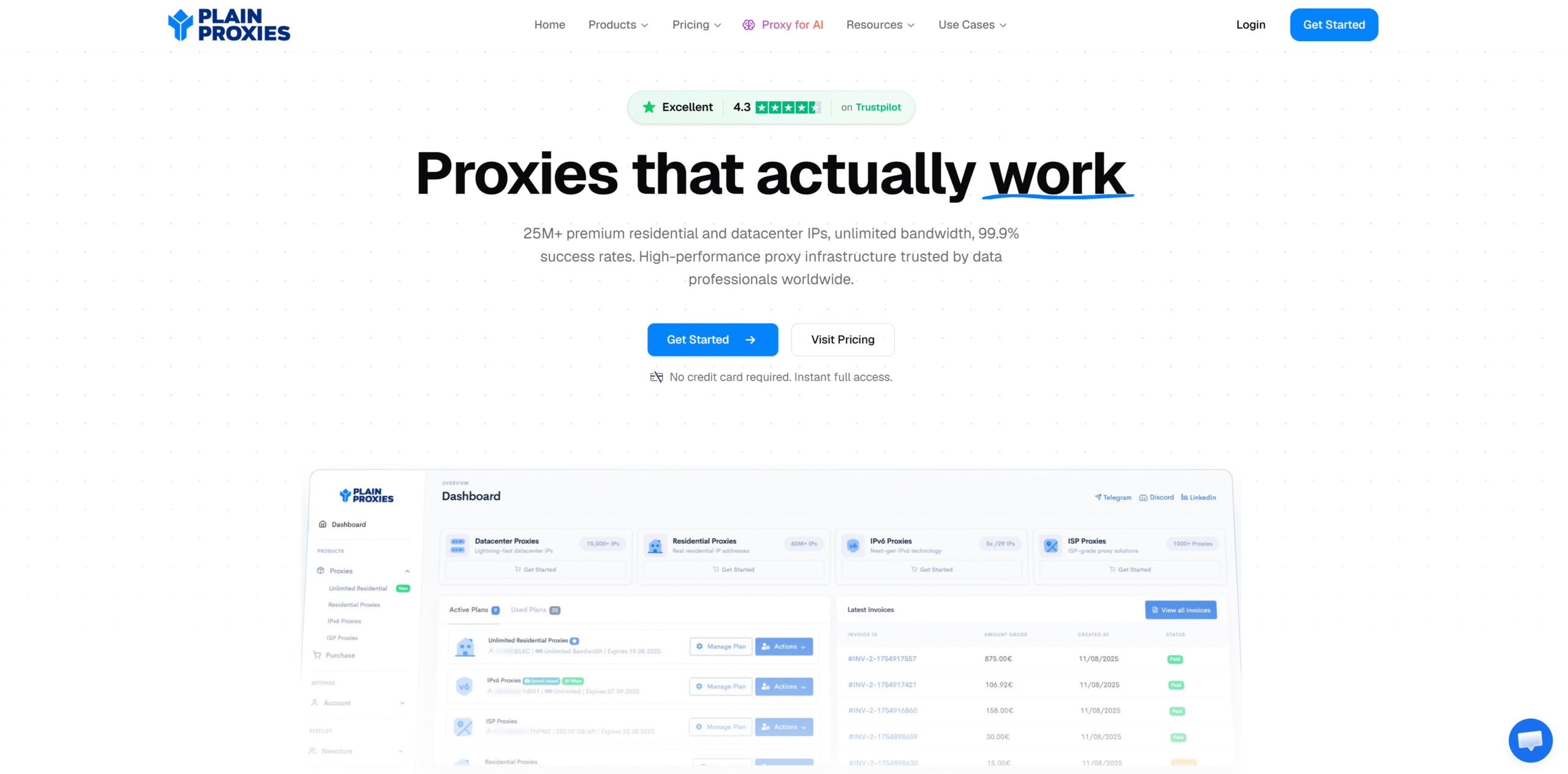
PlainProxies Proxy Types and Key Features
PlainProxies offers several proxy types, along with options for choosing locations and managing connections. Here’s how these features fit together.
Residential and Unlimited Residential Proxies
PlainProxies offers standard residential plans measured in gigabytes and unlimited residential plans without a fixed data allowance. The choice depends on your expected traffic: smaller tasks may suit a data package, while heavier usage may justify an unlimited plan. Compare the duration, connection limits, and bandwidth conditions to estimate the overall cost.
Datacenter, ISP, and IPv6 Proxies
Beyond residential plans, PlainProxies provides datacenter proxies for fast bulk requests and ISP proxies with static IPs for longer sessions. IPv6 proxies are another option, provided your target websites and software support IPv6 connections.
Location Targeting and Session Control
After choosing a proxy type, consider where your connection should appear to come from and how often its IP should change. PlainProxies residential plans list country, state, and city targeting, alongside rotating connections and sticky sessions. Rotation changes the exit IP, while a sticky session keeps it for a set period. Static ISP proxies address longer-term fixed-IP needs.
Dashboard, Authentication, and Integrations
To start using your chosen plan, obtain the proxy connection details from your account and enter them into a compatible browser or tool. PlainProxies residential plans support HTTP(S) and SOCKS5, with API documentation available for integration. Follow the selected product’s instructions for authentication and any proxy export options.
PlainProxies Pricing and Plans
PlainProxies pricing varies by proxy type, traffic allowance, and subscription length. Residential plans are priced by gigabyte, unlimited residential plans by duration and speed, and dedicated ISP proxies by IP count. The table below summarizes the published options:
| Proxy Type | Billing Model | Entry Plan or Published Example | Traffic and Duration |
| Residential | Per GB | 5 GB for €11.50 (€2.30/GB) | Valid for 30 days |
| Unlimited Residential | By duration and speed | €158 for 1 day at 200 Mbps; €525 for 1 week; €1,575 for 30 days | Unlimited data during the selected period; listed prices include a promotional discount |
| Datacenter | Monthly, based on IP pool and traffic | Published example: €27/month for a 1,000-IP pool and 1 TB | Monthly allowance; cost changes with configuration |
| Dedicated ISP | Per IP per month | 1 IP for €3/month; 10 IPs for €25/month | 100 GB per IP per month; longer billing periods offer discounts |
| IPv6 | Traffic packages, with an unlimited option also listed | Smallest listed traffic package: 100 GB at €0.15/GB (€15 total) | Traffic packages are advertised as having no expiration date |
A lower unit price may require a larger purchase. For example, the PlainProxies residential rate drops to €0.95/GB on the listed 500 GB plan, with a total cost of €475 and a 30-day validity period. The effective cost per GB depends on how much of the purchased traffic is used within that period.
PlainProxies offers a free trial. Details about the trial duration, traffic allowance, and eligible products are available by contacting its sales team.
Is PlainProxies Safe and Reliable?
PlainProxies publishes a privacy policy explaining how personal data is collected and protected. According to its website, the service provides ethically sourced residential IPs, high availability, and 24/7 support. These statements have not been independently verified in this review.
However, the policy does not clearly establish a no-logs guarantee for proxy traffic. Refunds are restricted to eligible credit-card purchases requested within 48 hours, with a 500 MB usage limit for traffic-based products. Connection reliability may also vary by location and target website.
PlainProxies Pros and Cons
PlainProxies offers several proxy types and pricing models. Its strengths and limitations depend on the connection requirements and scale of each task.
Pros of PlainProxies
- Multiple proxy types: Residential, datacenter, ISP, and IPv6 proxies provide options for different workflows.
- Location and session controls: Residential plans include geographic targeting, IP rotation, and sticky sessions.
- Different billing options: Traffic-based and unlimited residential plans accommodate different usage levels.
- Free trial: PlainProxies offers a free trial, with details available from its sales team.
Cons of PlainProxies
- Product-specific compatibility: IPv6 requires compatible websites and tools, and available locations vary by proxy type.
- Limited sticky-session duration: Residential sticky sessions retain an IP temporarily, unlike longer-term static ISP connections.
- Volume and validity requirements: Lower residential rates require larger purchases, while standard packages remain valid for 30 days.
- Restricted refunds: Refund eligibility depends on the payment method, request timing, and traffic consumed.
PlainProxies Alternatives at a Glance
PlainProxies alternatives range from configurable proxy networks to browser-based web proxies. The first five providers offer proxy connections for browsers, scripts, and other tools. Proxyium and BlockAway work through a webpage, so they serve a different purpose.
| Provider | Service Types | Connection Options | Pricing Model | Main Features |
| IPFLY | Residential, ISP, datacenter | Residential rotation; dedicated static ISP IPs | Per GB or per IP | Geographic targeting, non-expiring residential traffic, dedicated ISP connections |
| Decodo | Residential, ISP, mobile, datacenter | Rotating, sticky, and static options | Traffic-based and IP-based plans | Detailed location targeting and multiple network types |
| IPRoyal | Residential, ISP, mobile, datacenter | Rotating residential sessions; static ISP options | Subscriptions and pay-as-you-go | Residential session controls and volume-based pricing |
| Webshare | Residential, ISP, datacenter | Rotating residential and static proxy products | Traffic-based or per-proxy subscriptions | Customizable plans and a free datacenter proxy tier |
| Bright Data | Residential, ISP, mobile, datacenter | Rotating, sticky, and static options | Pay-as-you-go and subscriptions | Geographic targeting, proxy infrastructure, and separate data collection tools |
| Proxyium | Free web proxy | Browsing through its website | Free | URL-based access and a small selection of server locations |
| BlockAway | Free web proxy | Browsing through its website | Free basic access; premium option | Browser-based access with European and US server options |
7 PlainProxies Alternatives to Consider
The services below differ in how they provide access, maintain sessions, and charge for usage. Pricing examples refer to specific products rather than the full service range.
IPFLY
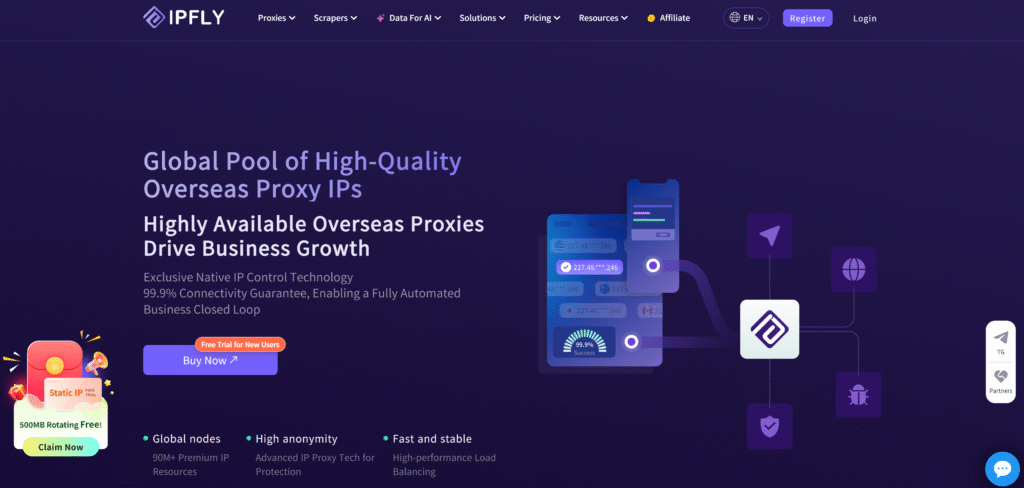
IPFLY Proxy brings residential, ISP, and datacenter proxies together, giving businesses flexibility to manage both changing and fixed-IP connections. Its residential network includes 90M+ IPs across 190+ countries and regions, while its dedicated static residential proxies provide consistent connections for ongoing operations.
- Key features: Geographic targeting, residential IP rotation, dedicated static ISP IPs, and HTTP(S)/SOCKS5 compatibility.
- Pricing: Residential traffic is listed from $1/GB with no expiration; the ISP pricing page lists dedicated IPs from $2.50/IP.
- Benefits: Non-expiring residential traffic supports uneven usage, while dedicated ISP connections provide continuity for longer workflows.
- Limitations: Connections require configuration in a compatible browser or tool; the dashboard does not currently include AI-powered features.
Expert Proxy IP Comparisons & Reviews
In-depth multi-dimensional analysis to help you pick the most cost-effective IPFLY plan
Decodo
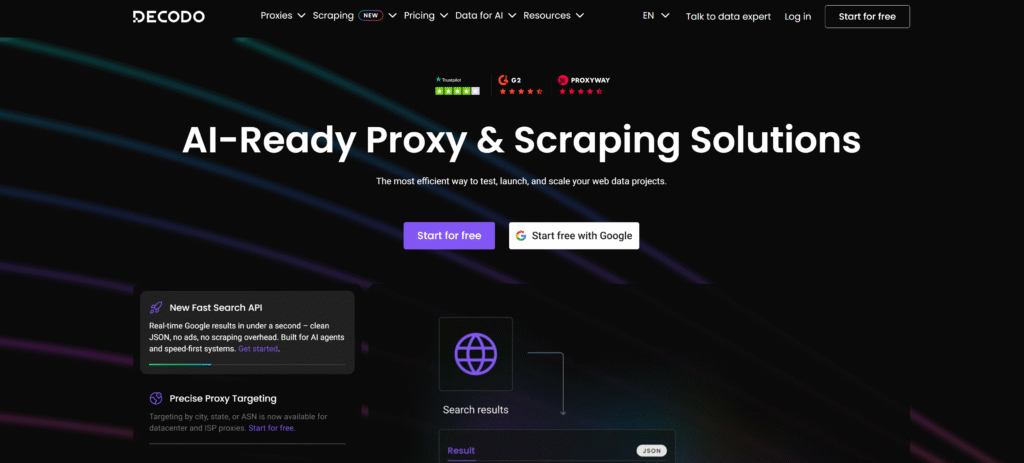
Decodo, formerly Smartproxy, provides residential, ISP, mobile, and datacenter proxies. Its residential service includes rotating and sticky sessions, with targeting options extending to city, ZIP code, and ASN level.
- Key features: Multiple proxy types, detailed geographic targeting, HTTP(S)/SOCKS5 support, and browser extensions.
- Pricing: Residential pay-as-you-go costs $4/GB. Monthly subscriptions start at $11.25 for 3 GB, excluding VAT; the listed 1 TB plan costs $2/GB.
- Benefits: Multiple network types and targeting controls allow different connection requirements within one service.
- Limitations: Lower residential rates require larger monthly commitments. Pay-as-you-go and subscription access cannot be active simultaneously under the published billing rules.
IPRoyal
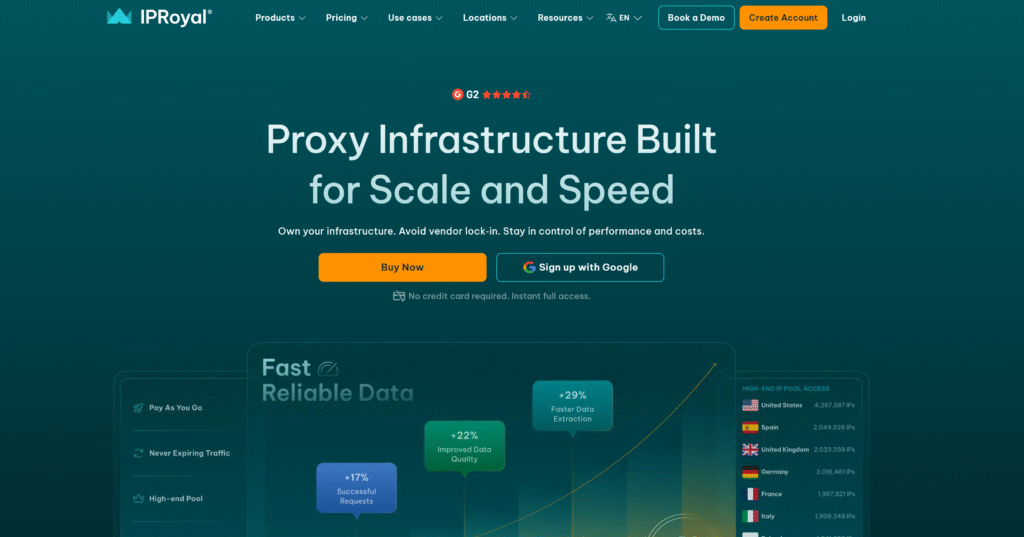
IPRoyal offers residential, ISP, datacenter, and mobile proxies. Its residential service supports IP rotation and sticky sessions of up to seven days, although keeping an IP for the full period depends on the residential device remaining online.
- Key features: Residential session controls, location targeting, static ISP products, and subscription or pay-as-you-go purchasing.
- Pricing: The residential pricing page lists 1 GB at $7 with a subscription or $7.35 with pay-as-you-go. Lower rates apply to larger orders.
- Benefits: Separate purchasing models provide flexibility between recurring usage and individual traffic purchases.
- Limitations: Small purchases have higher per-GB costs, and the maximum sticky-session duration is not a guarantee of uninterrupted IP availability.
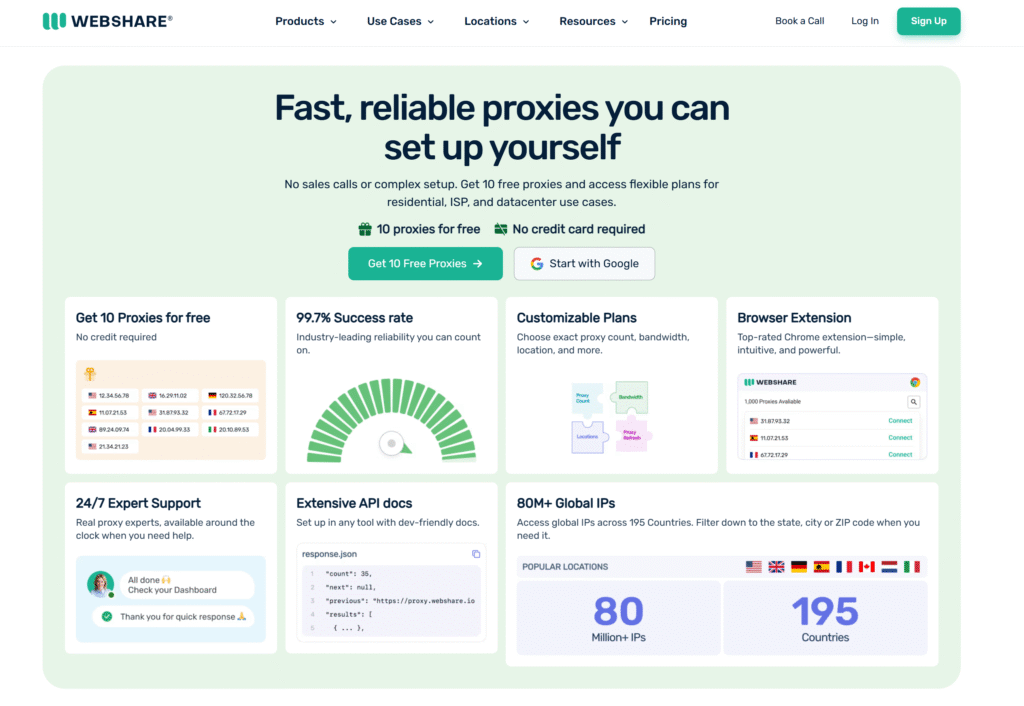
Webshare provides datacenter proxy servers, static residential proxies, and rotating residential proxies. Plans can be configured around proxy quantity, traffic, and sharing arrangements, with management through an online dashboard.
- Key features: HTTP/SOCKS5 endpoints, customizable subscriptions, rotating residential access, and static ISP options.
- Pricing: Shared datacenter plans start at $2.99/month for 100 proxies. A separate free tier includes 10 proxies; residential pricing varies by traffic package.
- Benefits: The free datacenter tier provides an entry point for testing, while paid plans offer several configuration options.
- Limitations: The free tier does not include the full product range. Bandwidth, thread limits, and whether IPs are shared or dedicated depend on the subscription.
Bright Data
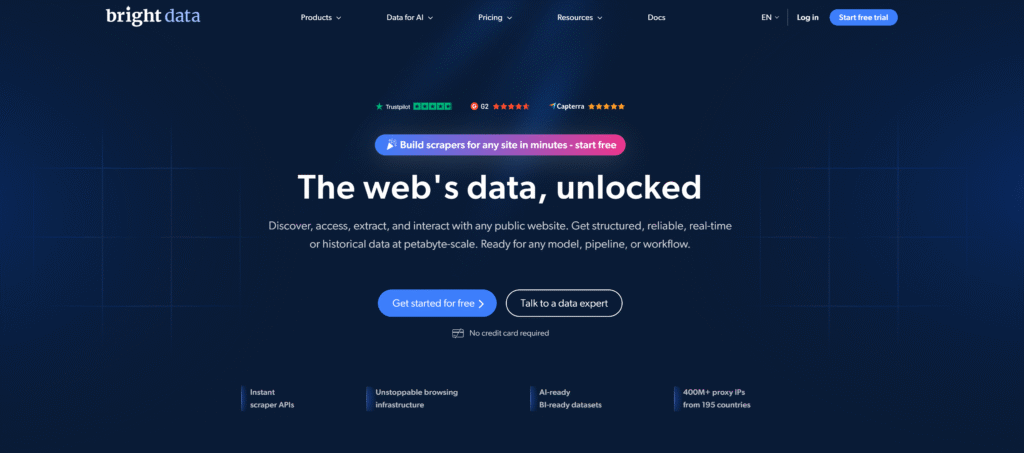
Bright Data provides residential, ISP, mobile, and datacenter proxy networks, alongside separate scraping and browser tools. Its residential proxies support rotating and sticky sessions with country, state, city, and ZIP code targeting.
- Key features: Multiple proxy networks, detailed location controls, session management, and additional data collection services.
- Pricing: Published residential pay-as-you-go pricing shows $4/GB with a 50% promotional discount from $8/GB. Subscription plans are also available.
- Benefits: Proxy connections and managed data collection products are available within the same platform.
- Limitations: Products use different billing units and configurations, making total costs dependent on the services selected. Promotional rates may change.
Proxyium

Proxyium is a free web proxy that opens websites through an online URL field. Users select an available server location and enter a website address without installing software or configuring proxy credentials.
- Key features: Browser-based access, selectable server locations, and shareable proxy links.
- Pricing: Free.
- Benefits: The URL-based interface keeps the setup process simple.
- Limitations: Access is limited to pages opened through Proxyium. It does not replace configurable proxy endpoints for external applications, and website compatibility can vary.
BlockAway

BlockAway is another browser-based web proxy. It provides a URL or search field, European and US server options, and support for browsing popular websites, including video and social platforms.
- Key features: No browser configuration, regional server options, and shareable browsing links.
- Pricing: Basic access is free; the website also links to a premium option.
- Benefits: Users can open supported pages directly through the website without managing proxy connection details.
- Limitations: The service centers on webpage access rather than supplying dedicated IPs or proxy endpoints for scripts and external tools. Compatibility depends on the website being opened.
How to Choose Between PlainProxies and Its Alternatives
The choice depends on how your workflow uses IP addresses, traffic, and external tools. These requirements help narrow down the options:
- Fixed IP or rotating connections: Long-running account sessions generally need a consistent IP, while data collection across many pages may require rotation. The distinction is between a dedicated static IP and a residential sticky session with a limited duration.
- Target locations: Country coverage alone may not be enough for regional research. Availability at the state or city level—and within the chosen proxy type—determines how precisely a connection can be located.
- Traffic budget: Per-GB plans tie costs to traffic consumption, including retries. Unlimited plans charge for access over a specified period, while per-IP plans may include separate traffic allowances.
- Integration requirements: Browsers, scripts, and automation tools need compatible proxy endpoints, protocols, and authentication. Proxyium and BlockAway instead provide access through their own webpages.
Conclusion
PlainProxies offers several proxy types, location controls, and billing options. Its overall fit depends on the required IP consistency, available locations, traffic allowance, and plan duration.
For businesses seeking flexible regional access and dedicated fixed connections, IPFLY Proxy combines residential, ISP, and datacenter proxies in one service. Explore IPFLY’s proxy plans for data collection, market research, and ongoing account operations.
Frequently Asked Questions About PlainProxies
What is PlainProxies used for?
PlainProxies provides proxy connections for web scraping, price monitoring, SEO research, ad verification, and account management. The relevant proxy type depends on the task’s location and session requirements.
Does PlainProxies offer a free trial?
Yes. PlainProxies offers a free trial. Its sales team can provide details about the duration, traffic allowance, and eligible products.
What is the difference between PlainProxies residential and unlimited residential plans?
Standard residential plans include a set amount of traffic measured in gigabytes. Unlimited residential plans provide unlimited data transfer during a selected period, with pricing based on duration and speed.
Can PlainProxies be used for long-term sessions?
PlainProxies offers static ISP proxies for connections that require a consistent IP. Residential sticky sessions also retain an IP temporarily, but their duration depends on the selected product and plan.
What is the best alternative to PlainProxies?
IPFLY combines rotating residential proxies, dedicated ISP proxies, and datacenter proxies in one service. Non-expiring residential traffic accommodates changing usage levels, while dedicated ISP IPs with unlimited bandwidth support consistent connections for ongoing operations.