What Is ScraperAPI? A “Dumbed-Down” Crawler Tool for Everyone
In Plain Language: What Does ScraperAPI Do?
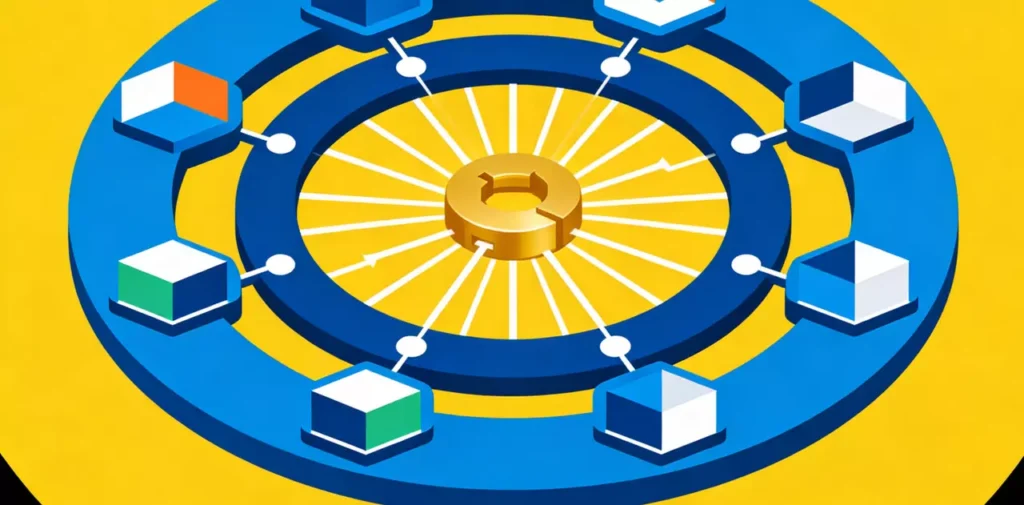
To put it simply, ScraperAPI is like a “professional crawler driver” you hire. You only need to tell it the “destination” (the URL you want to crawl) and the “requirements” (such as whether you need to render JavaScript, which region’s IP to use), and it will take care of the rest: finding available IPs, simulating real user behavior to bypass anti-crawling mechanisms, loading dynamic pages, and finally returning the parsed data to you.
You don’t need to learn complex anti-crawling knowledge, don’t need to spend time testing various proxies, and don’t need to debug the crawler repeatedly because of IP blocks. This is the core value of ScraperAPI: lowering the threshold of crawler technology and improving data collection efficiency.
Core Functions That Solve Pain Points
Automatic Anti-Crawling Bypass: It can automatically handle 100+ common anti-crawling mechanisms, including Cloudflare, reCAPTCHA, JavaScript rendering, and dynamic Cookie verification. Xiao Ming, the novice in the story above, wouldn’t have been blocked at the first step if he had used ScraperAPI.
Built-In Massive Proxy Pool: It has 40 million+ proxies covering 120+ countries and regions, supporting both data center IPs and residential IPs. You can specify the IP region with one parameter, which is very friendly for cross-border crawling scenarios like Sister Li’s.
High Concurrency & High Availability: It supports 1000+ requests per second and promises 99.9% availability. Even in large-scale data collection scenarios, it can ensure stable operation without frequent disconnections.
Multi-Language & Multi-Scenario Support: It is compatible with all mainstream programming languages such as Python, JavaScript, and Java. It can crawl static pages, dynamic pages, and even APP interfaces, covering almost all data collection needs.
Cost-Effective Billing Model: It only charges for successful requests, and failed requests are free. There is no minimum consumption for pay-as-you-go, which is very suitable for small and medium-sized enterprises and individual developers to control costs.
Practical Cases: Use ScraperAPI to Crawl Data in 2 Common Scenarios
Below, we will use two practical cases (novice entry-level static page crawling and advanced cross-border dynamic page crawling) to show you how to use ScraperAPI. The code is simple and easy to copy, and novices can get started directly.
Case 1: Novice Entry – Crawl Static Product Data (E-Commerce Platform)
Goal: Crawl the product name, price, and sales volume of a domestic e-commerce platform’s “wireless headphones” category page.
Step 1: Register ScraperAPI and Get API Key
1.Visit the official ScraperAPI website (https://www.scraperapi.com/) and register an account. The free trial includes 5000 successful requests, which is enough for testing.
2.After logging in, enter the “Dashboard” page to get your exclusive API Key (this key is required for subsequent API calls).
Step 2: Write Crawler Code (Python)
import requests
from bs4 import BeautifulSoup

# Basic configuration
API_KEY = "Your ScraperAPI Key"  # Replace with your own API Key
TARGET_URL = "https://example.com/category/wireless-headphones"  # Target URL
SCRAPER_API_URL = "https://api.scraperapi.com"

# Construct request parameters
params = {
    "api_key": API_KEY,
    "url": TARGET_URL,
    "timeout": 30  # Timeout setting
}

# Send request and parse data
try:
    response = requests.get(SCRAPER_API_URL, params=params)
    if response.status_code == 200:
        soup = BeautifulSoup(response.text, "html.parser")
        # Extract product information (adjust the selector according to the actual page structure)
        products = soup.find_all("div", class_="product-item")
        for product in products:
            name = product.find("h3", class_="product-name").get_text(strip=True)
            price = product.find("span", class_="product-price").get_text(strip=True)
            sales = product.find("span", class_="product-sales").get_text(strip=True)
            print(f"Product Name: {name}, Price: {price}, Sales: {sales}")
    else:
        print(f"Request failed, status code: {response.status_code}")
except Exception as e:
    print(f"Error occurred: {str(e)}")
Step 3: Run the Code and View Results
Install the required dependencies first: pip install requests beautifulsoup4, then run the code. You will find that the product data is successfully crawled without being blocked. For novices, this process only takes 10 minutes, which is much more efficient than writing anti-crawling code from scratch.
Case 2: Advanced Application – Cross-Border Dynamic Page Crawling (Southeast Asia Shopee)
Goal: Crawl the product reviews of a Shopee store in Indonesia. This scenario involves two pain points: dynamic page rendering (reviews are loaded through JavaScript) and cross-border latency.
Solution: Use ScraperAPI’s JavaScript rendering function, and match it with IPFLY’s Southeast Asia local proxy to reduce latency and improve stability.
Step 1: Prepare IPFLY Proxy Information
1.Register an IPFLY account (provide a free trial) and log in to the background.
2.Select the “Indonesia” region proxy node, and get the proxy IP, port, username, and password (IPFLY is client-free, so no software installation is required).
Step 2: Write Combined Crawler Code
import requests
from bs4 import BeautifulSoup

# Basic configuration
SCRAPER_API_KEY = "Your ScraperAPI Key"
IPFLY_PROXY = {
    "http": "http://IPFLY_Username:IPFLY_Password@IPFLY_Proxy_IP:IPFLY_Port",
    "https": "https://IPFLY_Username:IPFLY_Password@IPFLY_Proxy_IP:IPFLY_Port"
}
TARGET_URL = "https://shopee.co.id/product/123456789/1234567890"  # Shopee product page

# Construct ScraperAPI request parameters (enable JS rendering and custom proxy)
params = {
    "api_key": SCRAPER_API_KEY,
    "url": TARGET_URL,
    "render": "true",  # Enable JavaScript rendering
    "custom_proxy": IPFLY_PROXY["https"],  # Use IPFLY proxy
    "country_code": "id",  # Match Indonesia region
    "max_retries": 5  # Automatic retry for failed requests
}

# Send request and parse reviews
try:
    response = requests.get(
        url=SCRAPER_API_URL,
        params=params,
        timeout=60  # Extend timeout for cross-border crawling
    )
    if response.status_code == 200:
        soup = BeautifulSoup(response.text, "html.parser")
        reviews = soup.find_all("div", class_="shopee-product-rating__content")
        print(f"Total reviews: {len(reviews)}")
        for i, review in enumerate(reviews, 1):
            review_text = review.get_text(strip=True)
            print(f"Review {i}: {review_text}")
    else:
        print(f"Request failed, status code: {response.status_code}")
except Exception as e:
    print(f"Error occurred: {str(e)}")
Effect: After using the combination of ScraperAPI and IPFLY, the cross-border crawling latency is reduced from 300ms+ to 80ms-, the page loading success rate reaches 99.5%, and there is no longer any disconnection during high-concurrency crawling.
Why Do You Need to Match a High-Availability Proxy Like IPFLY with ScraperAPI?
ScraperAPI’s built-in proxy pool can meet basic crawling needs, but in enterprise-level scenarios (high concurrency, long-term stable crawling, cross-border crawling), matching a professional high-availability proxy like IPFLY can bring obvious improvements. The reasons are as follows:
Pain Points of ScraperAPI’s Built-In Proxy in Enterprise Scenarios
The built-in proxies are shared by multiple users, and the reuse rate is high, which may be blocked by some strict anti-crawling websites.
In emerging markets (Southeast Asia, the Middle East, etc.), the number of local nodes is limited, and cross-border crawling latency is high.
In long-term high-concurrency crawling, the proxy stability may fluctuate, affecting the continuity of data collection.
How IPFLY Makes Up for These Shortcomings
Client-Free Design, Seamless Integration: IPFLY does not require installing any client software, and can be directly integrated with ScraperAPI through IP + port. It is very convenient to configure, and there is no need to modify the original crawler logic, which is especially suitable for enterprise environments where software installation is restricted.
Exclusive Pure IP, Low Block Rate: IPFLY provides exclusive data center IPs and residential IPs, which are not shared with other users. The IP purity is 100%, which can greatly reduce the risk of being blocked when used with ScraperAPI’s anti-crawling logic.
Global Node Coverage, Low Cross-Border Latency: IPFLY has localized proxy nodes in 100+ countries and regions, especially in emerging markets such as Southeast Asia and the Middle East. The local node latency is as low as 50ms, which perfectly solves the problem of high cross-border crawling latency.
99.99% Availability, Stable and Uninterrupted: IPFLY adopts multi-node backup and intelligent routing optimization technology, with an availability rate of 99.99%. It can support 24/7 long-term stable crawling, which is crucial for enterprise-level data collection tasks that require continuity.
Enterprise-Level Security Guarantee: It supports AES-256 end-to-end encryption, which can effectively protect the security of crawled data during transmission. It also provides detailed access logs, which meets the compliance requirements of enterprise data collection.
Comparison of ScraperAPI + Different Proxies
| Proxy Type | Stability | Cross-Border Latency | Block Rate | Integration Difficulty | Suitability |
|---|---|---|---|---|---|
| ScraperAPI Built-In Proxy | ★★★★☆ | ★★★☆☆ | ★★★☆☆ | ★★★★★ (Zero Configuration) | Basic crawling scenarios, individual developers |
| Free Public Proxy | ★☆☆☆☆ | ★☆☆☆☆ | ★☆☆☆☆ | ★★☆☆☆ | Not recommended for any enterprise scenarios |
| General Paid Proxy | ★★★☆☆ | ★★★☆☆ | ★★★★☆ | ★★★☆☆ | Small-scale enterprise crawling |
| IPFLY High-Availability Proxy | ★★★★★ | ★★★★★ | ★★★★★ | ★★★★☆ (Seamless Integration with ScraperAPI) | High-concurrency, cross-border, long-term stable crawling |
ScraperAPI vs. Other Crawler Tools: Why It’s the First Choice for Most People
There are many crawler tools on the market, such as traditional manual coding, Apify, BrightData, etc. We compare ScraperAPI with them from the perspectives of “entry threshold”, “efficiency”, “cost”, and “enterprise adaptability” to help you make the right choice.
| Tool Type | Entry Threshold | Development Efficiency | Cost | Enterprise Adaptability |
|---|---|---|---|---|
| Traditional Manual Coding | High (Need to master anti-crawling, proxy, etc.) | Low (Need to write a lot of code) | Low (Only proxy cost) | High (Highly customizable) |
| ScraperAPI | Low (Zero anti-crawling knowledge required) | High (API call, a few lines of code) | Medium (Pay-as-you-go, cost-effective) | High (Support high concurrency, with IPFLY for better stability) |
| Apify | Medium (Need to learn the exclusive framework) | High (Template-based) | High (Subscription system, high minimum consumption) | High (Suitable for large-scale distributed crawling) |
| BrightData | Medium (Complex configuration) | Medium (Need to configure proxy and crawler separately) | Very High (Expensive proxy fees) | Very High (Global proxy coverage, enterprise-level SLA) |
Conclusion: For most people (novices, small and medium-sized enterprises), ScraperAPI is the most cost-effective choice. It balances low threshold, high efficiency, and reasonable cost. For enterprise-level scenarios with high requirements for stability and cross-border performance, matching it with IPFLY can achieve the effect of “1+1>2” without paying the high cost of tools like BrightData.
Whether you’re looking for reliable proxy services or want to master the latest proxy operation strategies, IPFLY has you covered! Hurry to visit IPFLY.net and join the IPFLY Telegram community—with first-hand information and professional support, let proxies become a boost for your business, not a problem!
Frequently Asked Questions About ScraperAPI
Q1: Is ScraperAPI legal to use? Will it violate the website’s rules?
ScraperAPI itself is a legal tool. Whether it violates the rules depends on your crawling behavior. It is recommended that you: 1. Check the website’s robots.txt protocol before crawling; 2. Do not crawl copyrighted or sensitive data; 3. Control the crawling speed to simulate real user behavior. As long as you crawl public data for legitimate purposes, it is compliant.
Q2: What should I do if the request fails? Will I be charged?
Failed requests will not be charged. Common reasons for failure include: target website downtime, network fluctuations, incorrect parameters. Solutions: 1. Enable the “max_retries” parameter to automatically retry; 2. Check whether the target URL is valid; 3. Switch the proxy region or use a custom proxy like IPFLY; 4. Contact ScraperAPI’s customer service for technical support.
Q3: Can ScraperAPI crawl APP data?
Yes. You need to first use packet capture tools (such as Charles, Fiddler) to obtain the API interface of the APP, then use ScraperAPI to call this interface, and configure the corresponding request headers (User-Agent, Cookie, etc.) in the parameters. It should be noted that you need to abide by the APP’s user agreement when crawling.
Q4: How long is the free trial of ScraperAPI? What are the limitations?
The free trial has no time limit and includes 5000 successful requests. It supports all core functions, including JavaScript rendering, proxy switching, etc. The only limitation is that the maximum concurrency is 10 requests per second. After the trial, you can choose pay-as-you-go or subscription according to your needs.
Q5: Is it necessary to match IPFLY? Can I use other proxies?
It is not necessary for basic scenarios, but it is highly recommended for enterprise-level scenarios. You can also use other paid proxies, but IPFLY has obvious advantages: client-free integration, global nodes, 99.99% availability, and better compatibility with ScraperAPI. If you use other proxies, you need to pay attention to whether they support custom proxy configuration and whether the stability is reliable.
ScraperAPI + IPFLY, the Best Combination for Efficient Data Collection
In the era of data-driven decision-making, efficient and stable data collection is the key to gaining a competitive advantage. ScraperAPI solves the pain points of high entry threshold and low efficiency of traditional crawlers, allowing everyone to crawl data easily.
And for enterprises that need to deal with high concurrency, cross-border crawling, and long-term stable data collection, matching ScraperAPI with IPFLY is the “golden combination”: ScraperAPI handles anti-crawling and request scheduling, and IPFLY provides high-availability, low-latency proxy support. Together, they can reduce the crawler block rate to 1% or less, and improve data collection efficiency by 80%.
If you are still troubled by crawler blockages, low efficiency, or cross-border crawling issues, why not try the free trial of ScraperAPI and IPFLY? Start your efficient data collection journey with the simplest configuration.