Search engine results pages (SERPs) are the single most valuable source of public business intelligence, powering 70% of critical decisions across SEO, market research, competitor analysis, brand monitoring, and ad verification. Extracting structured, actionable data from SERPs manually is impossible at scale, which has made SERP API the standard tool for automated search data collection. SERP APIs abstract the complexity of interacting with search engines, returning clean, structured JSON/XML data for titles, URLs, snippets, ads, local listings, and more. However, industry data shows that 65% of SERP API failures stem from poor underlying proxy infrastructure, leading to incomplete data, delayed reports, and missed business opportunities.
Even premium off-the-shelf SERP APIs struggle with persistent issues: IP bans, CAPTCHA challenges, inaccurate geographic targeting, strict rate limits, and inconsistent data quality. These problems arise because search engines like Google, Bing, and Yahoo operate the most advanced anti-bot systems in the world, easily detecting low-quality shared proxies, datacenter IPs, and suspicious traffic patterns. For businesses relying on SERP data for competitive advantage, a stable, high-performance proxy infrastructure is not optional—it is the foundation of reliable SERP API performance.
IPFLY’s enterprise-grade proxy ecosystem integrates seamlessly with both off-the-shelf SERP APIs and custom SERP scrapers, eliminating every common pain point of search data extraction. With fully self-built servers, 7-layer IP filtering, and a global pool of over 90 million high-quality residential IPs across 190+ countries, IPFLY delivers the clean, geographically diverse, scalable IP identities needed to bypass anti-bot systems and extract accurate SERP data consistently. This article breaks down SERP API’s core value, common performance challenges, and how IPFLY proxies supercharge your search data pipelines for maximum reliability and scalability.
What Is SERP API & Its Core Business Value
Core Definition
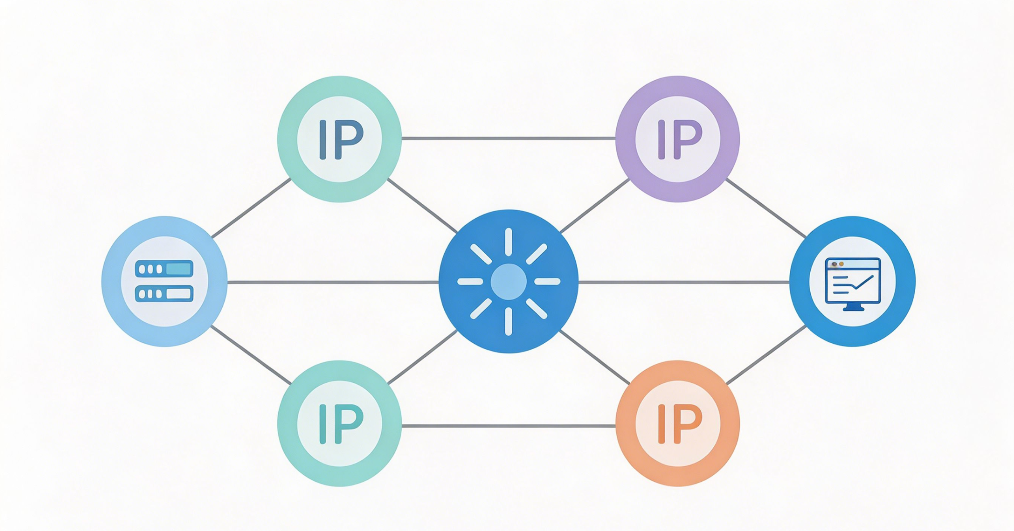
SERP API is a specialized application programming interface designed to automate the extraction of structured data from search engine results pages. It handles all the low-level complexity of web scraping—including request formatting, cookie management, header rotation, and anti-bot bypass—returning standardized, machine-readable data that can be directly integrated into analytics tools, dashboards, and business workflows. Most SERP APIs support major search engines (Google, Bing, Yahoo, DuckDuckGo) and advanced features like geographic targeting, language localization, pagination, and mobile/desktop result filtering.
Legitimate High-Impact Use Cases
SERP API powers data-driven decisions across every industry, with proven value for the following compliant use cases:
- SEO Rank Tracking: Monitor keyword rankings across regions, devices, and search engines to optimize content strategy and measure campaign performance.
- Competitor Intelligence: Track competitors’ organic and paid search presence, content strategies, and pricing changes to identify market opportunities.
- Market Research: Analyze search trends, consumer intent, and product demand across global markets to inform product development and go-to-market strategies.
- Brand Reputation Monitoring: Track mentions of your brand, products, or executives in search results to address negative sentiment and protect brand image.
- Ad Verification: Validate ad placement, visibility, and compliance across search engines to ensure marketing budgets are spent effectively.
- Local Business Intelligence: Monitor local search results, Google Business Profile data, and competitor locations to optimize local SEO and brick-and-mortar strategies.
All these use cases depend on consistent, accurate, and timely SERP data—making proxy quality the most critical factor in SERP API success.
Common Pain Points of SERP API Usage
Even the most expensive enterprise SERP API plans suffer from persistent issues that undermine data reliability and scalability. These problems all trace back to inadequate proxy infrastructure:
- IP Bans & CAPTCHA Challenges
Search engines update their anti-bot systems weekly, quickly flagging and blocking low-quality shared proxies and datacenter IPs. Blocked requests return partial or no data, leading to gaps in analytics and inaccurate reports. Many SERP APIs pass these CAPTCHAs and blocks on to users, requiring manual intervention and delaying data delivery.
- Inaccurate Geographic Targeting
Most SERP APIs use generic datacenter IPs or broad regional proxies that cannot accurately replicate local search results. For example, a proxy tagged as “United States” may actually be located in a different state, returning incorrect local listings, pricing, and keyword rankings. This renders regional SEO and market research data useless.
- Strict Rate Limits & Scalability Bottlenecks
Nearly all SERP APIs enforce strict per-minute and per-month request limits, with scaling requiring exponentially more expensive plans. Even high-tier plans often suffer from performance degradation during peak usage hours, as the provider’s shared proxy infrastructure cannot handle high concurrency.
- Inconsistent Data Quality
Blocked requests, timeouts, and anti-bot challenges lead to inconsistent data delivery. A single failed rank check can skew weekly SEO reports, while incomplete competitor data can lead to poor strategic decisions. Many SERP APIs do not offer granular visibility into failed requests, making it impossible to troubleshoot data gaps.
- High Total Cost of Ownership
Enterprise SERP API plans can cost tens of thousands of dollars per month for high-volume extraction, as providers pass on the cost of proxy infrastructure and anti-bot bypass. For businesses with custom workflows, building a custom SERP scraper with premium proxies is often 50–70% cheaper than using an off-the-shelf API.
- Lack of Customization
Off-the-shelf SERP APIs offer limited control over proxy rotation, IP type, request headers, and routing. This inflexibility makes it impossible to adapt to changes in search engine anti-bot systems or support custom data extraction requirements.
Why Proxy Infrastructure Is the Backbone of Reliable SERP API Performance
SERP APIs are only as good as the proxies they use. Search engines evaluate hundreds of signals to distinguish human users from automated scrapers, with IP identity being the most heavily weighted factor. To pass these checks consistently, you need proxies that:
- Appear as real residential users (not datacenter servers)
- Have clean reputations with no history of abuse
- Support precise geographic targeting down to the city level
- Rotate automatically to avoid rate limits and bans
- Handle high concurrency without performance degradation
- Maintain 99.9% uptime for uninterrupted data collection
Low-quality shared proxies and datacenter IPs fail all these criteria, leading to the persistent issues outlined above. Only enterprise-grade residential proxies can deliver the reliability and accuracy required for production-grade SERP data pipelines.
IPFLY Proxies: Supercharge Your SERP API Workflows
IPFLY’s enterprise proxy ecosystem is optimized for SERP data extraction, addressing every common pain point of SERP API usage. Our proxies integrate seamlessly with both off-the-shelf SERP APIs (via bring-your-own-proxy features) and custom SERP scrapers, delivering the clean, geographically diverse, scalable IP identities needed to bypass even the most advanced anti-bot systems.
Full-Industry Proxy IP Application Solutions
Power scalable growth for every cross-border business scenario with IPFLY’s reliable global proxy network
IPFLY Proxy Types for SERP API
IPFLY offers three specialized proxy types, each tailored to different SERP extraction use cases:
Dynamic Residential Proxies: The Gold Standard for SERP Scraping
IPFLY Dynamic Residential Proxies draw from a global pool of over 90 million real end-user IPs across 190+ countries and regions, supporting per-request or timed IP rotation with millisecond-level response times and unlimited ultra-high concurrency.
Best for: High-volume rank tracking, large-scale market research, competitor intelligence, and ad verification. Automatic per-request IP rotation eliminates rate limits and IP bans, while real residential IPs bypass search engine anti-bot systems seamlessly. City-level geographic targeting ensures accurate local search results, and unlimited concurrency lets you scale to millions of requests per day without performance degradation.
Static Residential Proxies: Consistent Long-Term Monitoring
IPFLY Static Residential Proxies use permanent, ISP-allocated real residential IPs that are exclusively assigned to a single user. They include unlimited traffic and full HTTP/HTTPS/SOCKS5 protocol support, with 24/7 technical support.
Best for: Long-term monitoring of specific local search results, brand reputation tracking, and workflows that require a consistent IP identity. Fixed residential IPs maintain stable session state and avoid sudden location changes that trigger anti-bot alerts, ensuring consistent data collection over weeks or months.
Datacenter Proxies: Low-Cost Testing & Non-Sensitive Extraction
IPFLY Datacenter Proxies provide exclusive, high-purity static IPs with industry-leading speed and ultra-low latency. They include unlimited traffic and global location selection, offering cost-effective performance for low-risk tasks.
Best for: Internal testing of SERP API integrations, extraction of non-geotargeted public data, and workflows where anti-bot detection is less strict. The high-speed connection ensures fast request processing, while exclusive IPs avoid shared abuse risks.
Core Technical Advantages of IPFLY for SERP API
- 7-Layer IP Filtering: All IPs undergo rigorous screening to remove pre-blacklisted addresses and those with a history of abuse, ensuring 99.8% success rates for SERP requests.
- City-Level Geographic Targeting: Precise IP targeting across 190+ countries and 3,000+ cities delivers accurate local search results for regional SEO and market research.
- Unlimited Ultra-High Concurrency: Fully self-built servers support thousands of simultaneous requests without throttling, enabling scalable data extraction for enterprise workloads.
- 99.9% Service Uptime: Redundant global infrastructure ensures uninterrupted data collection 24/7/365, with no downtime during peak usage hours.
- Full Protocol Compatibility: Native HTTP/HTTPS/SOCKS5 support works seamlessly with all major SERP APIs and scraping frameworks (Requests, HTTPX, Scrapy, Playwright).
- Real-Time IP Pool Updates: Our IP pool is continuously refreshed to stay ahead of search engine anti-bot updates, ensuring long-term reliability.
- 24/7 Technical Support: Expert team provides tailored configuration guidance and troubleshooting to optimize your SERP data pipeline performance.
How to Integrate IPFLY Proxies with SERP API Workflows
IPFLY proxies integrate with SERP API workflows in two primary ways: enhancing off-the-shelf SERP APIs and powering custom SERP scrapers. Below is a practical example of using IPFLY dynamic residential proxies with a custom Python SERP scraper:
python
import requests

# IPFLY dynamic residential proxy configuration
proxies = {"http": "http://your-ipfly-username:your-ipfly-password@gate.ipfly.com:10000","https": "http://your-ipfly-username:your-ipfly-password@gate.ipfly.com:10000"}# SERP request parameters (Google search for "best wireless headphones")
url = "https://www.google.com/search"
params = {"q": "best wireless headphones","gl": "us",  # Target country (United States)"hl": "en",  # Target language (English)"num": 10    # Number of results per page}

headers = {"User-Agent": "Mozilla/5.0 (Windows NT 10.0; Win64; x64) AppleWebKit/537.36 (KHTML, like Gecko) Chrome/124.0.0.0 Safari/537.36"}# Send request via IPFLY proxy
response = requests.get(url, params=params, headers=headers, proxies=proxies, timeout=10)# Process response dataif response.status_code == 200:print("Successfully retrieved SERP data")# Add your data parsing logic hereelse:print(f"Request failed with status code: {response.status_code}")
For off-the-shelf SERP APIs that support bring-your-own-proxy (BYOP) features, simply enter your IPFLY proxy credentials in the API’s settings to replace the provider’s default low-quality proxies.
Best Practices for Reliable SERP Data Extraction
Combine IPFLY’s proxy infrastructure with these best practices to maximize the accuracy and reliability of your SERP data pipelines:
- Use dynamic residential proxies for most tasks: They deliver the highest success rates and most accurate geographic targeting for SERP extraction.
- Implement city-level targeting: Match your proxy location to your target market to ensure accurate local search results.
- Rotate user agents and headers: Vary request headers to mimic different browsers and devices, reducing anti-bot detection risk.
- Add random request delays: Introduce 2–10 second delays between requests to simulate human browsing behavior.
- Implement exponential backoff retries: Retry failed requests with increasing delays to handle temporary network glitches and rate limits.
- Monitor success rates: Track request success rates, response times, and error codes to identify and resolve issues proactively.
- Avoid excessive concurrency: Even with rotating proxies, limit request frequency to avoid triggering search engine anti-bot systems.
Build Production-Grade SERP Pipelines with IPFLY
SERP API is an essential tool for data-driven businesses, but its performance and reliability depend entirely on the quality of its underlying proxy infrastructure. Low-quality proxies lead to IP bans, inaccurate data, scalability bottlenecks, and high costs—undermining the value of search data extraction.
IPFLY’s enterprise-grade proxy ecosystem solves all these challenges, providing clean, geographically diverse, scalable residential IPs that bypass even the most advanced search engine anti-bot systems. Whether you are enhancing an off-the-shelf SERP API or building a custom scraper, IPFLY delivers the 99.8% success rates, accurate local targeting, and unlimited scalability needed to build production-grade SERP data pipelines.
For businesses relying on search data for competitive advantage, IPFLY is the indispensable foundation for reliable, actionable, and cost-effective SERP extraction.
Build accurate, scalable SERP data pipelines with IPFLY’s enterprise-grade proxies. Register an IPFLY account today and choose Dynamic Residential Proxies for high-volume extraction, Static Residential Proxies for long-term monitoring, or Datacenter Proxies for testing—all backed by 99.9% uptime, global city-level coverage, and 24/7 technical support.