
In the modern business world of 2026, data is everything. If you want to know what your competitors are doing, you look at search engines. If you want to know what your customers are buying, you look at search engines. But gathering this data manually is impossible. It takes too much time.
Many businesses use automated tools to collect this information. However, search engines do not like bots. They build big walls to block automated scripts. This is why a professional Serp API is so important today. It is the easiest way to get clean, structured data from search results without getting your IP address banned.
As a solution architect who has spent 15 years building network infrastructure, I have seen how hard it is to maintain stable data pipelines. In this comprehensive guide, we will look at how a Serp API works, why your business needs one, and how pairing it with the premium proxy network of IPFLY can maximize your High ROI.
What is a Serp API and Why Does It Matter?
Before we dive into the technical details, let us define what a Serp API actually is. SERP stands for Search Engine Results Page. It is the page you see after you type a question into Google, Baidu, or Bing.
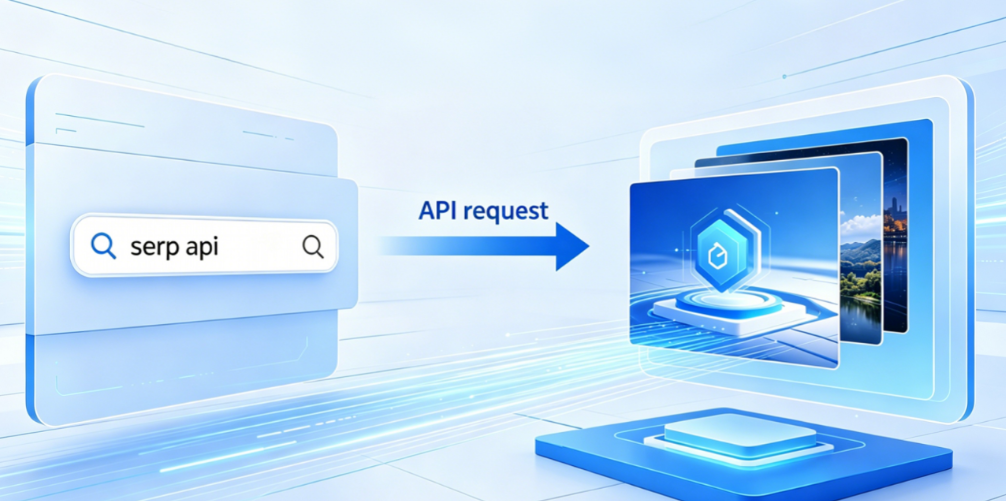
A Serp API is an Application Programming Interface designed specifically to facilitate web data collection from these pages for you. Instead of writing a complex script to open a browser, type a keyword, and copy the results, you just send a simple request to the Serp API.
The API visits the search engine, solves any technical connectivity challenges, collects the data, and returns it to you in a clean format like JSON. In 2026, search engines change their layouts almost every week. If you try to build your own local collection tool, it will break constantly. A professional Serp API handles these layout changes automatically. This allows your developers to focus on analyzing data rather than fixing broken code. It is a highly cost-effective solution for teams of all sizes.
The Evolution of Search Engine Defense Systems
Years ago, a basic script could perform data collection from search results for hours without any trouble. Today, the internet is different. Search engines use advanced artificial intelligence to detect and block automated behavior.
When you send a request to a search engine, their systems look at your “digital footprint.” They check your browser type, your screen resolution, and your network reputation. If they see a single IP address making hundreds of requests per minute, they will block it instantly. They might show you a captcha puzzle, or they might completely ban your IP address.
A standard web collector cannot handle these systems. But a high-quality Serp API is built to mimic human behavior perfectly. It manages browser fingerprints, handles interactive challenges in the background, and ensures your data collection never stops. This level of Expertise is what keeps your business intelligence accurate and reliable.
How Identity Protection Powers Your Search Data Success
Even the most advanced Serp API needs a strong network foundation to succeed. If the API routes all its requests through a known data center, search engines will quickly flag the entire network block. This is why Identity Protection is the secret ingredient in data collection.
To get the most accurate search data, your requests must look like they are coming from real users. When you look at search results from an office building, you see different ads and rankings than a person looking from their home. This is called localized search behavior.
By integrating a Serp API with IPFLY Residential Proxies, you gain the ultimate Privacy Enhancement. IPFLY replaces your commercial server footprint with high-reputation residential nodes from real internet service providers. This tells the search engine that the request is coming from a real living room, not a data center. It ensures that your Serp API always receives the true, unblocked results that a real customer would see.
Deep Dive: Three Critical Use Cases for a Serp API
Let us look at how different industries use a Serp API to drive growth and monitor their markets in 2026.
Use Case 1: Advanced SEO and Keyword Tracking
If you are an SEO manager, you need to know where your website ranks for thousands of different keywords. Doing this manually is impossible.
By using a Serp API, you can automate the entire tracking process. The API can check your rankings across different cities and devices every single day. For example, you can see if your site ranks higher on mobile devices in Chicago than on desktop computers in New York. This precise data allows you to optimize your content strategy and achieve a High ROI on your marketing spend.
Use Case 2: Competitor Price Monitoring and E-commerce Intelligence
E-commerce websites change their prices constantly based on market demand. To stay competitive, you must know what your rivals are doing right now.
A Serp API allows you to monitor shopping search results automatically. You can track product listings, compare prices, and see which competitors are buying ads for specific products. When you combine this with Market Research Automation, your system can automatically lower or raise your prices based on the live data from the search results. This keeps your store profitable around the clock.
Use Case 3: Brand Protection and Ad Verification
Sometimes, malicious advertisers display misleading ads or unauthorized products on search engines. They may try to hide these ads from corporate IP addresses so the brand owners cannot see them.
By utilizing a Serp API paired with IPFLY’s 190+ country nodes, your brand protection team can audit search results from any location in the world. You can look at the search page exactly like a user in Tokyo or London would. This “geographic camouflage” helps you detect unauthorized sellers and verify that your real ads are being displayed correctly to the right audience.
Complete Proxy IP Fundamentals
Build a full proxy knowledge framework — from core principles to protocol selection
Case Study: Scalable Market Research Automation in Action
Let us look at a real-world example from a mid-sized travel agency in early 2026. This agency wanted to build a tool that compared flight and hotel options by pulling live search data.
At first, their development team built an internal web collector. They connected it to a standard data center network. Within three days, Google began blocking their requests with infinite interactive challenges. Their internal tool was dead, and their project was delayed.
The agency decided to pivot. They integrated a commercial Serp API into their Python application and routed the traffic through IPFLY‘s static ISP proxies.
The results were immediate. Because the Serp API handled the code structures and IPFLY provided clean, trusted residential identities, their block rate dropped to zero. They successfully launched their tool, allowing them to track global travel trends in real-time. This combination provided a massive High ROI because they no longer wasted employee hours fixing broken systems.
Step-by-Step: How to Select and Set Up a Serp API
Choosing the right tool is essential for your long-term success. Here is a simple guide on how to evaluate a Serp API provider.
Step 1: Look for Real-Time Processing
Some providers show you cached data. Cached data is old data that the provider stored hours or days ago. In 2026, markets move too fast for old data. Ensure your Serp API fetches live, real-time results for every single request you make.
Step 2: Check the Output Format
The API should return clean, structured JSON data. It should separate organic results, paid ads, maps, and shopping boxes into clear sections. This makes it easy for your data team to feed the information into your business dashboards without extra cleaning.
Step 3: Secure Your Network Infrastructure
Always check how the API handles proxy rotation. For the best results, use a provider that allows you to bring your own high-quality proxies, or select a service that integrates directly with premium residential networks like IPFLY. This guarantees your Identity Protection and keeps your success rates high.
Ethical Considerations and Legal Compliance in 2026
When collecting web data, you must always be a responsible internet citizen. Data privacy laws like GDPR and CCPA are very strict today.
A professional Serp API helps you stay compliant because it only collects public data. It reads the public search results page that anyone can see. It does not access private accounts, user credentials, or personal information.
Furthermore, you should always respect the rate limits of your API provider. Sending too many requests at the exact same millisecond can strain servers. A well-designed data pipeline uses reasonable delays to ensure smooth, ethical data collection. By maintaining Environment Compliance, you protect both your business reputation and your technical infrastructure.
FAQ: Common Questions About Serp API
Is a Serp API better than building a custom data collector?
Yes. Building a custom data collector requires constant maintenance because search engines change their code frequently. A Serp API handles all layout updates and technical security layers for you, making it much more Cost-effective.
Can a Serp API simulate mobile search results?
Yes, a high-quality Serp API can change its parameters to look exactly like an iPhone or an Android device. This allows you to see mobile-specific rankings and mobile ads accurately.
Why should I use IPFLY proxies with my data collection tools?
IPFLY provides clean, high-reputation residential and ISP proxies. When your data tools use these proxies, they look like real human home users. This prevents network flags and ensures your Serp API gets accurate, localized results.
How does IPFLY ensure network compliance?
We source all our nodes through legitimate internet service provider partnerships. This ensures your Identity Protection remains intact while maintaining total alignment with enterprise-grade security standards.
Conclusion: Secure Your Competitive Advantage
The internet is growing larger and more complex every day. To stay ahead of your competitors in 2026, you cannot rely on guesswork. You need hard data, and you need it in real-time.
A professional Serp API gives your business the power to read the web at scale. It removes the technical headache of maintaining infrastructure and delivers clean data directly to your developers. However, remember that the foundation of all web automation is network trust.
By pairing your Serp API with the unmatched Identity Protection of IPFLY, you create an unstoppable data machine. You secure your digital footprint, eliminate connectivity flags, and gain the clear insights you need to grow your business. Don’t let your data pipelines break. Invest in a stable Serp API and premium IPFLY proxies today, and turn public search data into your ultimate competitive edge.