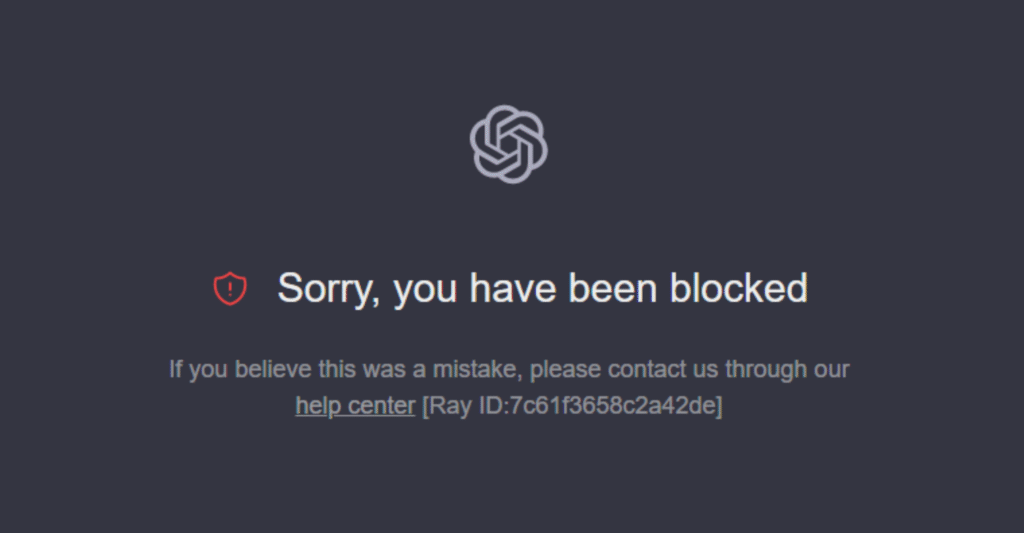
ChatGPT works on your mobile data but not on Wi-Fi. Or you open the site and see an “unsupported country” message. These problems can stem from a school or workplace network, your internet connection, or ChatGPT’s availability in your region.
This guide explains how to identify what is blocking access and how to get ChatGPT unblocked when the issue is network-related. You’ll learn when switching connections, changing DNS settings, using a VPN, or setting up a proxy may help.
Why Is ChatGPT Blocked?
ChatGPT may be unavailable because of restrictions set by the network you use, filtering by your internet provider, or OpenAI’s regional availability rules.
- School or workplace restrictions. An organization may block ChatGPT on its network under its internet usage or security policies.
- Internet provider or local network filtering. Filtering may prevent your connection from reaching ChatGPT, even when other websites load normally.
- Regional unavailability. OpenAI does not offer ChatGPT in every country or region. Its supported countries list determines where the service is officially available.
A temporary OpenAI outage can produce similar symptoms, although it is a service disruption rather than an access restriction.
How to Get ChatGPT Unblocked
If ChatGPT is blocked on a particular network, the way to restore access depends on how that network restricts the connection. Before changing settings, make sure OpenAI Status shows no outage and check whether ChatGPT is officially available in your country or region. Then choose the method that fits your situation.
Switch to Another Network
If ChatGPT is blocked on Wi-Fi but works on your personal mobile data, you can use your phone directly or connect a personal laptop through its hotspot. This avoids the affected Wi-Fi without changing your browser settings.
If the Wi-Fi belongs to a school or workplace, ask whether ChatGPT access can be approved for your work or studies. The administrator may also offer an approved AI tool.
Change DNS Settings if DNS Filtering Is the Cause
Some networks restrict websites through DNS, which helps your device find a site’s address. If you manage the network, switching to a public DNS resolver may restore access when that is the only filter involved.
DNS changes do not alter your exit IP. They will not help if the network blocks ChatGPT another way or if OpenAI does not support your location.
If You See “Unsupported Country”
If you are in a supported location and believe the message is an error, clear your browser’s cookies and cache, try another browser, and contact OpenAI Support if it persists.
A VPN or proxy can change where your connection appears to come from, but it does not change OpenAI’s regional availability rules. OpenAI warns that accessing its services from an unsupported location may result in account suspension.
Use a VPN to Change Your Network Route
A VPN routes your connection through a server in another location. If you’re allowed to use one, connect to a server and test whether chatgpt.com loads and sign-in works.
VPNs have drawbacks. A shared or frequently changing VPN IP may trigger extra verification or a temporary block, and an overloaded server can slow or interrupt your connection. If ChatGPT worked before you enabled the VPN, disconnect it and test again before trying another server.
Use a Proxy for a Browser or App
A proxy changes the route and exit IP of the traffic sent through it. Unlike a typical device-wide VPN setup, you can configure a proxy for just the browser where you use ChatGPT, leaving your other apps on their usual connection.
For regular use, a dedicated static IP or a residential proxy with a sticky session can keep your exit IP consistent during sign-in and conversations. This may provide a steadier experience than a crowded VPN server or a connection that changes IPs frequently. After setup, verify your exit IP, then test ChatGPT’s page, sign-in, and messaging. A proxy’s stability still depends on its provider and configuration, and access is not guaranteed.
Full-Industry Proxy IP Application Solutions
Power scalable growth for every cross-border business scenario with IPFLY’s reliable global proxy network
How to Set Up and Test an IPFLY Proxy
If you are allowed to configure a proxy for your connection, use this short checklist:
- Choose the proxy type. Select a static ISP IP if you need one fixed exit IP, or a residential proxy with a sticky session if that fits your use case.
- Get your connection details. Copy the host, port, username, password, and protocol from your IPFLY account. See IPFLY’s instructions for residential and static residential proxies.
- Configure your browser or device. Enter the details in its proxy settings and enable the connection.
- Verify the exit IP. Open an IP lookup page in the configured browser. Confirm that the reported IP or location matches the proxy you selected.
- Test ChatGPT. Open chatgpt.com, sign in, and send a message. Check any other features you need before treating the setup as successful.
If the proxy does not connect, recheck its host, port, credentials, protocol, and whether the proxy profile is enabled. If the proxy works elsewhere but ChatGPT shows a specific account or regional error, follow that error rather than continually changing IPs.
Common Mistakes When Trying to Get ChatGPT Unblocked
Even after you find a possible fix, a few common habits can make access less reliable or make the problem harder to diagnose. Keep these points in mind as you test your connection.
Treating Every Access Error as a Network Block
Suppose ChatGPT will not load because OpenAI is experiencing an outage. Changing your exit IP will not bring the service back. The same applies if a browser extension breaks the page or your account shows a sign-in error. Check the service status and read the exact error before changing your connection.
Changing IPs Repeatedly During Sign-In
Switching between several proxy locations or VPN servers after each failed attempt makes it hard to tell what is wrong. It can also lead to extra verification when your sign-in location keeps changing. Choose one connection, check that it works, and keep it consistent while you test ChatGPT.
Using an Unofficial ChatGPT Site
A site may promise “ChatGPT unblocked for free” and present a page that resembles the real login screen. Do not enter your OpenAI email, password, or verification code there. Open chatgpt.com directly when signing in.
Conclusion
Getting ChatGPT unblocked starts with identifying the restriction. If the issue is limited to a network you can manage, a personal connection, VPN, DNS change, or proxy may help depending on how that network filters access.
If you need to test a different exit IP while keeping the connection consistent, explore IPFLY’s residential and ISP proxies and verify the result in your browser before using ChatGPT.
Frequently Asked Questions
Can a proxy unblock ChatGPT?
It may help if a network you are allowed to configure is blocking or disrupting the connection. A proxy changes the route and exit IP for the traffic you send through it. It will not resolve every account, browser, or service error.
Is a proxy or VPN better for ChatGPT?
It depends on what you need to route. A VPN is commonly used for a device-wide connection; a proxy can be configured for a particular browser or application. Test the chosen method on your network instead of assuming either one will always work.
Why does ChatGPT work on mobile data but not on Wi-Fi?
That difference points to the Wi-Fi network or its settings. On a network you manage, review its filtering and any VPN or proxy already enabled. On a school or workplace network, ask the administrator about access.
Why do I see “unsupported country” even though I’m in a supported location?
OpenAI says this error can sometimes appear incorrectly. Clear your browser’s cookies and cache, then try another browser or a private window. Contact OpenAI Support if the error persists.
Will changing DNS unblock ChatGPT?
Only if DNS filtering is the cause. DNS settings do not change your exit IP and cannot resolve every type of network or regional restriction.