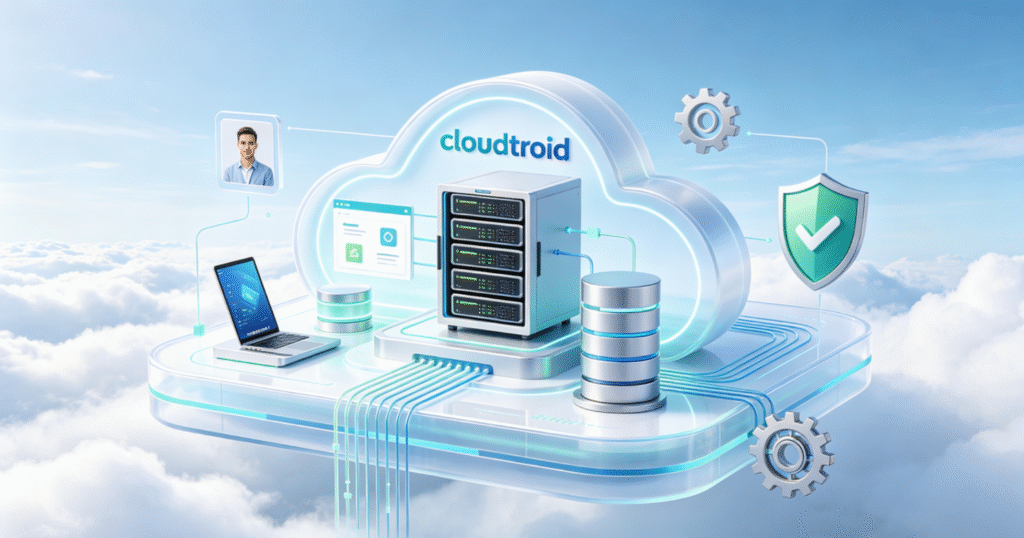
The shift from physical device farms to cloud-based Android environments represents a fundamental transformation in how teams approach large-scale account management. A cloud phone—a virtual Android device running in the cloud—eliminates the hardware constraints, maintenance overhead, and physical space requirements associated with managing hundreds of mobile devices. Each cloud phone simulates a complete mobile device with its own operating system, hardware parameters, and network environment, enabling efficient, controllable, and hardware-independent operations at scale.
However, device isolation alone does not constitute a complete operational environment. When operating multiple accounts across social platforms, e-commerce marketplaces, or advertising networks, IP isolation is as critical as device isolation. Even when each cloud phone maintains its own system environment, sharing the same IP address across multiple devices can still trigger platform risk controls, leading to account restrictions or suspensions.
This article examines the technical architecture of cloud phone infrastructure, the integration of proxy networks for comprehensive isolation, and the specific strategies that enable secure, scalable multi-account operations. The discussion encompasses protocol selection, proxy types, implementation patterns, and operational considerations for teams managing cloud phone deployments at scale.
Understanding Cloud Phone Architecture
Virtual Android Environments in the Cloud
Cloud phone technology operates by running Android system instances on remote servers, with users accessing these virtual devices through client applications or web interfaces. The underlying infrastructure typically employs containerization or virtual machine technologies to host multiple Android instances on a single physical server, with solutions such as Redroid representing common container-based approaches.
Each cloud phone instance maintains its own:
- Operating system version – Ranging from Android 10 through Android 15, depending on the provider
- Hardware parameters – Customizable brand, model, and SIM information
- Storage and memory allocation – Dedicated resources for application installation and runtime
- Network configuration – Including proxy settings, DNS resolution, and routing policies
The ARM-based architecture of many cloud phone deployments provides native compatibility with Android applications, eliminating the performance overhead and compatibility issues associated with x86 emulation. This architectural choice proves particularly important for resource-intensive applications such as social media clients, video processing tools, and automation frameworks.
Use Cases Across Industries
Cloud phone infrastructure serves a diverse range of operational scenarios across multiple industries:
Social Media Management – Teams managing TikTok, Facebook, Instagram, X, Telegram, and WhatsApp accounts leverage cloud phones to maintain multiple presences without the logistical burden of physical devices. Each account operates within its own isolated environment, reducing cross-account correlation risks.
Cross-Border E-Commerce – Sellers operating across multiple marketplaces use cloud phones to manage storefronts, process customer communications, and monitor competitive intelligence. The ability to match device locations with target markets through proxy integration enhances operational authenticity.
Affiliate Marketing and Ad Testing – Marketing teams deploy cloud phone arrays to test advertisement placements, validate tracking mechanisms, and optimize campaign performance across different geographic regions and demographic segments.
Application Testing and Development – Quality assurance teams utilize cloud phone environments to test applications across multiple Android versions and device configurations without maintaining extensive physical device labs.
The Isolation Imperative
The fundamental value proposition of cloud phone infrastructure centers on isolation. Physical phones, while providing genuine device environments, present significant challenges for multi-account operations:
- Hardware constraints – Limited by physical space, power, and network connectivity
- Management overhead – Manual configuration, updating, and maintenance of each device
- Cost inefficiency – Capital expenditure for devices that may become obsolete
- Scalability limitations – Linear scaling that becomes impractical beyond certain volumes
Cloud phones address these constraints by providing software-defined environments that can be provisioned, configured, and decommissioned programmatically. However, the isolation provided by cloud phones operates primarily at the device level. Network-level isolation—ensuring that each device operates with a distinct IP address—requires complementary infrastructure.
Proxy Integration for Cloud Phone Environments
The Network Isolation Requirement
Platform risk control systems evaluate multiple signals when assessing account legitimacy. Device fingerprints—including operating system, hardware parameters, and application configurations—represent one category of signals. Network fingerprints—including IP address, geolocation, DNS resolution patterns, and routing characteristics—represent another.
When multiple cloud phones share the same IP address, they present a network fingerprint that correlates these devices, even when their device fingerprints remain distinct. Platform algorithms can detect this correlation and may apply risk controls that affect all associated accounts. This correlation risk applies across social platforms, e-commerce marketplaces, and advertising networks.
Proxy integration addresses this vulnerability by assigning unique IP addresses to each cloud phone device. With proper proxy configuration, each device operates with:
- Unique IP address – Distinct from all other devices in the deployment
- Geographic alignment – IP region matching the account’s target location
- Consistent network identity – Stable IP-device pairing that mimics legitimate user behavior
Proxy Configuration in Cloud Phone Platforms
Most cloud phone platforms support custom proxy configuration, enabling administrators to assign specific proxy credentials to individual devices. The configuration process typically involves:
- Obtaining proxy credentials – IP address, port, protocol type, and authentication information
- Accessing the cloud phone configuration interface – Within the cloud phone management console
- Selecting custom proxy mode – Rather than using platform-default network routing
- Entering proxy details – Including IP, port, username, and password
- Validating the connection – Confirming that the proxy routes traffic as expected
The proxy protocol selection depends on the specific requirements of the use case. SOCKS5 proxies provide flexibility for handling diverse traffic types, while HTTP/HTTPS proxies offer specialized handling for web-based applications. Some platforms support both protocol types, allowing administrators to choose based on application compatibility and performance characteristics.
Proxy Types for Cloud Phone Deployments
Residential Proxies – Sourced from real residential networks, these proxies present IP addresses that appear to originate from actual home internet connections. For cloud phone deployments supporting social media accounts or e-commerce operations, residential proxies offer the highest level of authenticity. The IP addresses appear consistent with legitimate user behavior, reducing the likelihood of platform detection.
IPFLY’s dynamic residential proxies provide access to over 90 million residential IP addresses across 190+ countries, with response times as low as 0.6 seconds. The rotation capabilities enable administrators to assign fresh IP addresses to cloud phones as operational requirements evolve, while the protocol flexibility supporting HTTP(S) and SOCKS5 ensures compatibility with diverse cloud phone platforms.
Static Residential Proxies – For scenarios requiring consistent IP-device pairing over extended periods, static residential proxies maintain the same IP address persistently. This consistency proves valuable for long-term account management, where frequent IP changes might appear suspicious to platform monitoring systems. The 100% exclusive IP allocation ensures that cloud phone devices are not sharing IP addresses with other parties, reducing correlation risks.
IPFLY’s static residential proxies offer coverage across 100+ countries with exclusive IP resources that remain consistent over time. For cloud phone deployments supporting established accounts that require stable network identities, these proxies provide the necessary persistence while maintaining residential IP authenticity.
Datacenter Proxies – Sourced from professional data center infrastructure, these proxies offer high bandwidth and low latency performance. For cloud phone deployments supporting non-social applications—such as application testing, development environments, or internal tools—datacenter proxies provide a cost-effective solution without the premium associated with residential IPs.
IPFLY’s datacenter proxies deliver 100% exclusive IP resources with 99.9% availability and global coverage across major regions including the United States, Europe, and Asia. The performance characteristics support data-intensive cloud phone workloads where bandwidth and response time directly impact operational efficiency.
Cloud Phone Platform Landscape
DuoPlus Cloud Phone
DuoPlus represents a comprehensive cloud phone solution designed specifically for overseas social media and cross-border business operations. The platform provides isolated Android environments with realistic device parameters, supporting multiple account management across TikTok, Instagram, Facebook, X, Telegram, and WhatsApp.
Technical Capabilities
- ARM-based infrastructure – Deployed overseas for lower latency and native Android compatibility
- Multi-version support – Compatible with Android 10, 11, 12, and 15
- Device parameter customization – Configurable brand, model, SIM information, and proxy settings
- Operation synchronization – Batch execution across multiple devices
- RPA automation – Built-in robotic process automation and local API integration
- SMS verification management – Cloud number system for verification code handling
- Team collaboration – Permission controls for multi-user management
Proxy Integration – DuoPlus supports custom proxy configuration, allowing administrators to assign unique IP addresses to each cloud phone. The platform’s open proxy ecosystem enables integration with various proxy providers, avoiding the correlation risks associated with platform-shared IP resources. For teams requiring comprehensive device and network isolation, DuoPlus combined with quality residential or mobile IPs provides a complete solution.
Full-Industry Proxy IP Application Solutions
Power scalable growth for every cross-border business scenario with IPFLY’s reliable global proxy network
Bit Cloud Phone
Bit Cloud Phone provides cloud-based Android virtualization designed for batch operations and large-scale device simulation. The platform serves applications including app marketing, social media automation, and large-scale device simulation.
Technical Capabilities
- Batch management – Control of multiple Android devices from a unified interface
- Cloud-hosted environments – No physical hardware requirements
- Application automation – Support for installation and automated task execution
- Persistent operation – Devices remain online for long-running workflows
- Flexible configurations – Different plans based on device quantity and usage time
Proxy Integration – Bit Cloud Phone supports proxy configuration for network isolation, enabling administrators to assign distinct IP addresses to individual devices. The batch management capabilities extend to proxy assignment, allowing efficient configuration across large device arrays.
MoreLogin Cloud Phone
MoreLogin positions itself as the first all-in-one solution combining an anti-detect browser with cloud phone capabilities. Designed for e-commerce, social media marketing, and advertising, the platform provides secure isolated environments supporting batch account operations and automated workflows.
Technical Capabilities
- Dual-engine architecture – Combined browser and cloud phone environments
- 24/7 support – Continuous customer assistance
- Free trial – New users receive 2 free profiles and 100 minutes of cloud phone time
Proxy Integration – The platform’s integrated approach enables consistent proxy configuration across both browser and cloud phone environments, maintaining network isolation across different access methods.
Implementation Patterns for Cloud Phone Proxy Integration
Per-Device Proxy Assignment
The most common implementation pattern assigns a unique proxy to each cloud phone device. This approach provides maximum isolation, ensuring that each device operates with a distinct IP address and network fingerprint.
Implementation Steps:
- Provision cloud phone devices through the platform’s management interface
- Obtain proxy credentials for each device from the proxy provider
- Configure each device with its assigned proxy through the platform’s settings
- Validate that each device resolves with the expected IP address
- Monitor device-IP pairing consistency over time
Advantages:
- Complete network isolation between devices
- Ability to match IP geography to account requirements
- Reduced correlation risk from shared network infrastructure
Considerations:
- Higher proxy consumption compared to shared approaches
- Management overhead for large device arrays
- Requires adequate proxy inventory for scaling
Geographic Alignment Strategy
For operations targeting specific geographic markets, proxy selection should align with the target region of each account. A TikTok account targeting the US market should operate with a US-based IP address, while an account targeting the UK market should use a UK-based IP.
Implementation Considerations:
- Regional proxy inventory – Ensure sufficient proxy availability in target regions
- Latency optimization – Select proxies with acceptable response times for the target region
- ISP diversity – Distribute across multiple internet service providers within regions
- Consistency maintenance – Keep IP region stable for established accounts
Static vs. Dynamic Proxy Selection
The choice between static and dynamic proxies depends on the operational requirements of specific accounts.
Static proxies suit:
- Established accounts with consistent operational patterns
- Long-term account management requiring stable network identities
- Scenarios where IP changes might trigger platform verification
Dynamic proxies suit:
- New account provisioning and testing
- Short-term campaigns or temporary operations
- Scenarios requiring fresh IP addresses for each session
Many teams adopt a hybrid approach, using static proxies for established accounts and dynamic proxies for testing, provisioning, or temporary operations.
Batch Configuration and Management
For large-scale cloud phone deployments, manual proxy configuration across hundreds of devices becomes impractical. Batch management capabilities available in cloud phone platforms enable efficient proxy assignment.
Batch Management Techniques:
- Template-based configuration – Define proxy configuration templates and apply across device groups
- API-based automation – Use platform APIs for programmatic proxy assignment
- Group-based policies – Assign proxy pools to device groups based on operational requirements
- Monitoring and alerting – Track proxy performance and receive alerts for connectivity issues
Security and Operational Considerations
Proxy Credential Management
Proxy credentials—including IP addresses, ports, usernames, and passwords—represent sensitive operational data that requires proper management. Credential exposure can lead to unauthorized access, account compromise, or platform detection.
Best Practices:
- Secure storage – Store credentials in encrypted systems rather than plaintext
- Access control – Limit credential access to authorized personnel only
- Rotation policies – Implement regular credential rotation for critical proxies
- Audit logging – Track credential access and usage for security monitoring
Performance Optimization
Proxy performance directly impacts cloud phone operational efficiency. Slow proxy response times can affect application performance, user experience, and automation reliability.
Performance Factors:
- Geographic distance – Proximity between proxy server and cloud phone infrastructure
- Network latency – Round-trip time for proxy connections
- Bandwidth capacity – Available throughput for data-intensive operations
- Concurrent connection limits – Maximum simultaneous connections per proxy
Selecting proxy providers with optimized infrastructure and global coverage helps maintain performance across diverse geographic deployments. IPFLY’s global proxy network with coverage across 190+ countries provides the geographic diversity needed for performance optimization in international cloud phone deployments.
Monitoring and Troubleshooting
Continuous monitoring of cloud phone proxy configurations helps identify issues before they impact operations.
Monitoring Metrics:
- Connection success rate – Percentage of successful proxy connections
- Response time – Latency for proxy-mediated requests
- IP consistency – Verification that devices maintain assigned IP addresses
- Error rates – Frequency of proxy-related errors or timeouts
Common Issues and Resolutions:
| Issue | Likely Cause | Resolution |
| Connection timeout | Proxy server unavailable | Switch to backup proxy |
| IP mismatch | Configuration error | Re-validate proxy settings |
| Platform detection | Shared IP usage | Assign unique proxy per device |
| Slow performance | Geographic distance | Select closer proxy location |

Cloud phone infrastructure represents a significant advancement in multi-account operational capability, eliminating the hardware constraints and management overhead associated with physical device farms. However, device isolation alone does not provide complete operational security. Network isolation through proxy integration is equally critical, ensuring that each cloud phone operates with a distinct IP address and network fingerprint.
The integration of proxy networks with cloud phone platforms enables teams to:
- Assign unique IP addresses to each device for complete network isolation
- Match IP geography to account locations for operational authenticity
- Reduce correlation risks that trigger platform risk controls
- Improve account stability across social media, e-commerce, and advertising platforms
Different proxy types serve different operational requirements. Residential proxies provide the highest level of authenticity for social media and e-commerce operations. Static residential proxies offer consistent IP-device pairing for established accounts. Datacenter proxies deliver performance and cost-effectiveness for testing and development environments.
The cloud phone platform landscape offers multiple options, each with distinct capabilities for proxy integration, batch management, and automation. Selecting the appropriate platform and proxy combination depends on specific operational requirements, scale, and target markets.
As multi-account operations continue to scale across industries, the combination of cloud phone infrastructure and professional proxy networks will remain a foundational technical component. Organizations that implement comprehensive isolation strategies—addressing both device and network fingerprints—position themselves for sustainable, secure operations at any scale.
Organizations deploying cloud phone infrastructure for multi-account operations require reliable, high-performance proxy networks that provide the IP isolation essential for operational security. IPFLY offers comprehensive proxy solutions designed to meet the demands of cloud phone deployments:
- Dynamic Residential Proxies – Access over 90 million residential IP addresses across 190+ countries with rotation capabilities for flexible cloud phone configurations.
- Static Residential Proxies – Exclusive, persistent residential IP addresses for established accounts requiring consistent network identities.
- Datacenter Proxies – High-performance proxy infrastructure with 99.9% availability for data-intensive cloud phone workloads.
Begin building your cloud phone proxy infrastructure today. Visit IPFLY’s homepage to explore the full range of proxy solutions, or register now for immediate access to integrate professional proxy capabilities into your cloud phone deployment.