Educational institutions operate at the intersection of open academic inquiry and operational security requirements. Students and faculty require access to a vast array of digital resources—academic databases, research repositories, learning management systems, and institutional services—while network administrators must simultaneously protect sensitive data, enforce acceptable use policies, and maintain infrastructure integrity. This dual mandate creates a complex operational environment where school proxy solutions emerge as a foundational technical component rather than a mere convenience.
The concept of a school proxy extends far beyond simple connection routing. In contemporary educational IT architecture, proxy systems serve as sophisticated gateways that enable granular access control, traffic optimization, usage analytics, and security enforcement—all while maintaining the transparency and performance that academic users expect. This article examines the technical architecture, deployment models, and practical applications of school proxy infrastructure, with particular attention to the capabilities that modern proxy networks bring to educational environments.
Understanding School Proxy Architecture
The Technical Foundation of Educational Proxy Systems
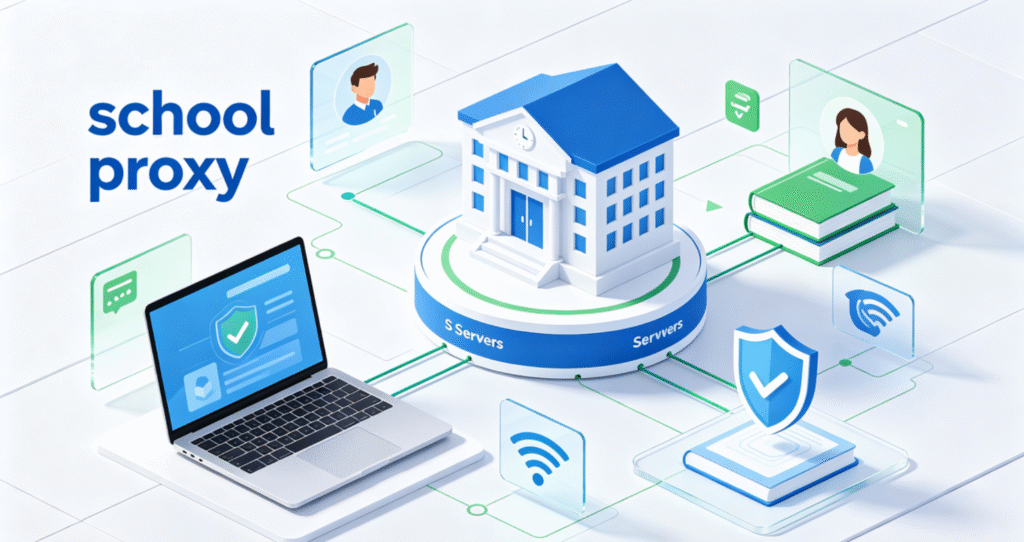
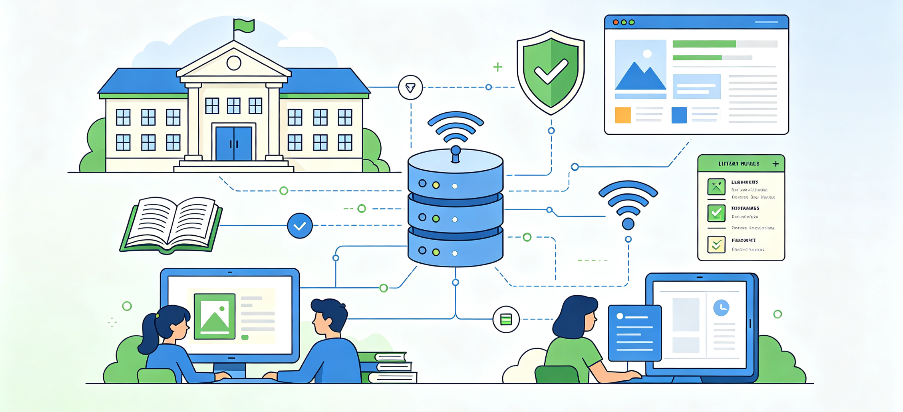
At its core, a school proxy functions as an intermediary between client devices within an educational network and the broader internet. When a student or faculty member requests a web resource, that request travels first to the proxy server, which then evaluates the request against institutional policies before forwarding it to the destination or returning a blocked response. This intervening layer provides network administrators with visibility into traffic patterns, the ability to enforce content policies, and a mechanism for caching frequently accessed resources to improve performance.
The architectural choices available to educational institutions vary significantly based on scale, budget, and operational requirements. Smaller institutions might deploy a single forward proxy server handling all outbound traffic, while larger universities often implement distributed proxy clusters with load balancing, failover capabilities, and geographic distribution. The proxy layer can be positioned at the network perimeter, integrated with firewall systems, or deployed as a cloud-based service that routes traffic through external infrastructure.
Modern school proxy implementations increasingly leverage proxy networks that provide access to diverse IP resources across multiple geographic locations. For institutions conducting international research, managing global campus operations, or supporting distributed learning environments, the ability to route traffic through regionally appropriate endpoints becomes a critical capability. Platforms such as IPFLY offer access to extensive proxy networks spanning 190+ countries and regions, enabling educational institutions to simulate region-specific network environments for academic research and testing purposes.
Proxy Protocols and Their Educational Applications
The technical efficacy of a school proxy deployment depends heavily on protocol selection. HTTP proxies, the most common variety in educational settings, handle web traffic efficiently and integrate seamlessly with existing authentication systems. HTTPS proxies extend this capability to encrypted traffic, though they require careful certificate management to maintain security while enabling content inspection. SOCKS5 proxies operate at a lower level, handling any TCP-based traffic regardless of application protocol, making them particularly valuable for research applications that use non-web protocols.
Educational institutions often deploy multiple protocol types to address different use cases. A typical configuration might use HTTP/HTTPS proxies for general web browsing and learning management system access, while reserving SOCKS5 proxies for research computing environments, specialized academic applications, and development sandboxes. The flexibility to support multiple protocols simultaneously—a capability offered by many modern proxy solutions, including IPFLY support for HTTP(S) and SOCKS5 protocols—enables institutions to maintain a unified proxy infrastructure across diverse academic workloads.
Authentication and Access Control Mechanisms
School proxy systems must balance accessibility with security, a challenge that manifests most clearly in authentication architecture. Educational environments encompass a wide range of user types—students, faculty, staff, guest researchers, and affiliated personnel—each requiring different levels of access. Proxy authentication mechanisms typically integrate with existing institutional identity management systems, leveraging LDAP, Active Directory, or SAML-based single sign-on to validate user credentials and apply appropriate policy rules.
The granularity of access control available through modern proxy systems enables institutions to implement sophisticated policies. A graduate student in a computer science department might have access to a broader range of technical resources than an undergraduate in the humanities, while research faculty might require persistent, geographically appropriate IP addresses for accessing region-locked academic databases. Some proxy solutions provide static IP resources that remain consistent over time, which can be particularly valuable for researchers who need to maintain consistent identities when accessing subscription-based academic resources.
Educational Use Cases for School Proxy Infrastructure
Academic Research and Global Resource Access
University research increasingly depends on access to geographically distributed data sources and region-specific academic resources. Many scholarly databases, government publications, and research repositories implement geographic access controls based on the originating IP address. A school proxy infrastructure that provides access to IP addresses in relevant regions enables researchers to access these resources without requiring physical presence in those locations.
For institutions with multicampus operations or international research partnerships, proxy infrastructure that supports diverse geographic IP sourcing becomes an operational necessity. Research teams collaborating across borders often need to access resources that are regionally restricted, and a properly configured proxy network can provide the necessary geographic diversity while maintaining institutional security policies. The ability to source IP addresses from 190+ countries and regions allows educational institutions to support research activities spanning virtually any geographic area of academic interest.
Network Performance Optimization and Bandwidth Management
Educational networks face significant bandwidth demands, particularly in residential campuses where thousands of students simultaneously stream video, participate in video conferences, and access cloud-based learning resources. School proxy systems contribute to bandwidth management through several mechanisms. Caching proxies store copies of frequently accessed content locally, reducing the need for repeated external requests. Compression proxies can reduce the size of transmitted data, particularly beneficial for mobile users or networks with constrained bandwidth.
Traffic shaping capabilities built into modern proxy systems enable administrators to prioritize academic traffic over recreational use, ensuring that learning management systems, research databases, and institutional services receive appropriate bandwidth allocation. This prioritization becomes particularly important during peak usage periods, such as final examination weeks when access to academic resources is most critical.
Security Enforcement and Threat Prevention
The security functions of a school proxy extend well beyond content filtering. Modern proxy systems incorporate threat intelligence feeds that identify and block connections to known malicious domains, protecting the institutional network from phishing attempts, malware distribution, and command-and-control communications. This protective layer operates continuously, evaluating each outbound connection against updated threat databases without requiring user intervention.
Data loss prevention capabilities represent another critical security function. Proxy systems can inspect outbound traffic for sensitive information—such as student records, research data, or financial information—and block or alert on unauthorized transmissions. This capability helps institutions maintain compliance with data protection regulations while reducing the risk of accidental data exposure through email or web uploads.
Content Policy Enforcement in Academic Environments
Educational institutions operate under legal and ethical obligations to provide appropriate access while protecting minors from harmful content. School proxy systems implement content filtering policies that reflect these obligations, typically through categorized URL databases that classify web content and apply access rules based on institutional policy. The sophistication of these filtering systems has advanced significantly, with modern solutions incorporating real-time analysis, dynamic categorization, and machine learning-based detection of emerging threats.
The implementation of content policies through proxy infrastructure offers several advantages over alternative approaches. Proxy-based filtering operates at the application layer, providing visibility into encrypted traffic that network-layer solutions cannot inspect. This visibility enables more nuanced policy enforcement—for example, allowing access to a social media site for educational purposes while blocking specific objectionable content within that site. Additionally, proxy-based policies can be applied consistently across all devices and locations, ensuring that institutional policies follow users whether they are on-campus, working remotely, or accessing resources through mobile devices.
Proxy Types and Their Educational Applications
Dynamic Residential Proxies in Academic Settings
Dynamic residential proxies source IP addresses from real residential networks, providing IP addresses that appear to originate from actual home internet connections. In educational contexts, these proxies serve specialized research applications where the authenticity of the IP address affects the quality or validity of research data. Market research conducted by business schools, for example, may require simulating consumer behavior from diverse residential locations to analyze regional variations in pricing, product availability, or consumer sentiment.
The rotation capabilities inherent in dynamic residential proxy networks enable researchers to conduct large-scale studies without triggering rate limiting or access restrictions that might affect a single static IP address. For institutions conducting web scraping for academic research—analyzing public data for social science research, computational linguistics, or economic analysis—the ability to distribute requests across a rotating pool of residential IP addresses helps maintain access to public data sources while respecting the operational limits of those sources.
IPFLY’s dynamic residential proxy network offers access to over 90 million residential IP addresses across 190+ countries, with response times as low as 0.6 seconds. The protocol flexibility supporting HTTP(S) and SOCKS5 enables integration with a wide range of research tools and custom data collection scripts. For educational institutions conducting data-intensive research, the combination of geographic diversity, performance characteristics, and protocol support makes dynamic residential proxies a valuable infrastructure component.
Static Residential Proxies for Consistent Academic Access
Static residential proxies provide persistent IP addresses sourced from residential networks. Unlike their dynamic counterparts, these proxies maintain the same IP address over extended periods, offering consistency that proves valuable for specific academic applications. Researchers conducting longitudinal studies that require a consistent online identity—such as monitoring changes in publicly available information over time—benefit from the stability that static residential proxies provide.
Educational institutions managing distance learning programs or supporting international students may use static residential proxies to provide consistent access to region-specific resources. A student studying abroad who needs to access their home institution’s library resources, for example, can use a static residential proxy that presents an IP address consistent with their institution’s geographic region, maintaining access to subscription-based academic content throughout their period of study.
The 100% exclusive IP allocation offered by IPFLY’s static residential proxies ensures that educational users are not sharing IP addresses with other parties, reducing the risk of IP-based blocks or restrictions affecting academic activities. With coverage across 100+ countries and support for HTTP(S) and SOCKS5 protocols, these proxies provide educational institutions with reliable, consistent IP resources for long-term academic projects and institutional services.
Datacenter Proxies for High-Performance Educational Applications
Datacenter proxies, sourced from professional data center infrastructure rather than residential networks, offer performance characteristics that make them suitable for specific educational applications. The high bandwidth and low latency of datacenter proxies support data-intensive academic workloads such as large-scale data processing, distributed computing projects, and real-time analytics. For computer science departments, engineering programs, and research groups working with large datasets, the performance advantages of datacenter proxies can significantly accelerate research workflows.
The cost-effectiveness of datacenter proxies makes them attractive for educational institutions with budget constraints, enabling broader access to proxy infrastructure across more users and use cases. While residential proxies may be preferred for research requiring authentic residential IP addresses, datacenter proxies provide a more economical option for general academic use, administrative functions, and non-research applications where IP authenticity is less critical.
IPFLY’s datacenter proxies provide 100% exclusive IP resources with 99.9% availability and support for HTTP(S) and SOCKS5 protocols. The global coverage spanning major regions including the United States, Europe, and Asia enables educational institutions to access resources and conduct research across diverse geographic locations. For institutions requiring high-performance proxy infrastructure for technical education, research computing, or administrative operations, datacenter proxies offer a compelling combination of performance, reliability, and cost-effectiveness.
Implementation Considerations for School Proxy Deployments
Infrastructure Requirements and Scalability Planning
School proxy deployments require careful consideration of infrastructure capacity. The number of concurrent users, typical bandwidth consumption, and peak usage patterns all influence the hardware and network resources required for satisfactory performance. Institutions serving thousands of students and faculty members need proxy infrastructure capable of handling substantial concurrent connections while maintaining acceptable response times.
Scalability planning should account for both current needs and anticipated growth. Educational institutions often experience significant fluctuations in usage—increasing during academic terms, decreasing during breaks, and spiking during specific events such as registration periods or final examination weeks. Proxy infrastructure designed with scalability in mind can accommodate these variations without requiring constant reconfiguration or hardware upgrades.
Complete Proxy IP Fundamentals
Build a full proxy knowledge framework — from core principles to protocol selection
Integration with Existing Educational Technology Stacks
School proxy systems do not operate in isolation; they must integrate with the broader educational technology ecosystem. Learning management systems, student information systems, library catalogs, and research databases all interact with the proxy layer, and integration challenges can arise when these systems expect specific network configurations or authentication flows.
Single sign-on integration represents a particularly important integration point. Students and faculty expect seamless access to resources without repeated authentication prompts, and proxy systems that integrate with institutional identity management reduce friction while maintaining security. Proxy solutions that support standard authentication protocols and can be configured to respect existing session management systems simplify this integration.
Monitoring, Analytics, and Continuous Improvement
The operational value of school proxy infrastructure extends beyond its immediate function of routing traffic. Proxy systems generate detailed logs of network activity that provide insights into usage patterns, resource utilization, and potential security incidents. Educational institutions can leverage this data to optimize network performance, identify emerging research trends, and detect anomalous behavior that might indicate security threats.
Usage analytics from proxy logs can inform strategic decisions about resource allocation, infrastructure investment, and policy development. If analytics reveal that a significant portion of bandwidth is consumed by streaming video during peak academic hours, for example, administrators might implement quality of service policies that prioritize academic applications. Similarly, patterns of access to specific academic resources can inform library collection development and research support services.
Security and Compliance in Educational Proxy Environments
Data Privacy and Student Information Protection
Educational institutions handle sensitive data including student records, academic performance information, and personally identifiable information. School proxy systems that inspect traffic content must implement appropriate safeguards to protect this data from unauthorized access or disclosure. Encryption of proxy logs, access controls limiting who can view traffic data, and data retention policies that balance operational needs with privacy requirements all contribute to a comprehensive data protection framework.
The regulatory landscape for educational data privacy continues to evolve, with regulations such as FERPA in the United States, GDPR in Europe, and various national laws imposing specific requirements on how educational institutions handle student data. Proxy deployments must be configured to comply with these regulations, which may include restrictions on data retention, requirements for data minimization, and obligations to report security incidents.
Acceptable Use Policy Enforcement
School proxy systems serve as the primary mechanism for enforcing acceptable use policies in many educational institutions. The granular control available through modern proxy solutions enables institutions to implement policies that reflect their specific values and legal obligations. Rather than simply blocking broad categories of content, sophisticated proxy deployments can apply context-aware policies that consider user type, time of day, location, and other factors.
The enforcement of acceptable use policies through proxy infrastructure must balance several sometimes-competing objectives. Policies must be sufficiently restrictive to meet legal and ethical obligations while remaining permissive enough to support academic freedom and research. Overly restrictive policies can impede legitimate academic activities, while overly permissive policies may expose the institution to legal liability or reputational damage.
Threat Detection and Incident Response
Proxy infrastructure contributes to institutional security through threat detection capabilities that identify and block connections to malicious destinations. Modern proxy systems incorporate threat intelligence from multiple sources, enabling real-time protection against emerging threats. When a user attempts to connect to a newly identified malicious domain, the proxy can block the connection and generate an alert for security personnel.
Incident response procedures should incorporate proxy logs as a source of forensic evidence. When security incidents occur, proxy logs can provide detailed information about the timeline of events, the systems affected, and the data potentially exposed. This forensic value argues for retaining proxy logs for sufficient periods to support incident investigation while balancing privacy considerations and storage costs.
Advanced School Proxy Applications
Supporting Distance Learning and Global Campuses
The expansion of distance learning and the growth of international campus operations have created new requirements for school proxy infrastructure. Students accessing educational resources from different countries need reliable, low-latency connections to institutional services. Proxy networks with geographically distributed endpoints can optimize routing, reducing latency and improving the user experience for remote learners.
For institutions with physical campuses in multiple countries, proxy infrastructure that supports consistent policy enforcement across all locations simplifies administration and ensures uniform user experiences. Students at different campuses can access the same resources with the same policies, regardless of their physical location, supporting a consistent educational experience across the institution.
Facilitating Academic Collaboration and Data Sharing
Academic research increasingly involves collaboration across institutional and national boundaries. Proxy infrastructure that supports secure, authenticated access to shared resources enables researchers to collaborate effectively while maintaining appropriate security controls. Collaborative research projects often require access to shared datasets, computational resources, or specialized software, and proxy systems can provide the access control and auditing capabilities needed for these collaborations.
Data sharing between institutions presents particular challenges that proxy infrastructure can address. When researchers at different institutions need to share sensitive data, proxy-based access controls can ensure that only authorized individuals access the data while maintaining audit trails for compliance purposes. The geographic diversity available through proxy networks can also support data sovereignty requirements, ensuring that data remains within appropriate jurisdictional boundaries.
Supporting Institutional Web Presence and Digital Services
Educational institutions maintain extensive web presences that include public-facing websites, admissions portals, alumni services, and institutional communications. The proxy infrastructure that supports these services must balance accessibility with security, ensuring that legitimate users can access information while malicious actors cannot exploit vulnerabilities.
Content delivery optimization through proxy systems can improve the performance of institutional web services. By caching frequently accessed content at geographically distributed proxy locations, institutions can reduce load on origin servers and improve response times for users in different regions. This caching capability becomes particularly valuable for institutions with significant international audiences, such as universities attracting international students or research institutions with global collaborators.
Operational Considerations for School Proxy Management
Staffing and Expertise Requirements
School proxy deployments require skilled personnel for configuration, maintenance, and troubleshooting. Network administrators must understand proxy protocols, authentication systems, security principles, and performance optimization techniques. The complexity of modern proxy systems, with their support for multiple protocols, integration with identity management, and sophisticated policy engines, demands specialized expertise that may not be available in all educational institutions.
Training and professional development for proxy administrators should address both technical skills and policy understanding. Administrators must understand not only how to configure proxy systems but also the legal and ethical considerations that inform policy decisions. This combination of technical and policy expertise enables administrators to implement proxy configurations that effectively support institutional objectives while maintaining appropriate security and compliance.
Vendor Selection and Partnership Considerations
Educational institutions selecting proxy solutions must evaluate multiple factors including technical capabilities, cost, support quality, and vendor stability. The proxy market offers a range of options from open-source solutions that institutions manage internally to fully managed services that reduce operational overhead. The appropriate choice depends on institutional resources, technical expertise, and specific requirements.
Vendor partnerships should include clear service level agreements that define performance expectations, support response times, and escalation procedures. Educational institutions with mission-critical proxy infrastructure may require 24/7 support coverage, particularly if they operate across multiple time zones or support essential services that cannot tolerate extended downtime. IPFLY offers 7×24 customer support, providing educational institutions with the responsive assistance needed for maintaining continuous proxy operations.
Future-Proofing School Proxy Infrastructure
Educational technology evolves rapidly, and proxy infrastructure must adapt to changing requirements. The growth of cloud-based learning resources, the increasing use of mobile devices, and the expansion of Internet of Things devices on campus all create new demands on proxy infrastructure. Institutions should select proxy solutions that can accommodate these changes through flexible architecture, regular updates, and vendor commitment to ongoing development.
The transition to IPv6, the evolution of web protocols, and emerging security threats all require proxy systems that can evolve with the technological landscape. Institutions should evaluate proxy solutions based not only on current capabilities but also on the vendor’s track record of innovation and responsiveness to emerging requirements. This forward-looking approach helps ensure that proxy infrastructure continues to serve institutional needs over the long term.
For educational institutions ready to deploy these capabilities, registering for IPFLY services provides immediate access to a comprehensive proxy network that combines performance, reliability, and global coverage.
School proxy infrastructure represents a foundational component of modern educational technology, serving as the bridge between academic users and the digital resources they require. The technical architecture of school proxy systems—encompassing protocol support, authentication mechanisms, and policy enforcement—determines the capabilities available to students, faculty, and researchers. Educational institutions have multiple proxy types to consider, each offering different characteristics suited to specific applications.
Dynamic residential proxies provide authentic IP addresses from real residential networks, supporting research requiring geographic diversity and realistic consumer simulation. Static residential proxies offer consistent IP addresses, valuable for longitudinal research and persistent academic access. Datacenter proxies deliver high performance and cost-effectiveness, suitable for data-intensive academic workloads and general institutional use. Each proxy type addresses different educational needs, and many institutions benefit from deploying multiple proxy types across different use cases.
The implementation of school proxy infrastructure requires careful attention to infrastructure planning, integration with existing systems, and ongoing monitoring and optimization. Security and compliance considerations—including data privacy, acceptable use policy enforcement, and threat detection—must inform configuration decisions and operational procedures. Advanced applications of school proxy technology, including support for distance learning, academic collaboration, and institutional web services, extend the value of proxy infrastructure across the educational enterprise.
As educational technology continues to evolve, school proxy infrastructure must adapt to new requirements while maintaining the performance, security, and reliability that academic users expect. The selection of proxy solutions that combine technical capability with operational support enables educational institutions to focus on their core mission of education and research while maintaining the network infrastructure that supports that mission.
Educational institutions seeking reliable, high-performance proxy infrastructure for academic research, institutional operations, and distance learning support can explore IPFLY’s comprehensive proxy solutions. With access to over 90 million IP resources across 190+ countries and regions, support for HTTP(S) and SOCKS5 protocols, and 7×24 customer support, IPFLY provides the technical foundation that educational institutions require.
- Dynamic Residential Proxies – Access real residential IP addresses with rotation capabilities for research and data collection.
- Static Residential Proxies – Consistent, exclusive residential IP addresses for long-term academic projects.
- Datacenter Proxies – High-performance proxy infrastructure for data-intensive academic workloads.
Begin building your educational proxy infrastructure today. Visit IPFLY’s homepage to explore the full range of proxy solutions, or register now for immediate access to integrate professional proxy capabilities into your institutional network architecture.