As web scraping becomes increasingly critical for data-driven business decisions, ScraperAPI has emerged as one of the most popular managed scraping APIs, used by over 100,000 developers and businesses worldwide. It abstracts the complexity of anti-bot bypass, handling CAPTCHA solving, JavaScript rendering, and automatic retries out of the box. However, industry data shows that even premium ScraperAPI plans suffer from average success rates of just 75–85% against modern anti-bot systems like Cloudflare Turnstile and Akamai Bot Manager. For enterprises relying on accurate, timely data, these gaps translate directly to incomplete analytics, delayed reports, and missed market opportunities.
The root cause of these limitations lies in ScraperAPI’s underlying proxy infrastructure. Shared IP pools, inconsistent residential IP quality, and limited geographic targeting precision lead to frequent IP bans, CAPTCHA challenges, and inaccurate geotargeted data. For users seeking to maximize scraping reliability and scale, pairing ScraperAPI with a premium enterprise proxy service—or building a custom scraper on dedicated proxy infrastructure—delivers significantly better results at lower total cost for high-volume workloads.
IPFLY’s enterprise-grade proxy ecosystem integrates seamlessly with ScraperAPI (via bring-your-own-proxy support) and powers custom scraping pipelines, eliminating every common pain point of web data extraction. With a global pool of over 90 million high-quality residential IPs, 7-layer IP filtering, and city-level geographic targeting, IPFLY achieves 99.8% success rates even against the most advanced anti-bot systems. This article breaks down ScraperAPI’s core value, common limitations, and how IPFLY’s proxy infrastructure supercharges your data extraction workflows.
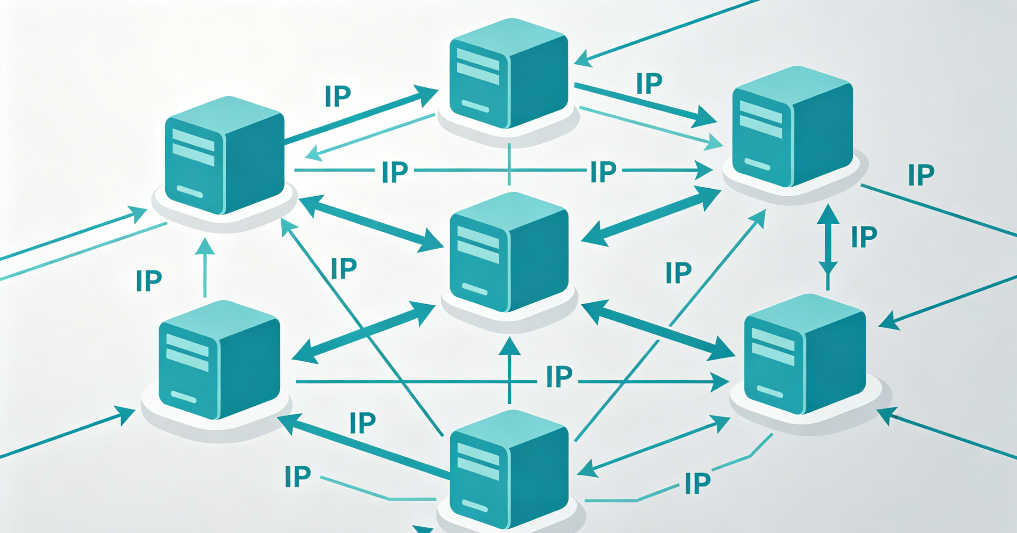
What Is ScraperAPI & Its Core Business Value
Core Definition
ScraperAPI is a managed web scraping API that handles all the low-level complexity of interacting with websites. Users send a single API request with a target URL, and ScraperAPI returns the rendered HTML content, automatically handling:
- IP rotation and proxy management
- CAPTCHA solving and anti-bot bypass
- JavaScript rendering for dynamic content
- Automatic retries for failed requests
- Geotargeted requests across 50+ countries
It offers a simple REST API interface and SDKs for major programming languages, allowing developers to build scraping pipelines in minutes instead of weeks.
Legitimate High-Impact Use Cases
ScraperAPI powers compliant data extraction across every industry, with proven value for:
- Price Intelligence: E-commerce brands monitor competitor pricing, promotions, and inventory levels to optimize pricing strategies.
- SEO Monitoring: Track keyword rankings, backlinks, and SERP features across regions to measure campaign performance.
- Competitor Analysis: Analyze competitors’ product catalogs, content strategies, and customer reviews to identify market gaps.
- Market Research: Aggregate consumer sentiment, product trends, and industry news to inform product development and go-to-market plans.
- Lead Generation: Extract business contact information from public directories and professional networks for sales outreach.
- Brand Monitoring: Track mentions of your brand, products, and executives across the web to protect brand reputation.
All these use cases depend on consistent, accurate, and timely data extraction—making proxy quality the most critical factor in ScraperAPI performance.
Common Limitations of ScraperAPI (And Why They Happen)
While ScraperAPI simplifies scraping development, it suffers from persistent limitations that stem from its shared proxy infrastructure and business model. These issues become increasingly severe as your scraping volume grows.
- Inconsistent IP Quality & High Ban Rates
ScraperAPI uses a shared proxy pool where IPs are reused across thousands of customers. This leads to frequent IP blacklisting, as abusive activity by one user contaminates IPs for everyone else. Even premium plans often include a mix of datacenter and low-quality residential IPs that are easily detected by modern anti-bot systems, resulting in 15–25% failed requests.
- Limited Geographic Targeting Precision
ScraperAPI only offers country-level geographic targeting for most regions, with limited city-level support in major markets. This makes it impossible to extract accurate local search results, regional pricing, or location-specific content—critical for local SEO, retail, and real estate use cases.
- Strict Rate Limits & Escalating Costs
ScraperAPI enforces strict per-minute and per-month request limits, with pricing increasing exponentially as you scale. High-volume enterprise plans can cost tens of thousands of dollars per month, and even top-tier plans suffer from performance degradation during peak usage hours due to shared infrastructure.
- Limited Customization & Control
Managed APIs like ScraperAPI offer limited control over proxy rotation frequency, session persistence, request headers, and TLS fingerprinting. This inflexibility makes it impossible to adapt to changes in anti-bot systems or support custom extraction requirements.
- Data Inconsistency & Partial Results
Blocked requests and anti-bot challenges often return partial or misleading data instead of clear error codes. This leads to inaccurate analytics and requires additional data cleaning and validation steps, increasing development time and operational overhead.
- No Dedicated IP Support
ScraperAPI does not offer dedicated or static IP options, making it unsuitable for workflows that require consistent session state, such as logged-in scraping or account-based data extraction.
Why Proxy Infrastructure Determines Scraping Success
All scraping tools—whether managed APIs like ScraperAPI or custom scrapers—are only as good as the proxies they use. Modern anti-bot systems evaluate hundreds of signals to distinguish humans from bots, with IP identity being the most heavily weighted factor. To achieve consistent success rates above 99%, you need proxies that:
- Are real residential IPs assigned by legitimate ISPs
- Have clean reputations with no history of abuse
- Support precise city-level geographic targeting
- Rotate automatically to avoid rate limits and bans
- Maintain session consistency for logged-in workflows
- Handle high concurrency without performance degradation
Shared proxy pools like those used by ScraperAPI fail to meet these criteria, leading to the limitations outlined above. For production-grade scraping, dedicated enterprise proxies deliver significantly better reliability and lower total cost of ownership for high-volume workloads.
IPFLY: Supercharge ScraperAPI or Build Custom Scrapers
IPFLY’s enterprise-grade proxy ecosystem solves every limitation of ScraperAPI, offering two flexible integration paths to optimize your data extraction workflows:
- Enhance ScraperAPI: Use IPFLY proxies as the upstream proxy for ScraperAPI requests (via its bring-your-own-proxy feature) to replace its shared pool with clean, dedicated residential IPs.
- Build Custom Scrapers: Replace ScraperAPI entirely with a custom scraper built on IPFLY proxies for full control, lower costs, and higher success rates.
Both approaches leverage IPFLY’s industry-leading proxy infrastructure to deliver 99.8% success rates even against the most advanced anti-bot systems.
Full-Industry Proxy IP Application Solutions
Power scalable growth for every cross-border business scenario with IPFLY’s reliable global proxy network
IPFLY Proxy Types Optimized for Scraping
IPFLY offers three specialized proxy types, each tailored to different scraping use cases:
Dynamic Residential Proxies: High-Volume Anonymous Scraping
IPFLY Dynamic Residential Proxies draw from a global pool of over 90 million real end-user IPs across 190+ countries and 3,000+ cities, supporting per-request or timed IP rotation with millisecond-level response times and unlimited ultra-high concurrency.
Best for: High-volume price intelligence, SEO monitoring, market research, and general web scraping. Automatic per-request IP rotation eliminates rate limits and IP bans, while real residential IPs bypass anti-bot systems seamlessly. City-level targeting ensures accurate local data extraction, and unlimited concurrency lets you scale to millions of requests per day without performance degradation.
Static Residential Proxies: Session-Based & Logged-In Scraping
IPFLY Static Residential Proxies provide permanent, ISP-allocated real residential IPs that are exclusively assigned to a single user. They include unlimited traffic and full HTTP/HTTPS/SOCKS5 protocol support, with 24/7 technical support.
Best for: Logged-in scraping, account-based data extraction, and workflows requiring consistent session state. Fixed residential IPs maintain stable authentication cookies and avoid sudden location changes that trigger anti-bot alerts, ensuring reliable access to password-protected content.
Datacenter Proxies: Low-Cost Testing & Internal Workflows
IPFLY Datacenter Proxies offer exclusive, high-purity static IPs with industry-leading speed and ultra-low latency. They include unlimited traffic and global location selection, providing cost-effective performance for low-risk tasks.
Best for: Internal testing, scraping public government data, and non-sensitive workflows with minimal anti-bot protection. The high-speed connection ensures fast request processing, while exclusive IPs avoid shared abuse risks.
Core Technical Advantages of IPFLY for Scraping
- 7-Layer IP Filtering: All IPs undergo rigorous screening to remove pre-blacklisted addresses and those with a history of abuse, ensuring 99.8% success rates for scraping requests.
- City-Level Geographic Targeting: Precise IP targeting across 190+ countries and 3,000+ cities delivers accurate local search results, regional pricing, and location-specific content.
- Unlimited Ultra-High Concurrency: Fully self-built servers support thousands of simultaneous requests without throttling, enabling scalable data extraction for enterprise workloads.
- 99.9% Service Uptime: Redundant global infrastructure ensures uninterrupted data collection 24/7/365, with no downtime during peak usage hours.
- Full Protocol Compatibility: Native HTTP/HTTPS/SOCKS5 support works seamlessly with all scraping frameworks (Requests, HTTPX, Scrapy, Playwright) and tools like ScraperAPI.
- Advanced Anti-Detection: Residential IPs with browser-like TLS fingerprints bypass modern anti-bot systems that flag datacenter IPs and automated clients.
- Transparent Usage-Based Pricing: Pay only for the traffic you use, with no hidden fees or overage charges, resulting in 50–70% lower costs than ScraperAPI for high-volume workloads.
Integration Examples
Enhance ScraperAPI with IPFLY Proxies
Use IPFLY dynamic residential proxies as the upstream proxy for ScraperAPI requests to replace its shared pool:
python
import requests

# ScraperAPI configuration with IPFLY upstream proxy
api_key = "YOUR_SCRAPERAPI_KEY"
target_url = "https://example.com/products"

params = {"api_key": api_key,"url": target_url,"render": "true","proxy": "http://your-ipfly-username:your-ipfly-password@gate.ipfly.com:10000"}

response = requests.get("https://api.scraperapi.com/", params=params)print(response.text)
Build a Custom Scraper with IPFLY Proxies
Replace ScraperAPI entirely with a custom Python scraper using IPFLY dynamic residential proxies:
python
import requests
from bs4 import BeautifulSoup

# IPFLY dynamic residential proxy configuration
proxies = {"http": "http://your-ipfly-username:your-ipfly-password@gate.ipfly.com:10000","https": "http://your-ipfly-username:your-ipfly-password@gate.ipfly.com:10000"}

headers = {"User-Agent": "Mozilla/5.0 (Windows NT 10.0; Win64; x64) AppleWebKit/537.36 (KHTML, like Gecko) Chrome/124.0.0.0 Safari/537.36"}# Each request automatically uses a new unique IP
response = requests.get("https://example.com/products", proxies=proxies, headers=headers, timeout=10)
soup = BeautifulSoup(response.text, "html.parser")# Extract product data
products = soup.find_all("div", class_="product")for product in products:
    name = product.find("h3").text
    price = product.find("span", class_="price").text
    print(f"Product: {name}, Price: {price}")
Best Practices for Production-Grade Scraping
Combine IPFLY’s proxy infrastructure with these best practices to maximize the reliability and efficiency of your scraping workflows:
- Choose the right proxy type: Use dynamic residential proxies for high-volume anonymous scraping, static residential for logged-in workflows, and datacenter for low-risk testing.
- Implement precise geographic targeting: Match your proxy location to your target market to ensure accurate local data extraction.
- Add intelligent retry logic: Retry failed requests with exponential backoff and automatic IP rotation to handle temporary network glitches and rate limits.
- Rotate user agents and headers: Vary request headers to mimic different browsers and devices, reducing anti-bot detection risk.
- Respect robots.txt: Follow target websites’ robots.txt guidelines and avoid scraping during peak hours to minimize load on their servers.
- Monitor success rates: Track request success rates, response times, and error codes to identify and resolve issues proactively.
- Stay compliant: Only scrape public data and ensure your activities comply with local data protection laws like GDPR and CCPA.
Optimize Your Scraping Workflows with IPFLY
ScraperAPI is a valuable tool for developers looking to quickly build simple scraping pipelines, but its shared proxy infrastructure leads to inconsistent success rates, limited control, and high costs at scale. For production-grade data extraction, dedicated enterprise proxies deliver significantly better reliability, flexibility, and value.
IPFLY’s enterprise-grade proxy ecosystem solves every limitation of ScraperAPI, providing clean, geographically diverse residential IPs that achieve 99.8% success rates even against the most advanced anti-bot systems. Whether you choose to enhance ScraperAPI with IPFLY proxies or build a custom scraper from scratch, IPFLY delivers the performance, scalability, and control you need to power your data-driven decisions.
For businesses relying on web data for competitive advantage, IPFLY is the indispensable foundation for reliable, cost-effective web scraping.
Supercharge your scraping workflows with IPFLY’s enterprise-grade proxies. Register an IPFLY account today and choose Dynamic Residential Proxies for high-volume extraction, Static Residential Proxies for session-based scraping, or Datacenter Proxies for testing—all backed by 99.9% uptime, global city-level coverage, and 24/7 technical support.