Every online operation that depends on IP masking eventually reaches the same crossroads: residential, datacenter, or something in between. Datacenter IPs are fast but often blocked. Residential IPs are trusted but frequently throttled by network limitations and rotation instability. In the gap between them sits the ISP proxy—a static IP assigned by an internet service provider to a real home or business connection, yet provisioned specifically for proxy use. It blends the speed and consistency of a datacenter with the trust and genuine appearance of a residential address. For operators who need a single IP that performs like a premium home connection but never changes, behaves like a loyal returning visitor, and rarely triggers even the most aggressive anti‑bot detection, the ISP proxy has become the definitive tool. This guide dissects every layer of ISP proxy technology, illustrates how it outperforms other proxy types across a dozen real‑world scenarios, and shows how IPFLY’s static residential ISP proxies deliver that advantage at global scale.
What Is an ISP Proxy?
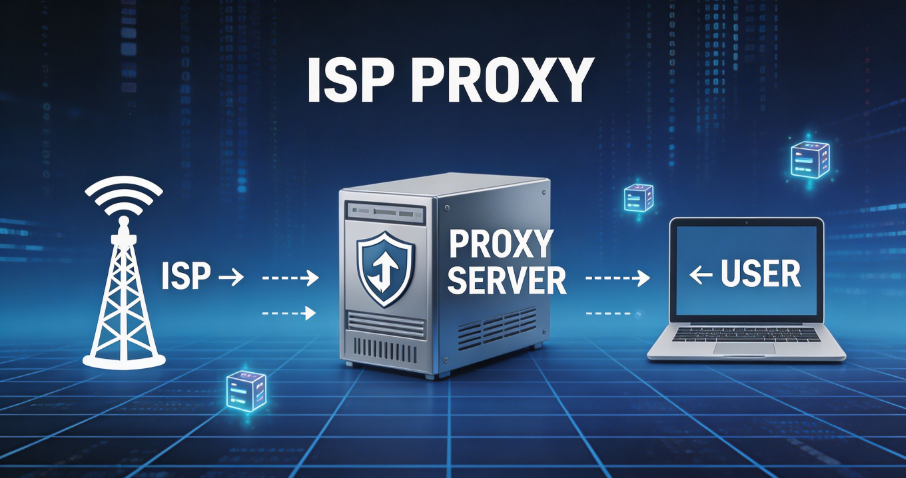
An ISP proxy is an IP address that originates from a genuine internet service provider—the same Comcast, AT&T, Deutsche Telekom, or NTT that serves ordinary households—but is provisioned through a data‑center‑like infrastructure. The physical server hosting the IP sits in a cloud facility, but the IP itself is registered under the ISP’s autonomous system number (ASN) and appears in geolocation databases exactly as a home broadband address would. This is a critical distinction: the IP is not announced from a hosting provider’s ASN; it is announced from the ISP’s ASN, making it indistinguishable from a residential IP to any website that performs an IP‑to‑ASN lookup.
Unlike peer‑to‑peer residential proxies, which route traffic through volunteer devices and can suffer from variable bandwidth and unpredictable uptime, ISP proxies run on dedicated, professionally maintained servers. The connection is fast, symmetrical, and always available. The IP is static—it remains assigned to the user for as long as the subscription is active. The result is a hybrid that inherits the best properties of both worlds: the residential reputation of an ISP‑registered address and the raw throughput of a hosted server.
The Technical Architecture Behind ISP Proxies
To understand why an ISP proxy performs so well, it helps to look at how IP addresses are categorized on the internet. Every IP belongs to an autonomous system—a network or group of networks under a common routing policy. ISPs have ASNs that are classified as “consumer” or “broadband” by commercial IP intelligence services. Hosting providers, such as AWS, DigitalOcean, and OVH, have ASNs classified as “hosting” or “datacenter.” The classification is the first thing a website’s firewall checks when a connection arrives. If the ASN is “hosting,” the request is immediately suspect. If the ASN is “consumer,” the request is given a baseline level of trust.
ISP proxies are routed through servers that are physically located in data centers, but the IP addresses they present are leased directly from ISPs. These IPs have never appeared in a residential home, but they are indistinguishable from those that have. A Geo‑IP lookup on an ISP proxy returns a residential ISP name and a physical city. A reputation check returns a blank slate—no history of spam, no history of bot activity. This is what makes ISP proxies so effective: they have the technical performance of a cloud server and the identity of a home connection.
How ISP Proxies Compare to Residential and Datacenter Proxies
The proxy landscape is typically divided into three categories, but ISP proxies form a fourth, distinct class. The table below maps the critical characteristics.
| Feature | Datacenter Proxy | Residential Proxy (P2P) | ISP Proxy |
| IP Origin | Cloud hosting provider | Volunteer home device | ISP‑assigned to a server |
| ASN Classification | Hosting | Consumer | Consumer |
| Speed | High (1‑10 Gbps) | Variable (depends on peer) | High (dedicated server) |
| Stability | Excellent | Unpredictable | Excellent |
| IP Rotation | Static or rotating | Rotating or sticky | Static |
| Trust Level | Low—often blocked | High—rarely blocked | Highest—residential and stable |
| Best Use Case | Bulk scraping of tolerant sites | High‑volume anonymous access | Persistent account management, sensitive transactions |
ISP Proxy vs. Residential Proxy
A peer‑to‑peer residential proxy routes traffic through a real person’s device, using that device’s home internet connection. The IP is unquestionably residential, and that is its strength. However, the connection quality depends on the peer’s bandwidth, router configuration, and whether their device is online. Speeds can fluctuate wildly, and the IP can change without warning if the peer’s router reboots or their ISP assigns a new address. Sticky sessions can last minutes or hours, but true permanence is not guaranteed.
An ISP proxy also presents a residential IP, but the connection does not depend on a third party’s device. It runs on a dedicated server with guaranteed uptime, consistent latency, and symmetrical bandwidth. The IP is static and never rotates unless the user explicitly changes it. For tasks that require the same IP over days, weeks, or months—logging into a bank, managing an e‑commerce store, automating a social media account—the ISP proxy is superior. It offers the residential trust of a P2P proxy with the reliability of a cloud server.
ISP Proxy vs. Datacenter Proxy
A datacenter proxy is the fastest option. It runs on cloud infrastructure with no dependency on external peers. However, its ASN classification as “hosting” is a permanent mark. Many websites, particularly those protected by advanced anti‑bot systems, block datacenter IPs outright. Others serve CAPTCHAs on every request. A datacenter proxy can be used for bulk data collection against unprotected endpoints, but it is ineffective for any target that enforces strict IP reputation checks.
An ISP proxy matches the speed of a datacenter proxy but escapes the hosting‑ASN block. The IP is seen as a residential address, so it passes through reputation filters that would block a datacenter IP instantly. The only trade‑off is that ISP proxies are typically static, not rotating, and are provisioned individually rather than in massive pools. This makes them less suitable for high‑volume, per‑request rotation tasks, but ideal for operations where a single, trusted IP is needed to maintain a persistent presence.
Why ISP Proxies Are Considered the Gold Standard
The term “gold standard” is not hyperbole. Across the proxy industry, ISP proxies command the highest trust and the lowest block rates. This section details the specific attributes that earn them that reputation.
Unmatched IP Reputation
The most important asset a proxy IP can have is a clean reputation. ISP proxies are born clean. They have not been used by previous owners for spam or fraud, because they have never been assigned to a consumer. They are fresh, ISP‑registered IPs with no history. When they begin to be used for legitimate web traffic, they build a positive history that reinforces their trusted status. A site that sees an ISP proxy visit daily for a month learns to treat that IP as a loyal user. The risk score drops to near zero, and challenges cease entirely.
Speed and Performance
Because ISP proxies run on dedicated servers with direct peering to major transit providers, they offer latency and throughput that rival the best datacenter proxies. An ISP proxy can comfortably handle high‑definition video streaming, large file downloads, or rapid‑fire API requests. There is no last‑mile bottleneck of a residential peer’s Wi‑Fi. The connection is end‑to‑end optimized. For operators who need to scrape content quickly and reliably from sites that block datacenter IPs, the ISP proxy provides the speed of a cloud server with the access of a residential IP.
Absolute IP Stability
The static nature of an ISP proxy is its defining feature. The IP does not change for the life of the subscription. This stability is critical for any use case that involves session state, authentication tokens, or IP whitelisting. A bank that sees a login from a new IP every day will lock the account. A marketplace that detects frequent IP changes will flag the seller. An ISP proxy provides a permanent IP address that can be registered as the account’s trusted location, eliminating security challenges and login friction.
Geographic Authenticity
ISP proxies are available in specific cities and regions, just like residential IPs. When a user provisions an ISP proxy in New York, the IP geolocates to a New York ISP. The timezone, language, and local content are all served correctly. This geographic precision is essential for ad verification, localized price monitoring, and market research. A datacenter IP may also geolocate to a city, but its ASN will betray it. An ISP proxy offers both the city and the consumer ASN, creating a flawless geographic profile.
IPFLY’s ISP Proxies: Static Residential IPs Built for Trust
IPFLY’s static residential proxies are the embodiment of ISP proxy technology. Each IP is a dedicated, ISP‑registered address hosted on IPFLY’s high‑performance infrastructure. They are available in dozens of countries and hundreds of cities, with new locations added regularly. The IPs are delivered as standard HTTP and SOCKS5 endpoints, making them compatible with any browser, bot, or automation framework.
How IPFLY ISP Proxies Are Provisioned
Provisioning an IPFLY ISP proxy is immediate. After signing up, the operator selects the target country and city from the IPFLY console. The system assigns a static residential IP from the appropriate ISP pool and provides the endpoint credentials: a hostname, port, username, and password. The IP is then exclusively reserved for that operator. No other user shares it. The operator can begin using it within seconds.
The IP remains assigned until the operator releases it. There is no forced rotation, no time limit, and no unexpected change. If the operator needs a different IP, they can release the current one and provision a new one from the console. This flexibility allows operators to maintain permanent identities for critical accounts while having the option to refresh IPs for less sensitive tasks.
Performance and Reliability
IPFLY’s ISP proxies are hosted on a global server network with redundant uplinks and low‑latency routing. The infrastructure is designed for sustained high throughput. Operators can expect consistent speeds suitable for simultaneous heavy‑duty tasks. IPFLY monitors all endpoints for uptime and automatically reroutes traffic in the rare event of a hardware issue. The result is a service that operators can depend on for 24/7 operations without worrying about a peer device going offline.
Security and Leak Prevention
IPFLY ISP proxies support SOCKS5 with remote DNS resolution. When an operator configures their browser or script to use a SOCKS5 endpoint, all DNS queries are tunneled to the proxy and resolved at the IPFLY exit node. This prevents DNS leaks that could expose the operator’s real ISP to the target site. IPFLY’s infrastructure also supports standard HTTPS, ensuring that data between the operator and the proxy is encrypted in transit.
Top 7 Use Cases Where ISP Proxies Outperform Everything Else
E‑Commerce Account Management
Sellers on Amazon, eBay, Shopify, and regional marketplaces must maintain a single, consistent IP for each store. If a marketplace detects frequent IP changes, it flags the account for suspicious activity and may suspend it. ISP proxies provide a permanent residential IP for each store, eliminating this risk. The IP’s ISP‑registered ASN ensures that the marketplace sees a legitimate home business, not a cloud‑hosted bot. IPFLY’s static residential IPs can be provisioned per store, in the store’s target country, and used exclusively for that account’s operations.
Social Media Management
Managing multiple social media accounts from a single device requires that no two accounts share an IP, and that each account’s IP remains stable over time. A rotating residential IP that changes daily will trigger security checks. An ISP proxy provides the fixed IP that platforms like Instagram, Facebook, and TikTok trust as a regular user’s home connection. Combined with a dedicated browser profile and cookie isolation, an IPFLY ISP proxy makes each account appear as a distinct, local user.
Sneaker Copping and Limited Releases
Sneaker bots must maintain a persistent IP during the checkout flow. Changing IPs mid‑transaction will cause payment failure or order cancellation. ISP proxies offer the speed needed to compete in millisecond‑sensitive drops and the static IP that keeps the session alive through cart addition, payment processing, and confirmation. IPFLY’s ISP proxies, hosted in cities near the target retailer’s infrastructure, provide the low‑latency edge that wins releases.
Online Banking and Financial Services
Financial institutions are among the strictest when it comes to IP consistency. Logging in from a new IP, especially one from a different country or a datacenter, will lock the account. ISP proxies provide a permanent, residential IP that can be registered with the bank as the customer’s trusted device. The operator can access their accounts from anywhere in the world, and the bank sees the same residential IP every time.
Ad Verification
Verifying that ads are displayed correctly, in the right geography, and to the right audience requires viewing them as a local user. Datacenter IPs may not trigger localized ad delivery because ad servers filter by IP reputation. ISP proxies are seen as genuine local residential users, so the ads served are exactly what a real consumer would see. IPFLY’s ISP proxies in target cities make ad verification campaigns accurate and reproducible.
Web Scraping of Protected Sites
While datacenter proxies are suitable for scraping unprotected sites, many e‑commerce platforms, travel aggregators, and real estate portals actively block known hosting IPs. ISP proxies scrape these targets without triggering blocks. Their residential ASN bypasses the initial filter, and their static nature allows for session persistence—maintaining the same IP across a multi‑page scrape ensures that the target site does not see inconsistent traffic patterns. IPFLY’s ISP proxies can be rotated manually if a particular IP does eventually get rate‑limited, though this is rare given the clean reputation.
Accessing Geo‑Restricted Business Services
Businesses that need to access localized services—such as regional payment gateways, tax filing portals, or supplier dashboards—can use ISP proxies to appear as a local business. The static IP ensures that the service recognizes the connection as a trusted, returning user. IPFLY’s geographic targeting makes it possible to provision a static residential IP in the exact country required, and the ISP proxy’s speed handles even data‑intensive tasks like uploading documents or running reports.
Case Study: A Multi‑Store Seller Eliminates Suspensions with IPFLY ISP Proxies
A dropshipping entrepreneur operated twelve storefronts on a major e‑commerce platform. The stores were registered under different business entities but managed from a single office. The entrepreneur initially used a proxy to assign different IPs to each store, but the platform’s security systems detected the proxies datacenter IPs and suspended three stores for “using unauthorized third‑party services.” The entrepreneur then switched to a rotating residential proxy, but the constant IP changes triggered “unusual activity” alerts. Customer service calls became a weekly ordeal.
The entrepreneur learned about IPFLY’s ISP proxies and provisioned twelve static residential IPs, each in the store’s registered country. Each IP was assigned to a dedicated browser profile. The entrepreneur used the same IPs for all store activity—inventory updates, price changes, customer messaging—day after day. The platform saw a stable, ISP‑registered address for each store. The account flags disappeared. Over the next year, not a single security alert was raised. The entrepreneur expanded to twenty stores, each with its own IPFLY ISP proxy, and the operation ran without interruption.
Setting Up an IPFLY ISP Proxy: A Straightforward Configuration
Integrating an IPFLY ISP proxy into any workflow is a matter of pasting the endpoint credentials into the proxy configuration field of the browser or tool. The following steps cover the standard setup.
- Log in to the IPFLY console and navigate to the static residential proxy section. Select the desired country and city. Generate a new endpoint.
- Copy the credentials. The console displays a hostname (e.g.,
isp-us.ipfly.net), a port (e.g.,8080or1080for SOCKS5), a username, and a password. - Configure the browser or tool. In the network settings, enter the proxy type (HTTP or SOCKS5), the hostname, the port, and the authentication. For scripts, the credentials are embedded in the proxy URL:
http://username:password@isp-us.ipfly.net:8080. - For maximum privacy, select SOCKS5 with remote DNS. This ensures DNS queries are resolved at the IPFLY exit node, not on the local machine.
- Test the connection. Visit an IP‑checking website. The displayed IP should match the IPFLY ISP proxy, showing the target country and a residential ISP name.
- Run a leak test. Verify that WebRTC is disabled and no DNS leaks are present. Once confirmed, the session is ready for production traffic.
A minimal code snippet demonstrates how to route a Python request through an IPFLY ISP proxy:
import requests

proxies = {
    "http": "http://user:pass@isp-us.ipfly.net:8080",
    "https": "http://user:pass@isp-us.ipfly.net:8080"
}

response = requests.get("https://httpbin.org/ip", proxies=proxies)
print(response.json())  # Should display the ISP proxy IP, not the home IP
The integration is identical for any software that supports standard HTTP or SOCKS5 proxies. No additional software is needed.
The Economics of ISP Proxies: When the Investment Pays Off
ISP proxies are typically priced higher than shared datacenter or rotating residential proxies, but their value proposition is unmatched for specific use cases. The cost of a single account suspension on a major e‑commerce platform—lost inventory, frozen funds, and the time to rebuild—can run into thousands of dollars. A dedicated IPFLY ISP proxy costs a fraction of that and prevents the suspension entirely. For sneaker resellers, a single successful cop of a limited release can cover the cost of the ISP proxy for a year. For social media agencies, the ability to manage clients’ accounts without triggering security checks preserves contracts worth far more than the proxy subscription.
The economic argument for ISP proxies is not about cost per gigabyte; it is about risk reduction. A static residential IP that never blocks, never challenges, and never changes is an insurance policy for high‑value digital operations. The alternative—using cheaper proxies and losing accounts—is demonstrably more expensive.
ISP Proxy Best Practices: Maximizing Value and Security
To get the most out of an IPFLY ISP proxy, operators should follow a few disciplined practices.
Warm Up the IP Before Critical Use
A brand‑new ISP proxy has no history with any website. Before using it for a high‑value login or transaction, spend a few days warming the IP. Visit the target site’s homepage, browse category pages, and perform generic searches at a human pace. This establishes a baseline of normal behavior. When the IP is later used for the critical action, the site’s risk models already recognize it as a legitimate user.
Pair the ISP Proxy with a Consistent Browser Fingerprint
An ISP proxy provides network‑level trust. The browser must provide application‑level consistency. Use a dedicated browser profile that always connects through the same ISP proxy. Align the profile’s timezone, language, and screen resolution with the IP’s geography. Disable WebRTC and other leak vectors. The result is a cohesive identity where every signal points to the same location and device.
Use Separate ISP Proxies for Separate Accounts
Never share an ISP proxy across multiple accounts on the same platform. If the platform detects the same IP on two different accounts, both will be linked and potentially suspended. IPFLY makes it easy to provision a unique ISP proxy for each account, maintaining strict isolation at the network level.
Monitor IP Health Periodically
Even the cleanest IP can occasionally land on a blacklist if, for example, a previous user of the IP (in a past life before it became a proxy) had a bad reputation. IPFLY continuously monitors its IPs, but operators can run their own checks by looking up the IP on public blacklist databases. If any issue is found, IPFLY’s support can replace the IP.
ISP Proxies Are the Ultimate Tool for Trusted, Persistent Access
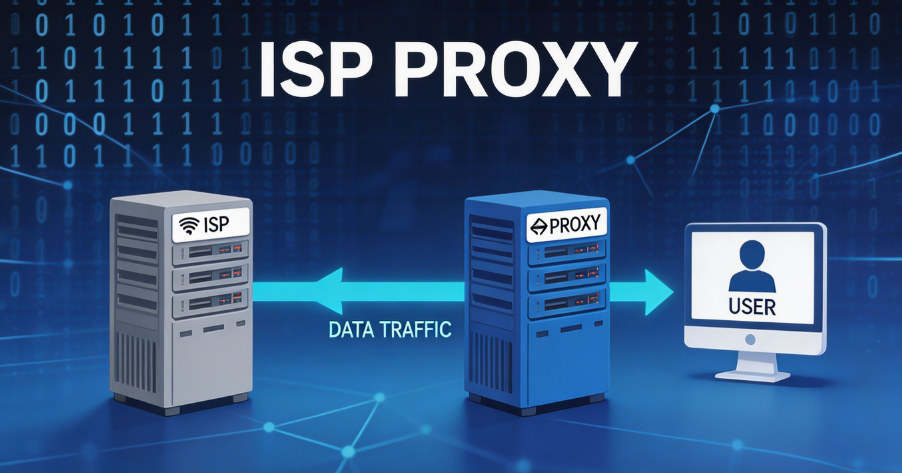
The ISP proxy occupies a unique position in the proxy ecosystem. It delivers the speed and reliability of a datacenter proxy without the hosting‑ASN stigma. It provides the trust and residential appearance of a peer‑to‑peer residential proxy without the instability and rotation. For any operation where a single IP must be trusted, persistent, and fast, the ISP proxy is the definitive solution. IPFLY’s static residential proxies make this technology accessible with global coverage, instant provisioning, and infrastructure designed for professional use. From managing multi‑million‑dollar e‑commerce storefronts to protecting the identity of a researcher, the ISP proxy turns network anonymity from a variable into a constant.
Get Your Own Dedicated ISP Proxy Today
Stop risking your accounts on unstable IPs. Sign up for IPFLY and provision a static residential ISP proxy in your target city. Configure it once, use it for as long as you need, and experience what it’s like to have an IP that websites trust as much as a local customer’s home connection.