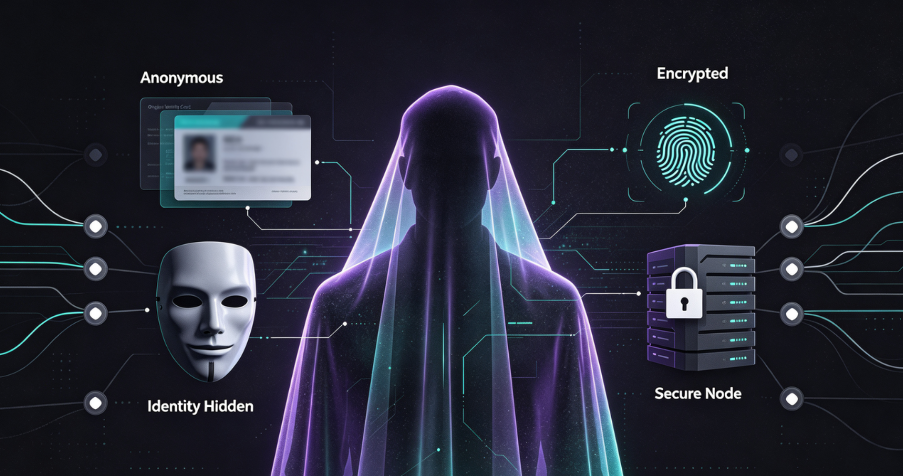
Every time a device connects to the internet, it broadcasts a digital identifier—an IP address—that reveals location, internet service provider, and potentially much more. This identifier serves as the foundation of online communication, yet it also represents a persistent vulnerability. Websites log it, advertisers track it, and malicious actors can exploit it. The ability to mask this identifier has become not merely a convenience but a necessity for privacy-conscious individuals and organizations alike.
Enter the anonymizer—a tool designed to make online activity untraceable by hiding the client computer’s identifying information. An anonymizer, also known as an anonymous proxy, is a type of proxy server that aims to make activity on the Internet untraceable. It acts as an intermediary between a user’s device and the internet, receiving requests, forwarding them to destination servers, and returning responses—all while replacing the user’s IP address with its own.
This guide examines the anonymizer in comprehensive technical detail: what it is, how it works, the different types available, its relationship to shared proxy IPs, and the critical distinction between free anonymizers and professional proxy infrastructure. The discussion encompasses protocol-specific and protocol-independent anonymizers, anonymity levels, use cases, and the circumstances under which professional solutions like those offered by IPFLY provide superior performance and reliability.
What Is an Anonymizer?
Definition and Core Concept
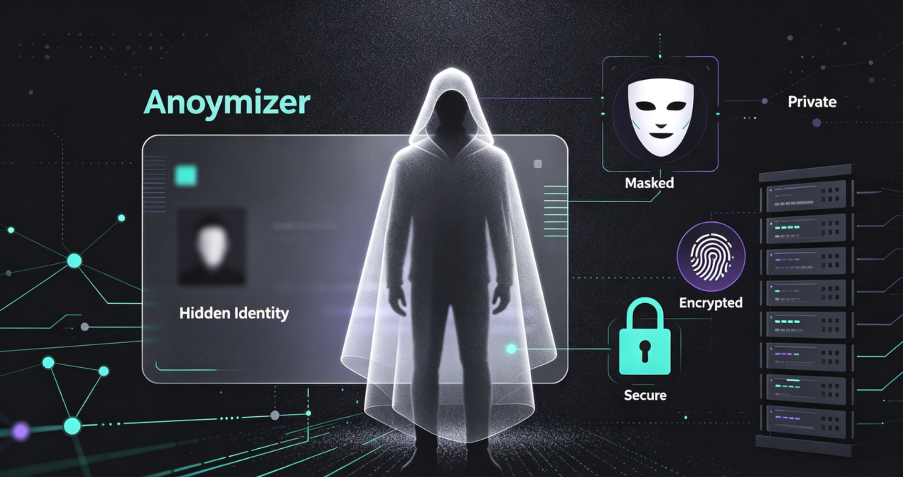
An anonymizer is a tool or service that hides a user’s digital identity by masking the IP address and routing internet traffic through intermediary servers. Think of it as a digital disguise that makes it harder for websites, advertisers, or surveillance systems to trace online activities back to the individual user.
The anonymizer acts as a middleman, intercepting requests and forwarding them using its own IP address instead of the user’s. When a user accesses a website through an anonymizer, the destination server sees only the anonymizer’s IP address and geographic location—not the user’s real IP.
This fundamental mechanism is what makes anonymizers valuable for privacy protection. By substituting the user’s IP address with its own, an anonymizer ensures that the destination server sees the request as coming from the proxy’s IP address, effectively rendering the user anonymous on the internet.
How an Anonymizer Works
The technical operation of an anonymizer follows a straightforward request-response flow:
- User initiates request – The user enters a URL or makes a network request through the anonymizer’s interface
- Anonymizer intercepts – The anonymizer receives the request, capturing the user’s IP address and other identifying information
- Headers are sanitized – The anonymizer removes or modifies headers that could reveal the user’s identity, such as X-Forwarded-For and Via headers
- Request is forwarded – The anonymizer forwards the request to the destination server using its own IP address
- Response is relayed – The destination server responds to the anonymizer, which then relays the content back to the user
This process happens in real-time, with the user typically experiencing only a slight delay compared to direct browsing. The critical distinction is that the destination server never sees the user’s real IP address.
While both anonymizers and Shared proxy IPs route traffic through intermediary servers and hide the user’s IP address, they differ in several fundamental ways:
| Feature | Anonymizer (Anonymous Proxy) | Shared proxy IPs |
| Scope | Typically affects only specific application traffic (e.g., browser) | Affects all device traffic |
| Encryption | Usually does not encrypt traffic | Encrypts all traffic using secure tunneling protocols |
| Configuration | Can be configured at application or system level | Requires software installation |
| Speed | Generally faster (no encryption overhead) | Slightly slower due to encryption |
| Privacy Scope | Hides IP address only | Hides IP and encrypts all data |
| Use Case | IP masking, geo-spoofing, basic anonymity | Comprehensive privacy and security |
A shared proxy IPs creates an encrypted tunnel for all internet traffic, providing an additional layer of security that basic anonymizers do not offer. However, proxies are generally faster than shared proxy IPs, as they do not have to use the extra resources involved in encryption and decryption.
The choice between an anonymizer and a shared proxy IPs depends on the specific requirements: basic IP masking and faster performance favor anonymizers, while comprehensive encryption and system-wide protection favor shared proxy IPs.
Anonymizers vs. Tor
Tor (The Onion Router) represents a third category of anonymization tool. Unlike a single proxy server, Tor routes traffic through multiple layers of encryption across a distributed network of volunteer-operated nodes. Each node peels away one layer of encryption, with the final node revealing the destination.
Tor provides higher anonymity than a single anonymizer but at the cost of significantly slower performance. For users who require maximum anonymity and can tolerate slower speeds, Tor is appropriate. For users who need faster performance with adequate anonymity, a well-configured anonymizer or shared proxy IPs is preferable.
Types of Anonymizers
Protocol-Specific vs. Protocol-Independent Anonymizers
Anonymizers can be classified into two broad categories based on how they handle different types of traffic:
Protocol-Specific Anonymizers – These anonymizers work with specific protocols. Examples include web proxies (HTTP/HTTPS), anonymous remailers (email), and bouncers for FTP and IRC. They are designed to handle the particular characteristics of each protocol, providing optimized performance for that specific use case.
Protocol-Independent Anonymizers – These anonymizers create a network tunnel using protocols such as SOCKS, PPTP, or Shared proxy IPs. They can handle any type of traffic that passes through the tunnel, offering greater flexibility at the cost of potentially higher complexity.
Anonymity Levels
Anonymizers provide varying levels of anonymity based on how they handle IP information and whether they identify themselves as proxies:
Transparent Proxy – These proxies do not hide the user’s IP address. They inform the destination server that a proxy is being used and pass along the user’s real IP address. Transparent proxies are typically used for caching and content filtering rather than privacy.
Anonymous Proxy – These proxies hide the user’s real IP address but identify themselves as proxies. The destination server knows that a proxy is being used but cannot see the user’s actual IP.
High Anonymity (Elite) Proxy – These proxies provide the highest level of privacy. They do not identify themselves as proxies and completely hide the user’s real IP address. The destination server sees only the proxy’s IP and has no indication that a proxy is being used.
The choice of anonymity level depends on the specific requirements. For casual browsing, an anonymous proxy may suffice. For sensitive operations or accessing platforms that actively block proxies, an elite proxy is essential.
Residential vs. Datacenter Anonymizers
The source of the proxy IP address significantly impacts both anonymity and reliability:
Residential Proxies – These proxies route through IP addresses registered to residential ISPs. They appear as genuine home internet connections, making them harder to detect and block. Residential proxies carry higher trust scores and are less likely to trigger CAPTCHAs or access restrictions.
Datacenter Proxies – These proxies originate from commercial data centers. They are easier to identify and block but offer higher bandwidth and lower latency. Datacenter proxies are suitable for applications where IP authenticity is less critical than performance.
IPFLY’s dynamic residential proxies provide access to over 90 million residential IP addresses across 190+ countries, with average response times of 0.6 seconds and 99.9% availability. The residential origin ensures higher trust scores and reduced blocking risk, while the geographic diversity enables users to select IP addresses that align with their anonymity requirements.
For users requiring persistent IP assignments—such as maintaining consistent access patterns or avoiding frequent IP changes—IPFLY’s static residential proxies provide 100% exclusive, ISP-registered residential IP addresses that remain stable over time.
Static vs. Rotating Proxies
Static Proxies – These proxies maintain the same IP address over extended periods. They are suitable for session-based workflows, authenticated access, and scenarios where IP consistency is important.
Rotating Proxies – These proxies change IP addresses automatically at configured intervals or per request. They are ideal for high-volume data collection, web scraping, and scenarios where distributing requests across multiple IPs reduces detection risk.
IPFLY’s dynamic residential proxies support automated rotation, enabling users to distribute requests across diverse IPs and maintain low request-per-IP ratios that stay below detection thresholds.
Anonymizer Use Cases
Personal Privacy Protection
For individual users, anonymizers provide protection against tracking, profiling, and surveillance. When browsing through an anonymizer, websites cannot collect the user’s real IP address, making it harder to build behavioral profiles or target advertising.
This protection extends to public Wi-Fi networks, where anonymizers prevent the network operator or other users on the same network from seeing the user’s browsing activity. For users concerned about data collection by websites, advertisers, or internet service providers, an anonymizer offers a straightforward privacy solution.
Accessing Region-Restricted Content
Anonymizers enable access to region-restricted content by making it appear as though the user is browsing from a different geographic location. By selecting an anonymizer server in a specific country, users can access content that would otherwise be unavailable in their region.
This capability is valuable for travelers needing to access home-country services, researchers requiring region-specific data, and users in regions with restricted internet access. The geographic diversity of residential proxy networks—spanning 190+ countries with IPFLY—enables users to access content from virtually any region.
Business and Professional Applications
For organizations, anonymizers serve a range of professional use cases:
Market Research – Gathering competitive intelligence, analyzing pricing strategies, and monitoring market trends requires accessing websites without revealing the organization’s identity or triggering anti-scraping measures.
Ad Verification – Verifying ad placements, detecting fraud, and monitoring campaign performance requires accessing ads from different geographic locations and user profiles.
Brand Protection – Monitoring for brand abuse, counterfeit products, and unauthorized distribution requires consistent, undetectable access to various platforms.
Web Scraping – Collecting data from websites at scale requires residential IPs to avoid detection and blocking.
SEO Monitoring – Tracking search engine rankings, analyzing competitor performance, and monitoring keyword positions requires accessing search results from different geographic locations.
Complete Proxy IP Fundamentals
Build a full proxy knowledge framework — from core principles to protocol selection
Secure Communication and Data Transmission
For users handling sensitive information, anonymizers provide an additional layer of protection. While anonymizers do not typically encrypt traffic, they do hide the user’s IP address, making it harder for third parties to identify the source of communications.
For activities requiring both anonymity and encryption, a combination of approaches may be appropriate—using a shared proxy IPs for encryption and an anonymizer for IP masking, or using an anonymizer that supports HTTPS connections for encrypted data transmission.
Free Anonymizers vs. Professional Proxy Infrastructure
The Limitations of Free Anonymizers
Free anonymizers—web-based proxy sites, free proxy lists, and browser extensions—offer convenient, no-cost access to basic anonymity. However, they come with significant limitations:
Performance Constraints – Free anonymizers are shared among many users simultaneously, leading to bandwidth congestion, slow loading times, and frequent interruptions. Response times are inconsistent, with users reporting significant variation in performance.
Datacenter IP Detection – Most free anonymizers use datacenter IP addresses that are readily identified as proxy traffic. Many websites actively block known datacenter IP ranges, present CAPTCHA challenges, or restrict access entirely.
Privacy and Security Concerns – Free anonymizers may log user activity, inject advertisements, or include third-party trackers that compromise user privacy. The proxy operator can see what the user is requesting, and the connection between the browser and the proxy server is not necessarily encrypted.
Limited Geographic Coverage – Free anonymizers typically offer a limited number of server locations, restricting the user’s ability to access region-specific content.
Not Designed for Business Operations – Free anonymizers are built for casual browsing, not for business-scale operations. They do not offer API-based integration, session persistence, dedicated resources, or consistent reliability.
Professional Proxy Infrastructure: The Enterprise Alternative
For users and organizations that require reliable, consistent anonymity, professional proxy infrastructure offers significant advantages over free anonymizers:
Large-Scale Residential IP Networks – Professional providers operate extensive residential IP networks that are harder to detect and block. IPFLY provides access to over 90 million residential IP addresses across 190+ countries, ensuring availability and geographic diversity that free anonymizers cannot match.
High Availability – With 99.9% uptime, professional infrastructure supports mission-critical operations without the interruptions common to free services.
Protocol Flexibility – Full support for HTTP/HTTPS and SOCKS5 protocols enables integration with diverse applications and automation tools.
Dedicated Resources – Exclusive IP allocations prevent cross-user contamination and maintain IP reputation.
Millisecond Response Times – Professional infrastructure delivers the speed and reliability that free anonymizers cannot provide.
Business-Grade Support – 7×24 customer support ensures responsive assistance for maintaining consistent operations.
Comparison: Free Anonymizers vs. IPFLY Professional Proxies
| Feature | Free Anonymizer | IPFLY Professional Proxies |
| IP Source | Datacenter IPs | Residential IPs |
| IP Pool Size | Limited | 90M+ residential IPs |
| Geographic Coverage | Limited | 190+ countries |
| Protocol Support | Limited (browser-based) | HTTP/HTTPS/SOCKS5 |
| Concurrent Connections | Shared, limited | Unlimited |
| IP Rotation | None | Automated per-request or time-based |
| Availability | Variable | 99.9% uptime |
| Performance | Inconsistent, slow | Millisecond response times |
| Privacy | Limited (trackers, logging) | High (dedicated resources) |
| Business Use | Not suitable | Enterprise-grade |
| Cost | Free (ad-supported) | Paid (professional infrastructure) |
When to Use a Professional Anonymizer
Business and Professional Scenarios
For organizations, professional anonymizer infrastructure is the appropriate choice when:
Consistent Access Is Required – Business operations cannot tolerate the interruptions and variable performance of free anonymizers. Professional infrastructure provides the reliability needed for mission-critical operations.
Scalability Matters – As operations scale, the limitations of free anonymizers become apparent. Professional infrastructure scales to support high-volume data collection, concurrent sessions, and growing IP requirements.
IP Reputation Is Critical – For accessing platforms that monitor IP reputation, residential proxies from professional providers maintain the trust scores needed for sustained access.
Geographic Diversity Is Needed – Accessing region-specific content requires IP addresses across multiple countries. Professional providers offer the geographic coverage that free anonymizers lack.
Integration with Automation – Business workflows require API-based integration, session persistence, and programmatic control that free anonymizers do not support.
Individual Power Users
For individual users with advanced requirements, professional anonymizer infrastructure offers benefits beyond free services:
Streaming and High-Bandwidth Applications – Professional residential proxies provide the bandwidth and performance needed for streaming, downloads, and other high-bandwidth activities.
Gaming and Latency-Sensitive Applications – Low-latency residential proxies support gaming and other real-time applications where speed is critical.
Multi-Account Management – Managing multiple accounts across platforms requires IP isolation to prevent correlation detection. Professional static residential proxies provide consistent IP assignments for long-term account management.
Research and Academic Use – Researchers collecting data from websites at scale require residential IPs to avoid detection and blocking.
Anonymizer Best Practices
Selecting the Right Anonymizer Type
Choosing the appropriate anonymizer depends on the specific use case:
- Casual browsing – A free web proxy may suffice for occasional, low-stakes browsing
- Basic privacy – An anonymous proxy provides adequate protection for everyday privacy concerns
- Sensitive operations – An elite proxy or shared proxy IPs is recommended for activities involving sensitive data
- Business operations – Professional residential proxy infrastructure is the appropriate choice
- Maximum anonymity – Tor provides the highest level of anonymity at the cost of performance
Configuring Anonymizers for Optimal Performance
For users configuring anonymizers, several best practices apply:
Protocol Selection – SOCKS5 and HTTPS proxies are recommended over HTTP for better compatibility and security.
Geographic Alignment – Select proxy locations that align with the target region to minimize latency and maximize access to region-specific content.
Connection Stability – Avoid frequent IP changes, which can appear suspicious to platform monitoring systems.
Authentication – Use properly configured authentication to prevent unauthorized access to proxy resources.
Maintaining Privacy While Using Anonymizers
Even when using an anonymizer, users should maintain privacy best practices:
Use HTTPS – Ensure that connections to websites use HTTPS, which encrypts data between the user and the destination.
Avoid Sensitive Data – Do not enter passwords, financial information, or other sensitive data through anonymizers that do not provide end-to-end encryption.
Clear Cookies and Cache – After using an anonymizer, clear browser cookies and cache to remove any tracking data.
Review Privacy Policies – Understand what data the anonymizer provider collects and how it is used.

Anonymizers represent a fundamental tool for online privacy, enabling users to mask their IP addresses and browse the internet without revealing their identity. The technical operation is straightforward—intercepting requests, sanitizing identifying headers, and forwarding traffic using the anonymizer’s own IP address—but the implications for privacy, security, and access are profound.
The landscape of anonymizers is diverse, ranging from free web-based proxies to enterprise-grade residential proxy networks. Free anonymizers offer convenient, no-cost access but come with significant limitations: variable performance, datacenter IP detection, privacy concerns, and lack of scalability. Professional proxy infrastructure addresses these limitations through large-scale residential IP networks, high availability, protocol flexibility, and dedicated resources.
The choice between free and professional anonymizers depends on the specific requirements. For casual, occasional browsing, free anonymizers may suffice. For business operations, professional infrastructure is essential. For individual users with advanced requirements—streaming, gaming, multi-account management, or research—professional residential proxies offer superior performance and reliability.
Understanding the distinctions between anonymizer types, anonymity levels, and IP sources enables users to select the right solution for their needs. Whether the goal is basic privacy protection, access to region-restricted content, or enterprise-scale data collection, the appropriate anonymizer infrastructure provides the foundation for secure, anonymous online activity.
For users and organizations requiring reliable, high-performance anonymizer infrastructure beyond what free services can offer, IPFLY provides professional proxy solutions designed for privacy, performance, and scalability:
- Dynamic Residential Proxies – Access over 90 million residential IP addresses across 190+ countries with automated rotation and millisecond response times for high-frequency access and data-intensive applications.
- Static Residential Proxies – Exclusive, ISP-registered residential IP addresses for consistent, long-term access patterns that maintain IP reputation and support session-based workflows.
- Datacenter Proxies – High-performance proxy infrastructure with 99.9% availability for bandwidth-intensive applications where residential IPs are not required.
Build your professional anonymizer infrastructure today. Visit IPFLY’s homepage to explore the full range of proxy solutions, or register now for immediate access to enterprise-grade proxy capabilities that support your privacy and data collection needs.