

Online privacy has become one of the most pressing concerns for internet users worldwide. With increasing surveillance, data breaches, and the constant tracking of online behavior, many users turn to proxy services to protect their identity and access restricted content. Kroxyproxy is one such service that has gained attention for its simplicity and accessibility.
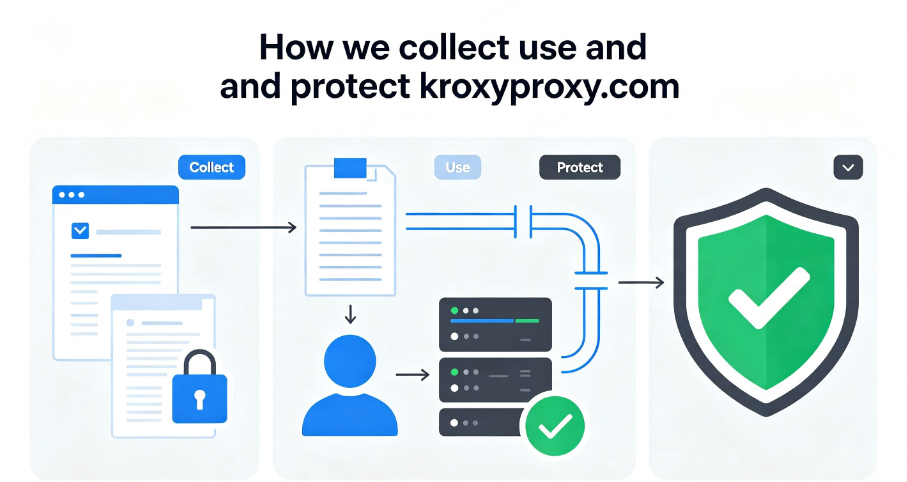
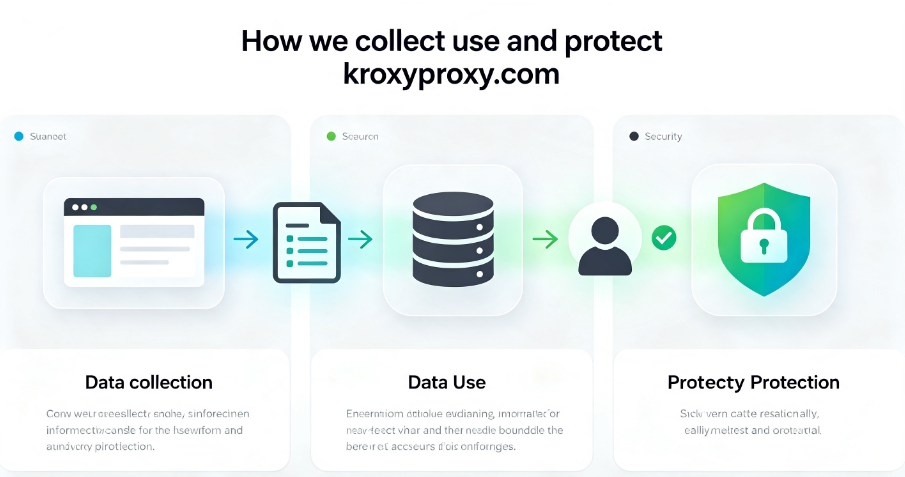
But before you route your traffic through any proxy service, it is essential to understand a fundamental question: how does Kroxyproxy collect, use, and protect your data? This guide provides a comprehensive analysis of Kroxyproxy’s data practices, security measures, limitations, and professional alternatives for users who require stronger privacy protection.

What Is Kroxyproxy and How Does It Work?
Kroxyproxy is a browser-based web proxy service that routes your internet traffic through an intermediary server, masking your real IP address and helping you browse anonymously or access blocked content. Unlike traditional proxies that require software installation or complex configuration, Kroxyproxy runs directly in your browser, making it particularly appealing for users who want a quick and convenient way to access restricted content.
When you use Kroxyproxy, the process follows a straightforward sequence: you type the URL you wish to access into Kroxyproxy’s interface, your browser sends the request to Kroxyproxy’s servers, Kroxyproxy makes the connection to the requested website on your behalf, and the destination website receives the proxy’s IP address and geographic location rather than yours. The network you are on (school or work) only sees a connection to Kroxyproxy, not to the restricted site.
Key features of Kroxyproxy include no installation required, support for video streaming on platforms like YouTube and Instagram, SSL encryption, free usage with no registration or payment required, and cross-device compatibility across Windows, macOS, Linux, iOS, and Android.
How Kroxyproxy Collects Your Data
Understanding what data Kroxyproxy collects is the first step in evaluating its privacy implications. While Kroxyproxy positions itself as a privacy-focused service, the nature of proxy architecture inherently involves certain data collection practices.
Traffic Metadata
When you use Kroxyproxy, the service processes your web requests. This means that, at a minimum, Kroxyproxy’s servers see the URLs you are visiting, the websites you are accessing, and the timing of your requests. This is an inherent characteristic of how any proxy service operates—the proxy server must know where to route your traffic.
The proxy server can see your traffic, including browsing history, login details, and other metadata, depending on how you use it. This means that while Kroxyproxy hides your IP address from the websites you visit, the proxy server itself becomes a potential point of data exposure.
IP Address and Device Information
Like any web service, Kroxyproxy’s servers log your IP address when you connect. This is a standard practice for most online services, used for operational purposes such as preventing abuse and maintaining service stability. Additionally, your browser may transmit device information such as operating system, browser type, and screen resolution.
No-Logging Policy Claim
Kroxyproxy states that it does not log user activity — a crucial privacy factor. This no-logging policy suggests that the service does not store or track your browsing history, which is a significant advantage over many free proxy services that monetize user data. However, it is important to note that this claim is based on the service’s stated policy rather than independent verification.
Third-Party Data Sharing
According to available information, Kroxyproxy’s Chrome extension developer has disclosed that the product does not collect or use your data and that your data will not be sold to third parties for unauthorized purposes. This is a positive indicator regarding data handling practices.
Limitations of Transparency
The privacy policy and terms of service are not always clearly published, which raises questions about data handling practices. Users should be aware that while the service may not log activity, the proxy server itself can see traffic during transit. Free proxy services often come with limitations, such as slower speeds, limited server locations, and potential risks related to data collection.
How Kroxyproxy Uses Your Data
The data that passes through Kroxyproxy serves several operational purposes.
Providing the Proxy Service
The primary use of your data is to fulfill your requests. When you enter a URL, Kroxyproxy’s servers use that information to fetch the requested content and return it to your browser. This is the core function of the service and requires processing your requests in real time.
Service Improvement and Maintenance
Like most online services, Kroxyproxy may use aggregated, anonymized data to improve its service. This could include analyzing traffic patterns to optimize server performance, identifying and fixing bugs, and ensuring the service remains stable and reliable. The service maintains updates to patch vulnerabilities and enhance reliability.
Security and Abuse Prevention
Kroxyproxy may use data to prevent abuse of its service. This could include identifying and blocking malicious activity, preventing spam, and ensuring fair usage of the service. The service filters harmful URLs and reduces exposure to malicious content.
Premium Features
Kroxyproxy offers a premium plan via Patreon at $3.50 per month. Paid users receive ad-free browsing, higher performance, more server locations, better encryption, and priority customer support. The data usage for premium users may include additional processing to support these enhanced features.
How Kroxyproxy Protects Your Data
Kroxyproxy employs several security measures to protect user data and privacy.
SSL/TLS Encryption
Kroxyproxy encrypts the connection between you and its servers using SSL encryption. This encryption reduces risks on public Wi-Fi and prevents interception of your data during transmission. For casual applications, these features create a shielded pathway, encrypting traffic even to non-HTTPS destinations. However, while SSL encryption secures the proxy link, end-to-end protection remains limited compared to dedicated solutions.
IP Masking and Anonymity
Your real IP is hidden, helping prevent websites, advertisers, and ISPs from tracking you. This basic anonymity protects you from profiling and tracking by destination websites.
Regular Security Updates
The service maintains updates to patch vulnerabilities and enhance reliability. This indicates active maintenance and a commitment to security.
Malware and Phishing Protection
Kroxyproxy filters harmful URLs and reduces exposure to malicious content. This adds a layer of protection against common web-based threats.
Legal Compliance
Kroxyproxy states that it accesses publicly available data while strictly complying with applicable laws. This commitment to legal compliance is an important aspect of responsible data handling.
Complete Proxy IP Fundamentals
Build a full proxy knowledge framework — from core principles to protocol selection
Limitations and Privacy Risks
Despite its security features, Kroxyproxy has several important limitations that users should understand before relying on it for sensitive activities.
Limited Privacy and Man-in-the-Middle Exposure
While Kroxyproxy hides your IP address from the websites you visit, the proxy server itself can see your traffic. Proxies inherently position the service as a man-in-the-middle entity, capable of viewing unencrypted traffic to target sites. The proxy operator can see what you are requesting, and the connection between your browser and the proxy server itself is not necessarily fully encrypted.
Browser-Only Coverage
HTTPS encryption protects the traffic between your browser and Kroxyproxy, but any applications outside the browser are not covered. If you are transmitting sensitive data outside the browser, such as through other software or APIs, this traffic may be exposed.
Datacenter IP Detection
Kroxyproxy uses datacenter IP addresses, which are more readily identified as proxy traffic and can be blocked by many websites. This means that some platforms may detect and block Kroxyproxy traffic, leading to security alerts, login verification, or even temporary bans.
Many users share the same Kroxyproxy IP addresses. This can result in security alerts, login verification, or even temporary bans when multiple accounts use the same IP for social media or other platforms.
Not Suitable for Sensitive Activities
CroxyProxy is safe for general use, thanks to SSL encryption, but for sensitive data activities, a share ip or an antidetect browser is recommended. It does not offer the same level of protection as a premium share ip. For handling sensitive information, investing in a robust share ip might be a better choice.
Professional Alternatives: IPFLY’s Superior Privacy Protection
For users who require consistent performance, true privacy, or scalable solutions for business workflows, free web proxies like Kroxyproxy come with significant limitations. Professional proxy infrastructure offers a superior experience for both casual and business users.
Why Residential Proxies Offer Better Data Protection
Residential proxies route traffic through real-device IPs that blend better with normal user traffic. Unlike datacenter proxies—which Kroxyproxy uses—residential IPs appear as genuine consumer connections. This means lower blocking rates, higher success rates, and better anonymity.
Residential proxy networks deliver ethically sourced, rotating residential IPs that mimic genuine user behavior, minimizing detection and enhancing privacy far beyond standard web proxies. This approach ensures robust anonymity without the vulnerabilities associated with free, shared services.
IPFLY’s Professional Proxy Solutions
IPFLY offers a comprehensive range of professional proxy solutions designed for users who need reliable, secure, and scalable access to online content. With over 90 million residential IPs across 190+ countries, IPFLY provides the authenticity and performance that free web proxies cannot match.
IPFLY Dynamic Residential Proxies originate from real ISP-assigned IP addresses with automatic rotation capabilities, supporting sticky sessions that sustain the same residential proxy IP for extended periods. These IPs appear as legitimate consumer internet connections, making them highly effective for bypassing regional restrictions and accessing restricted content.
IPFLY Static Residential Proxies (ISP Proxies) provide dedicated, ISP-registered IP addresses that remain fixed. These IPs combine the authenticity of residential addresses with the performance of professional infrastructure, offering higher speed and reliability.
How IPFLY Compares to Kroxyproxy
| Security Aspect | Kroxyproxy | IPFLY Residential Proxies |
| IP Type | Datacenter IPs | Real residential IPs |
| Encryption | Limited—proxy operator can see requests | End-to-end encryption |
| Data Logging | Unknown—free service may log activity | No logging policies |
| IP Detection Risk | High—easily identified as proxy traffic | Low—appears as regular consumer traffic |
| Blocking Rate | High—frequently blocked by websites | Low—residential IPs trusted by most sites |
| Anonymity | Limited—datacenter IPs traceable | High—residential IPs from real households |
Best Practices for Safe Proxy Usage
To mitigate risks when using any proxy service, follow these best practices. Avoid transmitting sensitive credentials or financial data through free web proxies. Combine proxies with browser privacy extensions for layered defense. Verify site HTTPS status independently before entering any personal information. Monitor for unusual ads or redirects that may indicate malicious activity. Limit usage to non-critical browsing when using free services. For professional or high-stakes scenarios, invest in residential proxy networks that offer superior reliability and security.
Conclusion
Kroxyproxy offers a convenient, browser-based solution for basic, casual browsing and accessing restricted content. Its SSL encryption and no-logging policy provide a reasonable level of security for everyday use. However, the service has significant limitations: limited privacy due to the man-in-the-middle nature of proxies, datacenter IP detection risks, performance constraints, shared IP addresses, and browser-only coverage.
For users handling sensitive information, managing multiple accounts, or requiring consistent, reliable access for business workflows, professional residential proxy solutions offer superior security, privacy, and performance. IPFLY’s residential and static ISP proxies provide clean, dedicated IPs that appear as genuine consumer traffic, dramatically reducing detection risk and ensuring reliable access.
Whether you are a casual user seeking basic privacy or a professional requiring enterprise-grade infrastructure, understanding how proxy services collect, use, and protect your data is essential for making informed decisions about your online privacy and security.
Protect Your Data with IPFLY
Free web proxies like Kroxyproxy have their place for quick, casual use. But when you need reliable access, true privacy, and professional-grade performance, IPFLY provides the infrastructure you need.
IPFLY offers flexible proxy plans for every use case:
- Dynamic Residential Proxies – Real residential IPs with automatic rotation, ideal for bypassing restrictions and accessing geographically diverse content.
- Static Residential Proxies – Dedicated, ISP-registered IPs with residential authenticity and datacenter performance—perfect for consistent, long-term access.
- Datacenter Proxies – High-performance, low-latency IPs for fast browsing and high-volume operations.
Get started today: Register for an IPFLY account and explore the full product lineup on the IPFLY homepage. Experience the difference that professional proxy infrastructure makes—faster, more secure, and more reliable than free web proxies.