
What Is a Cron Job and How Does It Work?
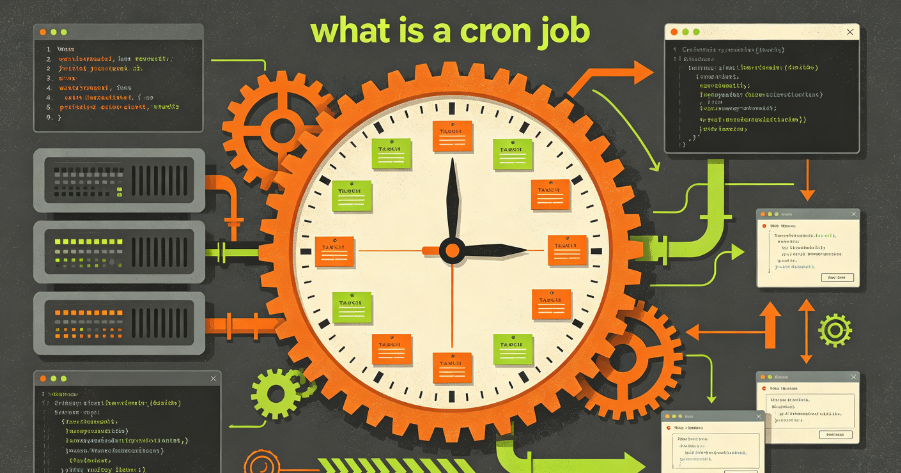
If you have ever found yourself manually running the same script or command every day at the same time, you have likely wished for a way to automate it. That is exactly what cron jobs are for.
A cron job is a scheduled task in Unix-based systems that automates the execution of scripts or commands at specific intervals. It is like having a personal assistant for your computer that handles routine tasks without you having to do anything. Whether you are backing up files, updating software, running maintenance scripts, or scraping data from the web, cron jobs handle it all reliably and on schedule.
This guide explains everything you need to know about cron jobs in 2026—what they are, how they work, how to set them up, and why they are essential for modern automation workflows.

Part 1: What Is a Cron Job?
A cron job is a scheduled task that runs automatically on Unix-based operating systems, including Linux and macOS. The name comes from “chronos,” the Greek word for time.
Cron jobs are managed by the cron daemon—a background process that runs continuously on your system, checking every minute whether any scheduled tasks need to be executed. When the current time matches a job’s schedule, the cron daemon runs the specified command or script.
The schedules for cron jobs are stored in a special configuration file called a crontab (cron table). Each user on a system can have their own crontab file, and there is also a system-wide crontab for tasks that need to run regardless of which user is logged in.
Cron Job vs. Cron Daemon vs. Crontab
It is helpful to distinguish between three related terms:
- Cron daemon: The background process that runs continuously and executes scheduled tasks
- Crontab: The configuration file where you define scheduled tasks
- Cron job: An individual scheduled task defined within a crontab
Part 2: How Cron Jobs Work
Cron jobs operate on a straightforward principle: you define what to run and when to run it, and the system handles the rest.
The Execution Cycle
- The cron daemon starts when your system boots and runs continuously in the background
- Every minute, the daemon checks its schedule against the current system time
- When a match is found, the daemon executes the corresponding command or script
- Output from the job is typically emailed to the user or logged to a file
Why Cron Jobs Are Reliable
Cron is a time-tested and reliable tool. Once a cron job is set, it will run at the specified times as long as the system is up. This reliability makes cron jobs ideal for mission-critical automation tasks.
Part 3: Crontab Syntax – How to Schedule a Cron Job
The heart of cron job scheduling is the crontab syntax. Every line in a crontab file follows the same pattern: five time/date fields, then the command to execute.
The Five Fields
The syntax consists of five fields representing different time units, followed by the command to run. Each field can contain a specific value, a range, a list, or a wildcard.
* * * * * command_to_run
│ │ │ │ │
│ │ │ │ └─── Day of week (0–7, where 0 and 7 = Sunday)
│ │ │ └───── Month (1–12)
│ │ └─────── Day of month (1–31)
│ └───────── Hour (0–23)
└─────────── Minute (0–59)
Common Scheduling Patterns
| Schedule | Crontab Syntax |
| Every minute | * * * * * |
| Every 5 minutes | */5 * * * * |
| Every hour | 0 * * * * |
| Every day at midnight | 0 0 * * * |
| Every Monday at 5 AM | 0 5 * * 1 |
| First and fifteenth of each month at 4:30 AM | 30 4 1,15 * * |
| Every weekday at 9 AM | 0 9 * * 1-5 |
Special Strings
Cron also supports special strings for common schedules:
| String | Meaning |
@reboot |
Run once at startup |
@daily |
Run once per day (equivalent to 0 0 * * *) |
@weekly |
Run once per week (0 0 * * 0) |
@monthly |
Run once per month (0 0 1 * *) |
@hourly |
Run once per hour (0 * * * *) |
Part 4: How to Set Up a Cron Job
Setting up a cron job is straightforward once you understand the syntax. Here is a step-by-step guide.
Step 1: Open Your Crontab File
To edit your user’s crontab file, use the command:
crontab -eThis opens your crontab in the default text editor. If you are editing for the first time, you may be prompted to choose an editor.
Step 2: Add Your Cron Job
Add a new line to the crontab file using the five-field syntax followed by the command you want to run.
For example, to run a backup script every day at 2 AM:
0 2 * * * /home/user/scripts/backup.shStep 3: Save and Exit
Save the file and exit the editor. The cron daemon automatically detects changes to the crontab and updates its schedule.
Step 4: Verify the Cron Job
To see your current cron jobs, use the command:
crontab -lThis lists all scheduled jobs for your user.
Step 5: Confirm Cron Is Running
You can check whether the cron daemon is running with:
systemctl status cronPart 5: What Are Cron Jobs Used For?
Cron jobs can automate virtually any repetitive task. Here are some of the most common use cases.
Automating Backups
One of the most common uses for cron jobs is automating backups. You don’t have to worry about losing important data because your system automatically saves copies of your files at regular intervals. With a cron job, you can schedule backups to run daily, weekly, or as often as needed.
Running Updates
Keeping your software up-to-date is crucial for security and performance, but it can be a hassle to remember to do it regularly. Cron jobs can handle this by scheduling updates to run automatically. Whether it is updating your operating system, applications, or security patches, cron jobs ensure everything stays current.
Performing Maintenance Tasks
Just like your car needs regular maintenance to run smoothly, so does your computer system. Cron jobs can perform routine maintenance tasks like clearing temporary files, checking for disk space, or optimizing databases. This keeps your system running efficiently and helps prevent issues before they become big problems.
Sending Notifications or Reports
If you need regular updates or reports, cron jobs can help with that too. You can schedule them to send you notifications or generate reports at specific times. Whether it is a daily summary of website traffic, a weekly sales report, or an alert when something goes wrong, cron jobs can keep you informed without manual checks.
Automating Web Scraping
For businesses and researchers, cron jobs are essential for automating data collection. You can schedule web scraping scripts to run at regular intervals, allowing you to track competitor prices, monitor job listings, and continuously feed fresh data into AI pipelines.
Managing Websites
For website owners, cron jobs can be a lifesaver. They can automate tasks like clearing cache, updating content, or sending out newsletters. This keeps your website running smoothly and ensures your visitors always have the best experience.
Database Management
Databases require regular maintenance to perform well, and cron jobs can help with that. They can automate tasks like backing up databases, optimizing tables, or running integrity checks, keeping your data safe and your database running efficiently.
System Administration
For system administrators, cron jobs are an essential tool. They can automate a wide range of tasks, from monitoring system health to managing user accounts.
Part 6: Benefits of Using Cron Jobs
Cron jobs offer several significant advantages that make them indispensable for system administrators, developers, and anyone who manages automated workflows.
Saves Time and Effort
One of the biggest benefits of using cron jobs is the time and effort they save. By automating routine tasks, you free up your time to focus on more important things. No more remembering to run backups or updates; cron jobs handle it all for you.
Clear Step-by-Step Proxy IP Tutorials
Master proxy setup, integration and performance optimization quickly with IPFLY guides
Increases Reliability
Cron jobs increase the reliability of your system by ensuring tasks are performed consistently and on schedule. This reduces the risk of human error and makes sure important tasks aren’t forgotten or overlooked.
Enhances System Performance
Regular maintenance and updates keep your system running smoothly, and cron jobs make sure these tasks happen like clockwork. This enhances overall system performance and can help prevent issues that might slow things down or cause problems.
Provides Peace of Mind
Knowing that your system is being taken care of automatically provides peace of mind. You can rest easy knowing that backups are happening, updates are being applied, and maintenance tasks are being performed without you having to worry about it.
Part 7: Cron Job vs. Task Scheduler
While cron is the standard scheduling tool on Unix-based systems, Windows uses Task Scheduler for similar purposes. Here is how they compare.
| Feature | Cron (Unix/Linux) | Task Scheduler (Windows) |
| Interface | Command-line (crontab) | GUI + command-line |
| Schedule Format | Five-field syntax | Visual schedule builder |
| Triggers | Time-based only | Time-based, event-based, system events |
| Reliability | Highly reliable | Generally reliable |
| Scalability | Single-system only | Single-system only |
Cron’s Strengths
Cron is simple, reliable, and widely supported across all Unix-based systems. Once a cron job is set, it will run at the specified times as long as the system is up. The five-field syntax, while initially intimidating, becomes second nature with practice.
Cron’s Limitations
Cron has some limitations compared to more modern scheduling tools:
- No built-in retry logic – If a job fails, it does not automatically retry
- No job dependencies – You cannot chain jobs together or set dependencies
- No GUI – Everything is configured through the command line
- Limited to single system – Cron does not natively handle distributed scheduling across multiple servers
Part 8: Common Cron Job Issues and How to Fix Them
Even with reliable cron, issues can arise. Here are some common problems and their solutions.
Job Not Running
Possible causes:
- The crontab syntax is incorrect
- The cron daemon is not running
- The script path is incorrect or the script lacks execute permissions
Solutions:
- Check your crontab syntax carefully
- Confirm the cron daemon is running with
systemctl status cron - Ensure your script is executable (
chmod +x script.sh) - Use absolute paths for both the script and any files it references
Job Runs but Doesn’t Work as Expected
Possible causes:
- Environment variables differ between your shell and the cron environment
- The script depends on a specific working directory
Solutions:
- Set environment variables explicitly in the crontab or script
- Change to the correct directory before running the script:
cd /path/to/dir && ./script.sh
Multiple Instances of the Same Job Running
Possible causes:
- The job takes longer to complete than the interval between scheduled runs
Solutions:
- Use a lock file to prevent overlapping executions
- Increase the interval between runs
- Implement a process check before starting a new instance
Part 9: Cron Jobs in Web Scraping and Data Automation
For businesses and developers working with web data, cron jobs are an essential infrastructure component.
Scheduled Data Collection
Web scraping workflows often need to run on a regular schedule—daily price monitoring, weekly competitor analysis, or real-time news aggregation. Cron jobs make this possible by triggering scrapers at predefined intervals.
The Role of IP Infrastructure
When running scheduled scrapers, the quality of your IP infrastructure directly impacts success rates. Websites may block repeated requests from the same IP address, especially when scraping at scale.
Residential proxies help maintain consistent access by routing requests through real household IP addresses, reducing the likelihood of detection and blocking. For scheduled scraping workflows, combining cron jobs with reliable residential proxy infrastructure ensures data collection runs smoothly without interruption.
Part 10: How IPFLY Supports Cron Job Automation
For organizations running cron jobs that involve web data collection, IPFLY provides the residential proxy infrastructure that enables reliable, uninterrupted automation.
The Challenge
When cron jobs run scrapers at scheduled intervals, they often generate high volumes of requests from the same IP addresses. This can trigger rate limiting, IP blocking, and other anti-bot measures.
The Solution
IPFLY’s residential proxies route requests through real ISP-assigned IP addresses, making traffic appear as legitimate consumer connections. This dramatically reduces the risk of detection and blocking.
IPFLY Residential Proxy Solutions
Dynamic Residential Proxies – With automatic IP rotation, these are ideal for scheduled scraping workflows where requests need to be distributed across multiple addresses.
Static Residential Proxies (ISP Proxies) – For workflows that require consistent IP identity, these dedicated, ISP-registered IPs provide stable, long-term access.
Datacenter Proxies – For speed-critical operations where residential authenticity is less important, these offer high-performance connectivity.
Cron Jobs as the Backbone of Automation
Cron jobs are one of the oldest and most reliable tools in the Unix ecosystem. They have been automating repetitive tasks for decades, and they remain just as relevant today as they were when they were first introduced.
Key takeaways:
- Cron jobs automate scheduled tasks – They run scripts and commands automatically at specified times
- Crontab syntax is straightforward – Five fields define the schedule, followed by the command to run
- Common use cases include – Backups, updates, maintenance, notifications, web scraping, and system administration
- Benefits include – Time savings, increased reliability, enhanced performance, and peace of mind
- Cron is reliable – Once a job is set, it will run as scheduled as long as the system is up
- For web scraping – Cron jobs combined with residential proxies enable reliable, scheduled data collection
Whether you are a system administrator automating routine maintenance, a developer scheduling data pipelines, or a business running regular web scraping operations, cron jobs provide the reliable scheduling foundation you need.

Power Your Scheduled Automation with IPFLY
Cron jobs handle the scheduling. IPFLY handles the infrastructure. For businesses running scheduled web scraping, data collection, or automation workflows, reliable IP infrastructure is essential for consistent access and uninterrupted operations.
IPFLY offers flexible proxy solutions for every use case:
- Dynamic Residential Proxies – Real residential IPs with automatic rotation. Ideal for scheduled scraping workflows and high-volume data collection.
- Static Residential Proxies – 100% dedicated, ISP-registered IPs with fixed identity. Perfect for workflows requiring consistent IP identity.
- Datacenter Proxies – High-performance IPs for speed-critical operations.
Get started today: Register for an IPFLY account and explore the full product lineup on the IPFLY homepage. Build automation that runs reliably, at scale, without interruption.